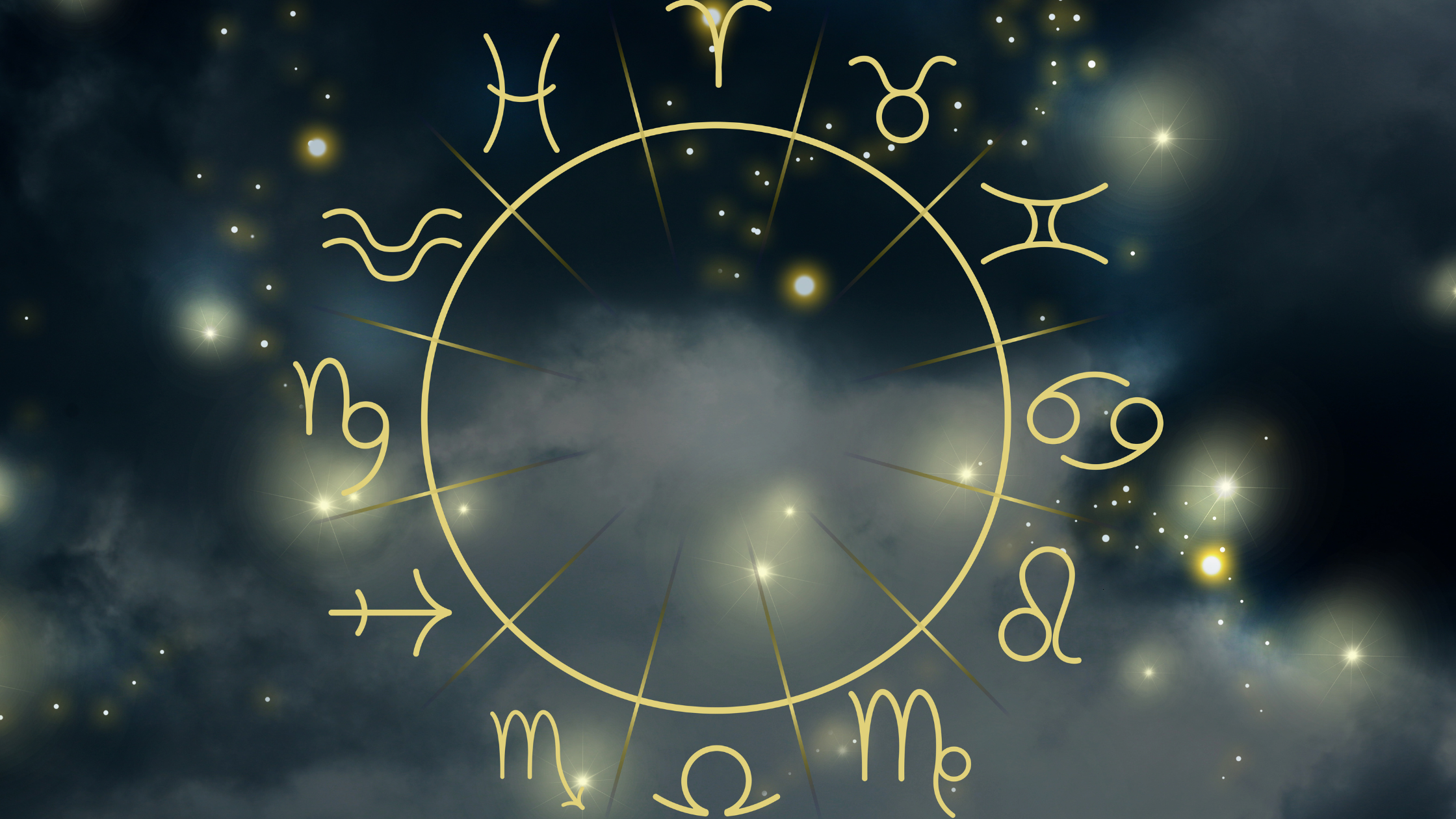
This birth chart explained guide begins with a common question. Why doesn’t my zodiac sign really sound like me? You are not alone. Your Sun sign is only one small part of your astrological story.
A birth chart is like a snapshot of the sky at the exact moment you were born. In astrology, people use a birth chart to explore different parts of their personality and life. It can offer insight into emotions, relationships, strengths, and personal experiences.
We’ll start with the three placements beginners hear about most. These are your Sun, Moon, and Rising signs, often called your Big Three. Your Sun sign represents your core identity. Astrologers traditionally connect your Moon sign with your emotional world. Your Rising sign describes the energy you may naturally show to others.
Understanding these three signs can help explain why two people with the same zodiac sign can seem completely different.
Maybe you have wondered why you don’t feel like your zodiac sign. Your birth chart may offer a much bigger picture. Let’s explore what your Big Three mean and how you can find yours.
What Is a Birth Chart?
A birth chart is also called a natal chart. It maps the positions of the Sun, Moon, planets, and other astrological points at the moment of your birth.
Astrologers create your birth chart using three important details: your date of birth, exact time of birth, and place of birth. Because these details are personal to you, your chart can look very different from someone else’s—even if you share the same Sun sign.
Think of your birth chart as an astrological blueprint. Instead of looking at only one zodiac sign, it brings together many different placements that astrologers traditionally interpret as representing different areas of your personality and life.
Your chart includes the 12 zodiac signs, planets, houses, and aspects between the planets. At first, this can look complicated. However, you do not need to understand everything at once.
For beginners, one of the easiest places to start is with your Big Three: your Sun sign, Moon sign, and Rising sign.
These three placements can give you a much broader picture than your Sun sign alone—and they may even help explain why you have never completely related to the zodiac sign you usually read in horoscopes.
What Are the Big Three in Astrology?
If you are new to astrology, you may have heard people talking about their Big Three. This refers to your Sun sign, Moon sign, and Rising sign—three of the most commonly discussed placements in a birth chart.
Each one is traditionally associated with a different part of how astrologers interpret your personality and inner world:
- Sun sign: your core identity, self-expression, and sense of self.
- Moon sign: your emotions, inner needs, instincts, and private self.
- Rising sign: the way you approach the world and the first impression you may give to others.
Imagine your Big Three as different layers of your personality. Your Sun can represent the person you are becoming and expressing, your Moon reflects what is happening beneath the surface, and your Rising sign can describe how you naturally meet the outside world.
For example, someone may have a confident and expressive Leo Sun, a sensitive and intuitive Pisces Moon, and a practical Virgo Rising. Looking only at their Leo Sun would leave out two important pieces of the astrological picture.
This is one reason learning your Big Three can make astrology feel much more personal than simply reading your daily horoscope.

Your Sun Sign: Your Core Identity
Your Sun sign is the zodiac sign most people already know. When someone asks, “What’s your zodiac sign?” they are usually asking about your Sun sign.
In astrology, the Sun traditionally represents your core identity, sense of self, confidence, and self-expression. It can represent the qualities you naturally develop and the person you are becoming as you move through life.
Your date of birth mainly determines your Sun sign because the Sun moves through the 12 zodiac signs throughout the year.
For example, a Leo Sun may be associated with creativity, warmth, confidence, and self-expression, while a Virgo Sun is often connected with practicality, organization, and attention to detail.
However, your Sun sign does not tell your entire story.
You might read a description of your Sun sign and recognize some qualities while feeling completely disconnected from others. This does not necessarily mean astrology “got you wrong.” Your Moon sign, Rising sign, and the rest of your birth chart add other layers to the traditional astrological interpretation.
That is why understanding your full birth chart can feel very different from reading a horoscope based only on your Sun sign.
Your Moon Sign: Your Emotional Inner World
While your Sun sign is traditionally associated with your core identity, your Moon sign represents a more private and emotional side of you in astrology.
It is often connected with your feelings, instincts, emotional needs, comfort, and the way you naturally respond to situations. Think of it as the part of yourself that may not always be visible to other people.
Your Moon sign can also offer an astrological explanation for why you sometimes react very differently from what your Sun sign description might suggest.
For example, someone with an adventurous Sagittarius Sun but a sensitive Cancer Moon may appear independent and optimistic while still having a deep need for emotional security, familiarity, and meaningful connections.
Unlike your Sun sign, finding your Moon sign can require more precise birth information because the Moon moves through the zodiac relatively quickly. Your birth date, time, and location can therefore be important when calculating it.
Learning about your Moon sign may help you explore questions such as: What makes me feel emotionally safe? What do I need when I feel overwhelmed? How do I instinctively respond to my emotions?
Together with your Sun and Rising signs, your Moon adds another important layer to your Big Three and the wider picture traditionally interpreted through your birth chart.
Your Rising Sign: How You Meet the World
Your Rising sign, also known as your Ascendant, is another important part of your Big Three. In astrology, it is traditionally associated with how you approach the world, the energy you naturally project, and the first impression you may give to others.
While your Sun sign relates to your core identity and your Moon sign to your emotional inner world, your Rising sign can be thought of as the way you naturally step into new situations.
For example, someone with a quiet and sensitive Pisces Sun but a bold Aries Rising may initially appear confident, energetic, and direct. As people get to know them better, they may begin to notice the softer qualities associated with their Pisces Sun.
Your Rising sign can also influence the structure of your entire birth chart because it determines which zodiac sign appears on the first house in many common astrological chart systems.
Unlike your Sun sign, your Rising sign can change relatively quickly throughout the day. Because of this, knowing your exact birth time and birth location is especially important when calculating your Ascendant.
This is another reason two people born on the same day can have surprisingly different birth charts—and may express their personalities in very different ways.
Once you understand your Sun, Moon, and Rising signs together, your Big Three can begin to reveal a much more detailed astrological picture than your Sun sign alone.
Sun vs. Moon vs. Rising Signs: What’s the Difference?
Your Sun, Moon, and Rising signs each represent a different layer of your astrological profile. Understanding how they work together can make your birth chart much easier to understand.
- Sun Sign — Your Core Self: Traditionally associated with your identity, confidence, purpose, and the way you express yourself.
- Moon Sign — Your Emotional Self: Connected with your emotions, instincts, inner needs, and what helps you feel safe and comfortable.
- Rising Sign — Your Outer Self: Associated with how you approach the world, the energy you may show to others, and the first impression you give.
An easy way to remember the difference is:
Sun = who you are
Moon = how you feel
Rising = how you meet the world
However, these three placements are not meant to compete with one another. In astrology, they are interpreted together.
For example, you might have a practical Capricorn Sun, an emotional Pisces Moon, and a sociable Libra Rising. You may therefore relate strongly to Capricorn qualities while also recognizing emotional sensitivity and a more charming or diplomatic social side.
This combination is one reason your personality may not seem to perfectly match the description of your Sun sign.
And that brings us to one of the most interesting questions for astrology beginners: Why don’t I feel like my zodiac sign?
Why Don’t I Feel Like My Zodiac Sign?
Have you ever read about your zodiac sign and thought, “This doesn’t sound like me at all”? There are several reasons this can happen within astrology.
The zodiac sign you usually see in horoscopes is your Sun sign, but your Sun is only one placement in your birth chart. Your Moon, Rising sign, planets, houses, and the relationships between different planets all add more layers to the traditional astrological interpretation.
For example, you might have a bold and outgoing Leo Sun, but if your Moon is in quiet, sensitive Pisces and your Rising sign is reserved Capricorn, you may not relate to every stereotypical Leo description.
Your birth chart can therefore contain qualities that seem very different—or even contradictory—at first.
This is why two people with the same zodiac sign can have completely different personalities, emotional needs, and ways of interacting with the world.
It is also worth remembering that zodiac descriptions online are often simplified. Astrology is a much broader system than the short personality descriptions commonly associated with each Sun sign.
So, if you have never fully connected with your zodiac sign, exploring your Big Three can be a useful next step. Instead of asking only, “What is my zodiac sign?” you can begin asking:
What is my Sun sign? What is my Moon sign? And what is my Rising sign?
Together, these three placements can give you a more detailed introduction to how your birth chart is interpreted in astrology.

How to Find Your Sun, Moon and Rising Signs
Finding your Sun, Moon, and Rising signs is easier than it may seem. You do not need to calculate your birth chart by hand—an online birth chart calculator can do it for you.
To get the most accurate result, you will usually need three pieces of information:
- Your date of birth
- Your exact time of birth
- Your place of birth
Your birth date is enough to identify your Sun sign in most cases. However, your Moon and especially your Rising sign can depend on your birth time and location, so accurate birth information is important.
Once you enter these details into a birth chart calculator, you will receive a natal chart showing the positions of the Sun, Moon, planets, houses, and zodiac signs at the time of your birth.
At first, the chart may look confusing—and that is completely normal. Start by finding just three things:
Sun — your Sun sign
Moon — your Moon sign
Ascendant or ASC — your Rising sign
You do not need to understand every symbol, house, or planetary aspect yet. Learning your Big Three is a simple first step toward understanding the bigger picture of your birth chart.
Once you know these three signs, write them down and explore how their different qualities may work together. You may be surprised by how much more nuanced astrology becomes when you move beyond your Sun sign.

What Else Is in Your Birth Chart?
Your Sun, Moon, and Rising signs are a great place to begin, but they are only the starting point of your birth chart.
A complete natal chart contains several other elements that astrologers traditionally interpret to create a more detailed picture.
These include:
- Mercury — associated with communication, thinking, and learning.
- Venus — connected with love, relationships, attraction, and personal values.
- Mars — associated with motivation, passion, action, and drive.
- Jupiter — traditionally linked with growth, opportunity, and expansion.
- Saturn — connected with responsibility, discipline, boundaries, and life lessons.
- The 12 Houses — different areas of life, such as relationships, career, home, and personal growth.
- Aspects — the angles formed between planets, which astrologers use to interpret how different parts of a chart may interact.
Astrology can also be explored alongside other spiritual practices that encourage self-reflection and personal growth.
You do not need to learn all of these at once.
If you are just beginning your astrology journey, focus on your Sun, Moon, and Rising signs first. Once you feel comfortable with your Big Three, you can gradually explore the planets, houses, and aspects in more detail.
Think of your birth chart as a book. Your Big Three may introduce the main characters, but there are many more chapters waiting to be explored.
How to Start Reading Your Birth Chart as a Beginner
Looking at your birth chart for the first time can feel overwhelming. There may be unfamiliar symbols, lines, houses, planets, and zodiac signs all appearing in one circle.
The good news is that you do not need to understand everything at once.
Start with your Big Three. Find your Sun, Moon, and Rising signs and read about each one separately. Notice which descriptions feel familiar and where the three signs seem different from one another.
Next, look at your personal planets, especially Mercury, Venus, and Mars. In astrology, these placements are traditionally associated with communication, relationships, attraction, motivation, and the way you take action.
After that, you can begin exploring the 12 houses. Each house represents a different area of life, from identity and relationships to career, home, creativity, and personal growth.
Finally, you can gradually learn about aspects, which describe the angles and relationships between planets in your chart.
A simple order for beginners is:
1. Sun, Moon, and Rising
2. Mercury, Venus, and Mars
3. The 12 houses
4. Planetary aspects
There is no need to memorize your entire chart. Astrology is a complex symbolic tradition, and learning it can be a gradual process. Start with one placement at a time, stay curious, and allow your understanding to grow as you explore.
As you explore your birth chart, meditation can also be a simple way to slow down, reflect, and become more aware of your thoughts and emotions.
Most importantly, use your birth chart as a tool for self-reflection and curiosity rather than a fixed definition of who you are.
Final Thoughts: Understanding Your Birth Chart
Learning about your birth chart can open the door to a much deeper exploration of astrology. Instead of identifying with only one zodiac sign, you begin to see how different placements may come together to create a more complex astrological picture.
Start with your Sun, Moon, and Rising signs. Your Sun is traditionally associated with your core identity, your Moon with your emotional inner world, and your Rising sign with how you approach and interact with the world around you.
From there, you can slowly explore your other planets, houses, and aspects without feeling like you need to understand everything at once.
Most importantly, remember that astrology does not have to define you. Your birth chart can simply be used as a symbolic tool for self-reflection, curiosity, and personal exploration.
So, if you have ever wondered why you do not completely relate to your zodiac sign, your Big Three may be a fascinating place to start.
Your Sun sign may be the first chapter—but your birth chart tells a much bigger story.