If you are learning how to meditate for beginners, you may feel unsure about where to begin. Maybe you have tried sitting quietly, only to discover that your mind suddenly became even busier. If so, you are definitely not alone.
Learning how to meditate for beginners does not have to be complicated. You do not need to completely empty your mind, sit perfectly still for an hour, or have any special spiritual experience. Meditation can begin with something much simpler: taking a few quiet minutes to slow down and notice the present moment.
For me, meditation is a way to step away from the constant noise of everyday life and reconnect with myself. Some days my mind becomes quiet, while on other days thoughts keep appearing. I have learned that both experiences can be part of meditation.
In this beginner-friendly guide, we will explore what meditation is, how to start, what to do when your mind wanders, and simple techniques you can try at home. You will also learn how to create a meditation practice that feels natural instead of becoming another task you have to do perfectly.
You do not need any previous experience. All you need is a little time, curiosity, and a willingness to begin.

What Is Meditation?
Meditation is a practice of bringing your attention to the present moment. Instead of trying to stop every thought, you learn to notice what is happening in your mind and body without immediately reacting to it.
People have practiced different forms of meditation for thousands of years. Meditation appears in several religious and spiritual traditions, including Buddhism and Hindu traditions. Today, many people also practice meditation outside of religion as a way to create moments of stillness, awareness, and reflection.
One of the biggest misunderstandings about meditation is that you need to completely clear your mind. Thoughts will naturally appear, even when you are meditating. The practice is not about fighting those thoughts. Instead, you gently notice them and bring your attention back to something simple, such as your breathing.
For me, this changed the way I looked at meditation. I stopped wondering whether I was “doing it right” every time my mind wandered. Instead, I began seeing the moment when I returned my attention as part of the practice itself.
Meditation can look different for everyone. You might focus on your breath, listen to a guided meditation, repeat a mantra, practice mindfulness, or simply sit quietly and observe what you notice.
You do not need to choose the perfect technique when you are beginning. The most important thing is finding a simple practice that helps you slow down and become more present.
How to Meditate for Beginners
If you are learning how to meditate for beginners, the best approach is often to keep things simple. You do not need special equipment, a perfectly quiet room, or a complicated routine to begin.
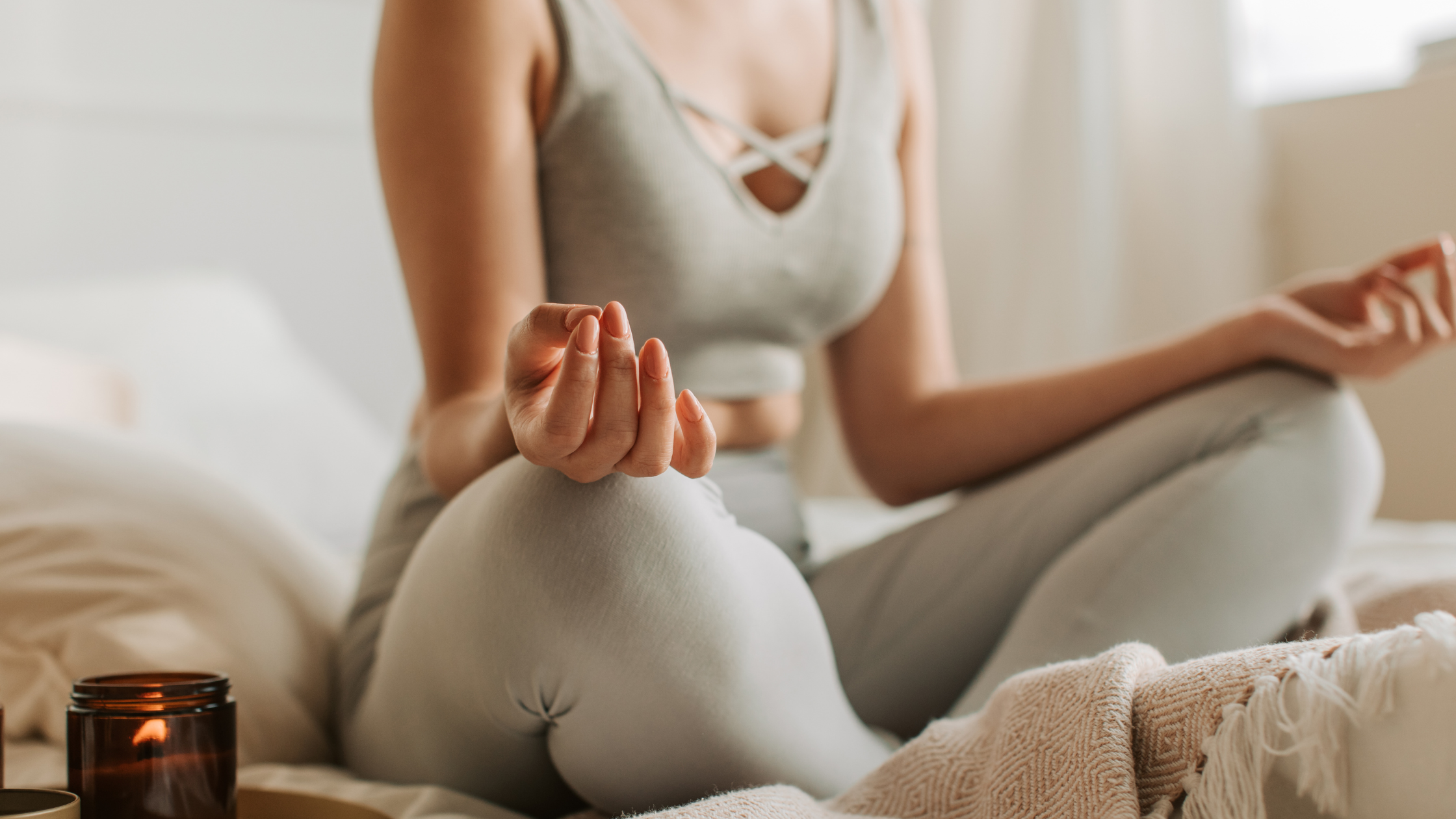
Start by finding a place where you can sit comfortably for a few minutes. You can sit on a chair, cushion, sofa, or even on the floor. Keep your body relaxed and choose a position that feels comfortable enough to maintain without constantly adjusting yourself.
Close your eyes if that feels natural, or simply soften your gaze. Take a slow breath and begin noticing the natural rhythm of your breathing. You do not need to change or control it.
Notice the feeling of the breath entering and leaving your body. You might focus on the air moving through your nose, the gentle movement of your chest, or the rise and fall of your abdomen.
Sooner or later, your attention will wander. You may start thinking about something you need to do, remembering a conversation, or planning the rest of your day. This is completely normal.
When you notice that your mind has wandered, gently return your attention to your breath. There is no need to criticize yourself or start the meditation again. The simple act of noticing and returning is part of the practice.
For your first meditation, try sitting for just five minutes. A short practice that you can return to regularly is often more approachable than forcing yourself to meditate for a long time.
When you are ready to finish, take one deeper breath and slowly bring your attention back to the room around you. Open your eyes and take a moment to notice how you feel before continuing with your day.
What Should You Focus on During Meditation?
One of the most common questions beginners ask is what they should actually think about during meditation. The simple answer is that you do not necessarily need to think about anything specific.
Instead, meditation often involves choosing one gentle point of focus. Your breath is one of the easiest places to begin because it is always with you and requires no special preparation.
As you breathe, notice the physical sensations of each inhale and exhale. When thoughts appear, you do not need to push them away. Simply notice that your attention has wandered and gently return to your chosen focus.
You can also focus on other things during meditation. Some people prefer the sensations in their body, a calming sound, a mantra, a visualization, or the voice of a guided meditation.
For me, the goal is not to force my mind into silence. Instead, I try to become aware of what is happening without immediately following every thought that appears.
Some days this feels easy, while other days my mind is much busier. Both experiences are completely normal. Meditation is not about judging whether you had a “good” or “bad” session.
As you continue learning how to meditate for beginners, remember that returning your attention again and again is not a sign that you are failing. That gentle return is actually an important part of the practice.
What to Do When Your Mind Won’t Stop Thinking
Many beginners believe that a busy mind means they are not good at meditation. You sit down, close your eyes, and suddenly thoughts about work, relationships, plans, memories, and completely random things begin appearing.
This does not mean you are doing anything wrong. Thinking is a natural activity of the mind, and meditation does not require you to switch your thoughts off.
When you notice yourself getting lost in a thought, try not to become frustrated. Simply acknowledge what happened and gently bring your attention back to your breath or another point of focus.
You can imagine your thoughts as clouds moving across the sky. You notice them, but you do not have to follow every cloud. Allow each thought to come and go while you return to the present moment.
Sometimes it can also help to silently say a simple word such as “thinking” when you notice your mind wandering. Then return your attention to your breathing without judging yourself.
For me, this is one of the most valuable lessons meditation has taught me. I do not need to believe, analyze, or react to every thought that enters my mind. Sometimes I can simply notice it and let it pass.
Over time, you may become more comfortable observing your thoughts without immediately getting carried away by them. The goal is not a perfectly silent mind. Instead, the practice is about developing greater awareness of where your attention goes and gently bringing it back.
5 Simple Meditation Techniques for Beginners

There is no single meditation technique that works perfectly for everyone. As you explore different methods, you may discover that some feel more natural to you than others.
If you are learning how to meditate for beginners, these five simple techniques are a good place to start. You can experiment with each one and choose the practice that helps you feel most comfortable and present.
1. Breath Meditation
Breath meditation is one of the simplest practices for beginners. Sit comfortably and bring your attention to your natural breathing.
Notice each inhale and exhale without trying to control them. You might focus on the feeling of air moving through your nose or the gentle rise and fall of your abdomen.
When your mind wanders, simply notice it and return your attention to your breath. Even five minutes can be enough when you are beginning.
2. Body Scan Meditation
Body scan meditation involves slowly bringing your attention to different areas of your body. It can be a gentle way to become more aware of physical sensations and reconnect with the present moment.
Sit or lie down comfortably and begin by noticing your feet. Pay attention to any sensations you feel without trying to change them.
Slowly move your attention upward through your legs, abdomen, chest, hands, arms, shoulders, neck, and face. If you notice tension, simply become aware of it and allow your breathing to remain relaxed.
You do not need to make every sensation disappear. The purpose is simply to notice what is happening in your body with curiosity rather than judgment.
A body scan can take just a few minutes or much longer, depending on how slowly you choose to move through each area.
3. Guided Meditation
Guided meditation can be especially helpful when you are new to meditation and find it difficult to stay focused on your own. Instead of meditating in silence, you listen to someone gently guide you through the practice.
A guided meditation may invite you to focus on your breathing, relax different parts of your body, visualize a peaceful place, or simply notice your thoughts and emotions.
For beginners, having a voice to follow can make meditation feel easier and less intimidating. You do not have to wonder what you should be doing next because the guidance helps you move through the practice step by step.
You can find guided meditations of many different lengths and styles. When you are beginning, try choosing a short meditation of around five or ten minutes and notice how the experience feels for you.
Over time, you may discover that you enjoy guided meditation most, or you may gradually feel more comfortable meditating in silence. Both approaches are completely fine.
4. Mantra Meditation
Mantra meditation involves repeating a word, phrase, or sound to give your mind a simple point of focus. The repetition can help you gently return to the present moment whenever your attention begins to wander.
You can repeat your mantra silently in your mind or say it softly out loud. Some meditation traditions use specific sacred mantras, while other practices may use simple words or phrases that feel meaningful to the person meditating.
For a simple beginner practice, choose a short phrase that helps you feel calm and centered. You might use something like “I am present,” “I am calm,” or simply repeat a single word such as “peace.”
Sit comfortably, breathe naturally, and repeat your chosen mantra at a relaxed pace. When thoughts appear, notice them without judgment and gently return your attention to the words.
You do not need to repeat the mantra perfectly or create a particular feeling. Let the repetition become a gentle anchor that brings your awareness back to the present moment.
5. Loving-Kindness Meditation
Loving-kindness meditation is a gentle practice that focuses on developing feelings of compassion and kindness toward yourself and others.
Begin by sitting comfortably and taking a few slow breaths. Bring your attention to yourself and silently repeat a few kind wishes. You might say:
“May I feel peaceful, safe, and well.”
After a few moments, you can bring someone you care about to mind and offer the same wishes to them:
“May you feel peaceful, safe, and well.”
You can gradually extend these wishes to other people if that feels comfortable. There is no need to force a particular emotion. Simply allow the words to become a gentle reminder of compassion and connection.
For me, this type of meditation is also a beautiful reminder that kindness does not only belong to other people. We can learn to offer ourselves the same patience and compassion that we naturally want to give to those we love.
Even a few minutes of loving-kindness meditation can become a meaningful part of your spiritual or mindfulness practice.
How Long Should Beginners Meditate?
When you are just beginning, you do not need to meditate for long periods of time. In fact, starting with only a few minutes can make it much easier to build a practice that feels comfortable and sustainable.
When learning how to meditate for beginners, try beginning with just five minutes a day. This gives you enough time to become familiar with the practice without making meditation feel overwhelming.
Once five minutes begins to feel natural, you can gradually increase your meditation to ten or fifteen minutes if you want to. There is no rule that says a longer meditation is automatically better.
For me, consistency is more important than trying to reach a certain amount of time. A few mindful minutes can still create a meaningful pause in a busy day.
Some days you may want to meditate longer, while on other days you may only have a few minutes. Both are completely okay.
As you continue learning how to meditate for beginners, try not to measure your progress only by the number of minutes you spend meditating. Instead, pay attention to how the practice fits into your life and whether it helps you become more present and aware.
When Is the Best Time to Meditate?
There is no single perfect time to meditate. The best time is usually the one that fits naturally into your life and makes it easier for you to practice consistently.
Some people enjoy meditating in the morning because it gives them a quiet moment before the day becomes busy. A short morning meditation can help you begin the day with greater awareness and intention.
Others prefer meditating in the evening. Sitting quietly after a busy day can create a gentle transition between daily activities and rest.
You can also meditate during the day whenever you feel that you need a moment to pause. Even a few minutes of mindful breathing can give you an opportunity to step away from distractions and reconnect with the present moment.
For me, it is more helpful to choose a time that feels realistic than to follow a strict rule. If morning meditation does not fit your lifestyle, you do not need to force it.
Experiment with different times and notice what works best for you. The goal is not to create a perfect routine. Instead, try to find a moment when meditation can become a natural and supportive part of your day.
Common Meditation Mistakes Beginners Make
When you are learning how to meditate for beginners, it is easy to believe that there is a perfect way to meditate. In reality, many of the things beginners worry about are completely normal parts of the practice.
One common mistake is expecting your mind to become completely silent. Thoughts will appear during meditation, and that does not mean you are doing anything wrong. Each time you notice your mind wandering, simply return your attention to your breath or chosen focus.
Another mistake is trying to meditate for too long too soon. You do not need to begin with thirty-minute sessions. Starting with five minutes can make the practice feel much easier to maintain.
You may also find yourself judging each meditation as “good” or “bad.” Some sessions may feel peaceful, while others may feel restless or distracted. Both experiences can teach you something about being present with whatever is happening.
Try not to compare your meditation practice with someone else’s. One person may enjoy sitting silently for twenty minutes, while another prefers a short guided meditation. Your practice does not need to look like anyone else’s.
Finally, do not turn meditation into another task you have to perform perfectly. Give yourself permission to learn gradually. Meditation is a practice, and every time you return to the present moment, you are practicing.
How to Make Meditation a Daily Habit

Starting meditation can feel easy when you are motivated, but turning it into a regular habit may take a little time. The good news is that your meditation practice does not need to be long or complicated to become part of your everyday life.
One of the easiest ways to build consistency is to connect meditation with something you already do each day. You might meditate after waking up, before drinking your morning coffee, after brushing your teeth, or before going to bed.
When you are learning how to meditate for beginners, keep your goal small at first. Instead of telling yourself that you must meditate for twenty minutes every day, begin with five minutes. A simple routine is often easier to return to consistently.
It can also help to create a peaceful space for your practice. You do not need a special meditation room. A comfortable chair, cushion, or quiet corner of your home can become a familiar place where you pause and turn your attention inward.
Be Patient With Your Meditation Practice
Some days you may miss your meditation, and that is okay. You do not need to start over or feel that you have failed. Simply return to your practice when you can.
For me, meditation becomes more meaningful when it feels like an invitation rather than an obligation. I try to see it as a few moments I am giving to myself instead of another item on my daily to-do list.
As your practice develops, allow it to change with you. You can also explore other gentle practices that may help you raise your vibration and bring more positive energy into your daily life. Some days you may want silence, while on others a guided meditation, mantra, or body scan may feel more supportive.
The goal is not to create a perfect meditation routine. It is to create a practice that you genuinely want to return to.

Meditation as Part of Your Spiritual Journey
Learning how to meditate for beginners is not about becoming perfectly calm or learning how to stop every thought. It is about creating small moments when you can slow down, become more aware, and reconnect with yourself.
Meditation can become a simple part of your spiritual journey, whether you practice for five minutes or much longer. Over time, you may begin to notice your thoughts, emotions, and reactions with greater awareness.
You may also discover that meditation feels different from day to day. Sometimes your practice may feel peaceful and deeply connected. On other days, your mind may be busy and sitting still may feel difficult. Both experiences can be part of the journey.
There is no need to rush or compare your progress with anyone else. Explore different techniques, listen to yourself, and allow your meditation practice to develop naturally.
Most importantly, remember that you do not need to wait until you feel completely ready. You can begin exactly where you are.
Take a comfortable seat, close your eyes if you wish, and give yourself five quiet minutes.
Breathe. Notice. Return.
Sometimes the simplest moment of stillness can be the beginning of a deeper connection with yourself.
Leave a Reply