If you’ve been curious about Reiki for sleep, you may know the feeling of being physically exhausted while your mind refuses to slow down.
You turn off the lights, settle into bed, and suddenly remember everything you forgot to do today. Tomorrow’s responsibilities begin filling your thoughts. Even though you want to rest, relaxing feels surprisingly difficult.
If this sounds familiar, you may be looking for a gentle way to slow down before bedtime.
Reiki for sleep is one approach some people explore as part of their evening self-care routine. Reiki is a Japanese practice traditionally associated with gentle hand placements, focused attention, and the idea of universal life energy.
While Reiki has not been scientifically proven to treat insomnia or improve sleep, taking a few quiet minutes for relaxation may help you create a more peaceful transition from your busy day to bedtime.
In this guide, you’ll learn what Reiki is, how it relates to relaxation, and how to try a simple 10-minute bedtime practice—even if you’ve never attended a Reiki class.
What Is Reiki, and Why Do People Practice It Before Bed?
Reiki is a Japanese complementary practice associated with Mikao Usui. In traditional Reiki, a practitioner places their hands gently on or just above the body.
According to Reiki teachings, practitioners work with universal life energy to support balance and well-being. This is a spiritual understanding of the practice rather than a scientifically established explanation of how the body works.
Many people are drawn to Reiki because it encourages them to slow down, become more present, and dedicate time to themselves.
And bedtime can be a particularly meaningful moment to do that.
Throughout the day, we’re often focused on everyone and everything around us. We answer messages, solve problems, make decisions, and move from one responsibility to another.
But when evening arrives, we don’t always give ourselves time to transition out of that busy rhythm.
A quiet Reiki practice—or a Reiki-inspired relaxation routine—can become a personal reminder that the day is ending and you no longer need to keep doing.
This is an important question, especially if you’ve been struggling with sleep.
Some people describe feeling peaceful, comforted, or deeply relaxed during Reiki sessions. However, personal experiences are not the same as scientific proof.
Research on relaxation techniques more broadly is somewhat more encouraging, although the evidence remains limited. The NCCIH explains that relaxation exercises may be useful for some people with insomnia, but cognitive behavioral therapy for insomnia (CBT-I) has stronger evidence and is generally recommended as a first-line treatment for chronic insomnia.
Rather than thinking of Reiki as something that will make you fall asleep, it may be more helpful to approach it as a quiet personal ritual.
The intention isn’t to force sleep to happen.
It’s simply to give yourself permission to rest.
Do You Need Training to Practice Reiki for Sleep?
No. You don’t need Reiki training to try the gentle relaxation exercises in this guide.
However, there is an important distinction.
In traditional Usui Reiki, formal training generally includes instruction from a Reiki teacher and an initiation or attunement process. The International Center for Reiki Training describes this as part of learning Reiki, and the UK Reiki Council includes training and hand-position practice in its professional curriculum.
If you’ve completed Reiki training, you can use the following routine as a framework for your own self-Reiki practice, following the methods you’ve learned.
If you haven’t received Reiki training, that’s perfectly fine too.
You can still rest your hands comfortably on your body, breathe gently, and enjoy a few moments of quiet awareness. We’ll call this a Reiki-inspired bedtime relaxation practice, rather than a formal Reiki treatment.
You don’t need to visualize energy, memorize symbols, or feel anything unusual for the exercise to be worthwhile.
How to Prepare for Your Reiki for Sleep Routine
Before beginning, make your surroundings as comfortable as possible.
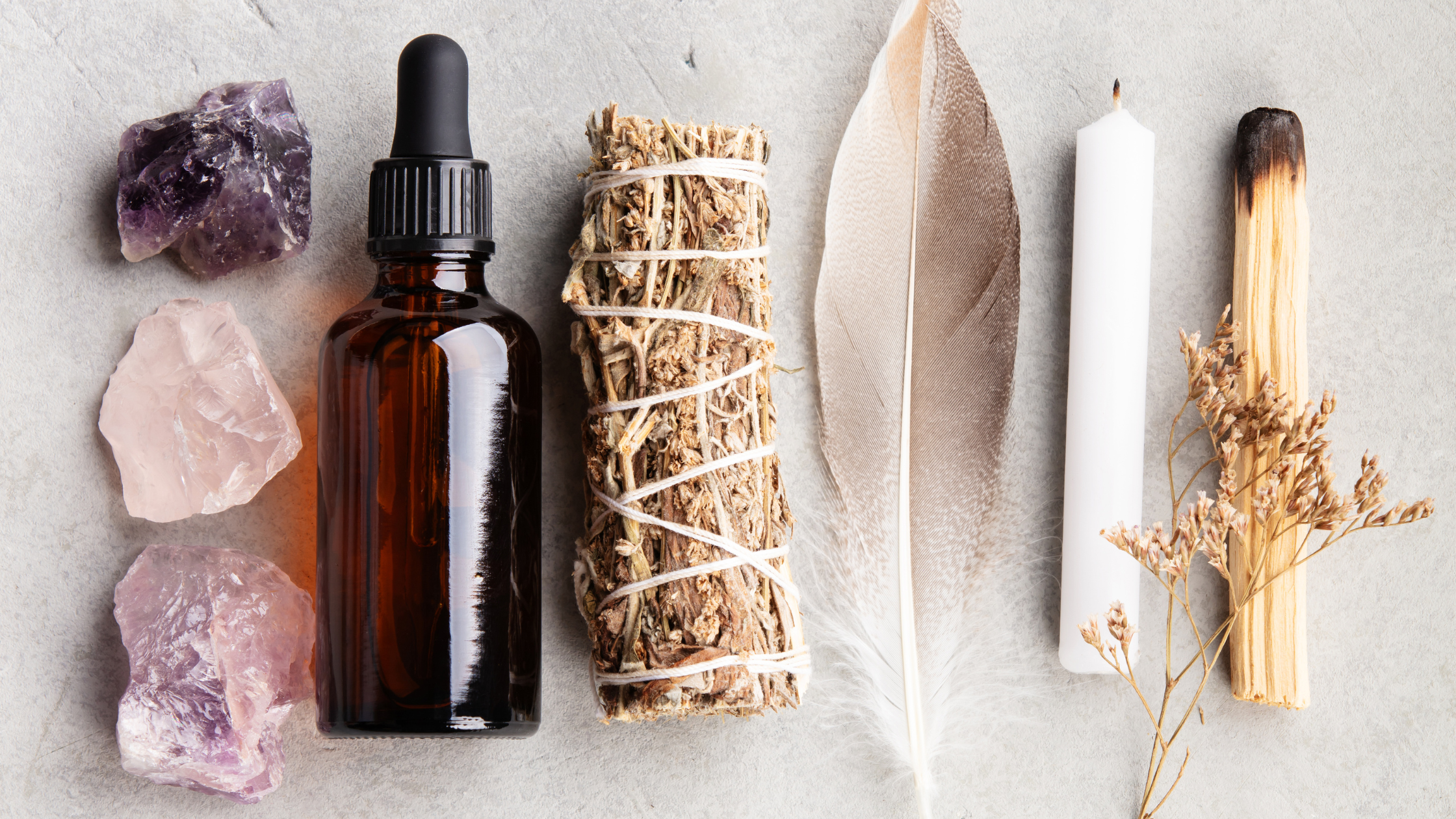
You don’t need crystals, candles, special music, or expensive equipment. A quiet corner of your bedroom is enough.
Dim the lights if you can. Put your phone aside and choose somewhere you can sit or lie down comfortably.
You might prefer a pillow behind your back or a blanket over your legs.
If you enjoy soft background music, that’s fine, but silence works just as well.
Try to approach the next ten minutes without expectations.
You aren’t trying to perform a perfect spiritual practice. You’re simply creating a little space for yourself.
And if you’re already feeling sleepy, you don’t have to finish every step.
A Gentle 10-Minute Reiki-Inspired Bedtime Routine
This routine combines comfortable hand placements, natural breathing, and quiet awareness.
The hand positions are inspired by the hands-on element of Reiki, but the sequence below is a beginner-friendly relaxation exercise—not a prescribed traditional Reiki treatment or a medically validated sleep technique.
Minutes 1–2: Settle In and Let the Day End
Sit comfortably against your pillows or lie on your back.
Allow your shoulders to soften.
Rest your hands wherever they feel natural, perhaps on your lap or beside your body.
Take a gentle breath in, then breathe out without forcing the air.
Continue breathing at your own comfortable pace.
You don’t need to count your breaths or make them unusually deep.
For a moment, notice the support beneath you.
The mattress is holding your body. Your shoulders don’t need to stay tense. Your hands don’t need to be busy.
If thoughts about tomorrow appear, there’s no need to fight them.
Simply notice that your mind is thinking and gently return your attention to the present moment.
You might silently remind yourself:
I’ve done what I can today. The rest can wait.
Minutes 3–4: Rest Your Hands Over Your Heart
Bring one or both hands to the center of your chest, wherever the position feels comfortable.
There’s no need to press.
Simply notice the warmth or gentle contact of your hands.
In Reiki traditions, the hands are central to the practice. Here, you’re using this simple placement as an opportunity to reconnect with your body.
You might notice your breathing becoming slower, or you might feel exactly as you did a moment ago.
Both experiences are okay.
Think about how often you move through the day without checking in with yourself.
For these two minutes, you don’t need to answer anyone or accomplish anything.
Just be here.
If it feels natural, silently repeat:
I can be gentle with myself tonight.
Minutes 5–6: Bring Your Attention to Your Belly
Move your hands to your abdomen, or rest them at your sides if that feels better.
Notice the natural movement of your breathing.
You may feel your abdomen rise and fall slightly beneath your hands.
Try not to control the rhythm.
Instead, allow each breath to come and go.
If your mind wanders, that’s completely normal.
You might remember a conversation, replay something that happened earlier, or start planning tomorrow.
When you notice this happening, gently bring your attention back to the movement beneath your hands.
There is nothing to get right.
This moment is about observing rather than changing.
Minutes 7–8: Release the Need to Keep Thinking
If it’s comfortable, place your hands lightly near your forehead or temples.
Avoid putting pressure on your eyes, face, or neck.
You can also leave your hands resting beside you.
Close your eyes if you feel comfortable doing so.
Imagine setting down a heavy bag you’ve been carrying all day.
Inside that bag are the little worries, responsibilities, unfinished tasks, and conversations you’ve been holding in your mind.
You don’t need to solve them right now.
They can wait until tomorrow.
Allow your forehead, jaw, and shoulders to relax as much as they comfortably can.
If visualization doesn’t appeal to you, simply focus on the feeling of your pillow or the sound of your breathing.
There is no single correct way to experience this moment.
Minutes 9–10: Rest Without Expectations
Let your hands settle into a comfortable position.
There’s nothing else you need to do.
Notice how you feel without judging the result.
Perhaps you feel a little calmer. Your thoughts might still be drifting toward tomorrow, or you may already be feeling sleepy.
Whatever you notice is okay.
You haven’t failed if you’re not immediately relaxed.
For the final minute, simply rest.
You might finish with a quiet intention:
Tonight, I allow myself to rest.
When you’re ready, let the practice end naturally.
You don’t need a special closing ritual.
And you certainly don’t need to check the clock to see whether it worked.
What If You Don’t Feel Any Energy?
One of the questions beginners sometimes ask is whether they should feel warmth, tingling, or some kind of energy moving through their hands.
In Reiki communities, people describe a wide range of personal sensations.
But you don’t need to experience any of them.
Sensations such as warmth or tingling are not proof that a particular energy is present, and feeling nothing doesn’t mean you’ve done something wrong.
If you’re using this routine for relaxation, focus on something simpler:
Are you giving yourself a few uninterrupted minutes?
Are your hands comfortable?
Can you allow your breathing to remain natural?
Those are enough.
Your experience doesn’t need to look or feel like anyone else’s.
What If Your Mind Won’t Stop Racing?
Sometimes the hardest part of bedtime isn’t getting comfortable.
It’s dealing with the thoughts that arrive when everything finally becomes quiet.
You might start replaying an awkward conversation or worrying about something that hasn’t happened yet.
When this happens, try not to turn relaxation into another task you have to succeed at.
Instead, acknowledge the thought.
You might say to yourself, I’m thinking about tomorrow again.
Then gently return your attention to the contact of your hands or the feeling of your body resting on the bed.
If you find that quiet attention makes you more anxious or uncomfortable, stop the exercise. You can try another calming activity, such as reading something gentle or listening to soft music.
A peaceful bedtime routine should feel supportive, not demanding.
Three Small Habits That Can Support Your Bedtime Routine
Your evening practice doesn’t need to stand alone.
A few ordinary habits may also make your bedroom and bedtime feel more restful.
1. Give Yourself a Consistent Wind-Down Period
Try to leave a little quiet time between your final responsibilities and going to bed.
Even ten or fifteen minutes can become a meaningful personal ritual.
You might wash your face, change into comfortable clothes, and spend a few minutes away from your phone.
2. Make Your Bedroom Comfortable
A cool, quiet, dark room can support healthy sleep habits.
If outside noise bothers you, consider simple ways to reduce distractions.
You don’t need to create a perfect bedroom. Small changes that make your space more comfortable are a good place to begin.
3. Keep a Reasonably Consistent Sleep Schedule
Going to bed and waking up at similar times helps support your body’s sleep-wake rhythm.
The National Heart, Lung, and Blood Institute recommends consistent sleep timing, a comfortable bedroom, and quiet activities before bedtime as part of healthy sleep habits.
Your Reiki-inspired routine can fit into those habits as a moment of personal care.
When Relaxation Isn’t Enough
An occasional restless night is different from an ongoing sleep problem.
If you regularly struggle to fall asleep, wake repeatedly during the night, or feel exhausted despite spending enough time in bed, it’s worth discussing your symptoms with a healthcare professional.
Sleep difficulties can have many causes, and a relaxing evening ritual cannot identify or treat them.
For persistent insomnia, evidence-based treatments such as CBT-I may be appropriate.
You can still enjoy spiritual practices alongside professional care if they feel meaningful to you.
The important thing is not to rely on Reiki—or any relaxation exercise—as a replacement for needed medical treatment.
Frequently Asked Questions About Reiki for Sleep
Can I practice Reiki before bed every night?
If you’re a trained Reiki practitioner, you can follow the self-practice guidance you learned from your teacher.
If you’re using the beginner-friendly relaxation routine in this article, you can make it part of your evenings whenever it feels comfortable. There is no required frequency.
Can I try this if I’ve never had a Reiki attunement?
Yes. You can try the breathing, hand placements, and quiet awareness exercises without an attunement.
Just remember that these exercises are Reiki-inspired relaxation rather than formal Reiki treatment.
How long should a Reiki bedtime routine last?
There is no scientifically established duration for Reiki to improve sleep.
Ten minutes is simply a manageable amount of time for the routine in this article. You can shorten or extend it based on your comfort.
Do I need Reiki symbols or crystals?
No. Neither is necessary for the relaxation routine described here.
Traditional Reiki training may introduce particular techniques and symbols at different levels, but beginners don’t need to use them for this exercise.
What if I still can’t fall asleep afterward?
That’s okay. This routine isn’t designed to guarantee sleep.
If sleep problems continue or affect your daily life, speak with a healthcare professional rather than relying on the exercise as a treatment.
A Gentle Reminder Before You Go to Sleep
Some evenings will feel peaceful. Others will be messy, busy, and full of thoughts you wish you could switch off.
You don’t need to judge yourself for either kind of night.
A Reiki-inspired bedtime routine isn’t about becoming perfectly calm or reaching a special spiritual state.
It’s about making a little room for yourself.
A few minutes without rushing. A few gentle breaths. A moment to notice how you’re feeling.
And perhaps the most meaningful part is remembering that you deserve care even when you haven’t finished everything on your to-do list.
Tonight, you don’t have to do more.
You can simply rest.
Sources and Further Reading
The following sources were used to distinguish traditional Reiki teachings from evidence-based information about sleep and relaxation.
Disclaimer: This article is for educational and general well-being purposes. Reiki has not been established as an effective treatment for insomnia or other medical conditions. The beginner routine is a relaxation exercise, not a medical treatment or a substitute for professional healthcare.
Could 2027 be the year you finally feel ready to move forward? If you’ve been wondering about the luckiest zodiac signs 2027 might favor, you’re not alone. Perhaps you’re hoping for a fresh start, more confidence, or meaningful changes in your life. While astrology cannot predict the future with certainty, its planetary symbolism can offer an interesting way to reflect on the possibilities ahead.
Astrology cannot promise that everything will fall into place. However, it can offer an interesting way to reflect on change, personal growth, and the possibilities ahead.
If you have been searching for the luckiest zodiac signs in 2027, you might be curious about which signs appear especially supported by the year’s major planetary movements.
In traditional Western astrology, Jupiter is associated with expansion and opportunity, while Saturn represents responsibility and long-term development. Meanwhile, Uranus is linked to change, independence, and unexpected discoveries.
These planets create an interesting astrological picture for 2027.
Some signs may find inspiration in becoming more confident. Others might feel drawn toward building stability, exploring new directions, or reconnecting with their personal goals.
So, which five zodiac signs stand out?
Let’s explore what the astrology of 2027 suggests, why these signs made the list, and how you can use these themes to reflect on your own journey.
Quick Answer: Which Zodiac Signs Could Be Luckiest in 2027?
Based on traditional Western astrology, Leo, Virgo, Sagittarius, Taurus, and Gemini are five zodiac signs associated with notable opportunities for growth in 2027. Jupiter’s movement from Leo into Virgo highlights the first two signs, while other planetary placements suggest themes of development, stability, and change for the remaining three. These are symbolic astrological interpretations, not guaranteed predictions.
What Makes the Luckiest Zodiac Signs in 2027 Stand Out?
Before looking at the five signs, it helps to understand what astrologers actually mean by luck.
In astrology, luck does not necessarily mean winning money, meeting your soulmate, or suddenly having a perfect life.
Instead, it often represents a period symbolically associated with opportunity, confidence, growth, or supportive circumstances.
For example, a year that encourages you to become more independent might feel exciting, even if it also requires difficult decisions.
Similarly, a period focused on building healthier habits might not seem glamorous, but it could become deeply rewarding over time.
Jupiter remains in Leo during the first part of the year. In traditional astrology, this placement is associated with creativity, visibility, generosity, and self-expression.
After entering Virgo, Jupiter’s symbolism shifts toward practical growth, useful skills, organization, and improving everyday life.
Saturn remains in Aries throughout 2027, while Uranus continues through Gemini. Neptune is also in Aries, and Pluto remains in Aquarius.
Together, these placements provide the framework for our five selections.
Remember, though, that astrology is a symbolic tradition rather than a scientifically established method of predicting personal events. Your individual circumstances and choices matter far more than your Sun sign alone.
1. Leo: A Year to Rediscover Your Confidence
July 23 – August 22
Leo begins 2027 with Jupiter traveling through its sign, making it one of the most interesting candidates for a year associated with growth and self-expression.
In astrology, Leo is traditionally connected with creativity, warmth, leadership, and the desire to express one’s authentic personality.
With Jupiter in Leo until July 26, the first half of the year may be interpreted as a period for exploring these qualities more fully.
But there is an important difference between seeking attention and feeling genuinely confident.
Real confidence does not always look dramatic. Sometimes it means speaking up when you would normally stay quiet, sharing a creative project, or allowing yourself to pursue something meaningful without constantly questioning your abilities.
Love and relationships
For Leo, 2027 could be a useful time to reflect on how you show affection and receive appreciation.
Do you feel comfortable being yourself around the people you love?
Are you expressing your needs clearly, or hoping others will somehow understand them without a conversation?
The symbolic emphasis on self-expression offers an invitation to approach relationships with greater openness.
Career and opportunities
If you have been considering a creative project, applying for a different role, or developing a personal brand, the first half of 2027 may feel like an inspiring theme to work with.
However, Jupiter’s association with expansion can also be interpreted as a reminder not to take on more than you can realistically manage.
Growth works best when enthusiasm is supported by thoughtful decisions.
Personal growth
Leo’s biggest lesson may be learning that your worth does not depend on being admired by everyone.
You can be confident without being perfect.
You can take up space without competing with someone else.
And you can be proud of your progress while still having more to learn.
A reflection for Leo: Where in my life am I ready to stop hiding my abilities?
2. Virgo: New Possibilities Through Small Changes
August 23 – September 22
Virgo becomes especially interesting in the second half of 2027.
On July 26, Jupiter enters Virgo, beginning a new chapter in the traditional astrological interpretation of this sign.
Unlike Leo’s emphasis on visibility and creative expression, Virgo is associated with practicality, careful observation, service, and personal improvement.
For Virgo, the most meaningful opportunities may not arrive as dramatic changes.
Instead, they could be reflected in the small decisions that gradually transform everyday life.
Love and relationships
Virgo is often described as thoughtful and attentive, sometimes showing love through practical support.
Yet constantly trying to solve other people’s problems can become exhausting.
During 2027, Virgo readers might find it helpful to reflect on the difference between caring for someone and feeling responsible for everything in their life.
Healthy relationships need kindness, but they also need boundaries.
Career and opportunities
Jupiter’s movement into Virgo provides a symbolic reason to focus on learning, improving professional skills, and becoming more confident in your abilities.
Perhaps you have been thinking about taking a course, changing your daily routine, or approaching your work in a more organized way.
You do not need to reinvent your entire life overnight.
Choose one meaningful improvement and give it time to develop.
Personal growth
Virgo’s greatest opportunity may be releasing the belief that everything must be done perfectly.
Perfectionism can make even simple goals feel overwhelming.
However, progress often comes from consistency rather than flawless results.
A few manageable changes may be more sustainable than a complete transformation.
A reflection for Virgo: What small habit could make my everyday life feel healthier or more peaceful?
3. Sagittarius: Turning Big Dreams Into Real Plans
November 22 – December 21
Sagittarius is traditionally associated with curiosity, exploration, optimism, and the search for meaning.
As a fellow fire sign, Sagittarius forms a harmonious trine relationship by sign with Jupiter in Leo during the first part of 2027.
Saturn in Aries also forms a trine by sign with Sagittarius.
In traditional astrology, this combination can be interpreted as a balance between inspiration and discipline.
That makes Sagittarius an interesting choice for readers who want more than excitement. They may be looking for ways to turn their ideas into something lasting.
Love and relationships
Sagittarius is often described as valuing freedom and honesty.
However, freedom within a relationship does not have to mean emotional distance.
It can also mean creating enough trust for both people to grow as individuals.
If you are a Sagittarius, consider whether your relationships allow room for curiosity, honest conversations, and shared experiences.
Career and opportunities
Perhaps you have several ideas but struggle to decide where to begin.
The symbolic relationship between Jupiter and Saturn offers a useful lesson: inspiration becomes more powerful when you give it structure.
Rather than starting five projects at once, choose the one that matters most.
Create a realistic plan.
Then take the first step, even if the result is not immediately visible.
Personal growth
Sagittarius may find inspiration in exploring new perspectives.
That could mean traveling, studying something unfamiliar, meeting people with different experiences, or questioning beliefs that no longer feel helpful.
Personal growth is not always about discovering something completely new.
Sometimes it begins when you become willing to see an old situation differently.
A reflection for Sagittarius: Which dream deserves a practical plan instead of another year of waiting?
4. Taurus: Building a Life That Feels More Fulfilling
April 20 – May 20
Taurus is an earth sign traditionally associated with patience, comfort, stability, and an appreciation for life’s simple pleasures.
When Jupiter enters Virgo in July 2027, it moves into another earth sign.
This creates a trine relationship by sign between Jupiter and Taurus, which astrologers often interpret as supportive.
For Taurus, the second half of the year can therefore be viewed symbolically as a period for steady growth, practical creativity, and making more room for enjoyment.
Love and relationships
Taurus is often associated with loyalty and the desire for emotional security.
But feeling secure is not necessarily the same as avoiding change.
Sometimes a relationship becomes stronger when both people are willing to discuss uncomfortable subjects.
If you have been keeping your feelings to yourself to preserve the peace, consider whether an honest conversation could create a healthier connection.
Career and opportunities
Rather than chasing every new possibility, Taurus may prefer to develop something gradually.
That approach can be valuable when supported by flexibility.
The second half of 2027 offers a symbolic opportunity to reflect on projects that require patience, whether that means building a skill, developing a creative hobby, or making thoughtful career decisions.
Financial choices, however, should always be based on real circumstances rather than astrological predictions.
Personal growth
For Taurus, growth may involve reconsidering what comfort really means.
Does your routine support your well-being, or has it become a way of avoiding unfamiliar experiences?
Stability can provide a wonderful foundation.
Still, allowing a little room for change may help you discover new sources of happiness.
A reflection for Taurus: What would I try if I trusted myself to handle a little uncertainty?
5. Gemini: Embracing Change Without Losing Yourself
May 21 – June 20
Gemini has a different reason for appearing on this list.
Uranus continues traveling through Gemini during 2027.
In modern astrology, Uranus is associated with innovation, independence, disruption, and unexpected changes.
That does not automatically make Gemini the luckiest sign of the year.
In fact, Uranus is not traditionally considered a planet of easy or predictable good fortune.
However, its symbolism makes Gemini especially relevant to conversations about personal reinvention and discovering new possibilities.
Love and relationships
Gemini is traditionally associated with communication, curiosity, and intellectual connection.
During a period symbolically connected with change, it may be helpful to examine how you communicate your evolving needs.
Perhaps your interests have changed.
Maybe you want more independence, or you are beginning to understand yourself differently.
Healthy relationships can make space for these changes through honest communication and mutual respect.
Career and opportunities
Gemini readers may feel particularly inspired by themes involving technology, communication, learning, or unconventional ideas.
If you have been considering a new skill or exploring a different professional direction, 2027 can serve as a reminder to stay curious.
At the same time, change for its own sake is not always progress.
Before making a major decision, ask whether it genuinely supports your long-term goals.
Personal growth
Gemini’s most meaningful lesson may be discovering that you can evolve without constantly abandoning what you have already built.
You do not need a completely different life every time your interests shift.
Sometimes growth means bringing a new perspective into the life you already have.
A reflection for Gemini: What part of myself am I ready to explore more openly?
Which Are the 5 Luckiest Zodiac Signs 2027 Could Favor?
If we focus primarily on Jupiter, the planet traditionally associated with good fortune, Leo and Virgo stand out most clearly.
Leo experiences Jupiter in its sign during the first part of 2027, while Virgo receives Jupiter from July 26 onward.
However, choosing one overall winner would oversimplify astrology.
Sagittarius and Taurus have supportive relationships by sign with Jupiter during different parts of the year, while Gemini represents a different kind of potential: change and reinvention rather than conventional luck.
Here is a simple overview:
Zodiac sign
Main theme for 2027
Period of emphasis
Leo
Confidence and creativity
First half
Virgo
Practical growth and improvement
Second half
Sagittarius
Turning inspiration into action
First half
Taurus
Stability, creativity, and fulfillment
Second half
Gemini
Change and self-discovery
Throughout the year
These themes are broad interpretations based on Sun signs. They do not predict what will happen to any particular person.
What If You’re Not Among the Luckiest Zodiac Signs in 2027?
If your sign is not among these five, please do not assume that 2027 will be a difficult or disappointing year.
Every zodiac sign has its own astrological themes, and no single planetary movement determines whether someone will be happy or successful.
More importantly, your Sun sign is only one part of a birth chart.
Your Moon sign is traditionally associated with emotional needs, while your Rising sign is often interpreted as describing how you approach the world.
Your complete birth chart also includes planetary placements, houses, and aspects that create a much more individual picture.
That is why a general Sun-sign article can offer inspiration, but it cannot replace a personalized astrological interpretation.
Based on the planetary themes discussed in this article, Leo, Virgo, Sagittarius, Taurus, and Gemini are five signs worth watching. Leo and Virgo have particularly direct connections with Jupiter, while the other selections reflect supportive sign relationships or themes of significant change.
This is an astrological interpretation, not a guaranteed prediction.
Which zodiac sign could have the most luck in 2027?
Leo may be associated with opportunities for growth and confidence during the first half of 2027 because Jupiter remains in Leo until July 26. Virgo becomes a strong candidate during the second half, when Jupiter enters its sign.
Neither placement guarantees personal success.
Is 2027 a good year for Leo?
In traditional astrology, Jupiter’s presence in Leo during the first part of 2027 is often interpreted as favorable for creativity, confidence, and personal development. Individual experiences will vary.
Will Virgo be lucky in 2027?
Virgo receives Jupiter on July 26, 2027. Astrologers may associate this transit with growth, learning, and new opportunities, especially in areas involving practical improvement.
Can my Rising sign be more important than my Sun sign?
In many astrological forecasting methods, the Rising sign is used to determine which areas of life are associated with particular planetary transits. Looking at both your Sun and Rising signs can provide a broader traditional interpretation.
Can astrology accurately predict my future?
There is no reliable scientific evidence that astrology can predict individual life events. Many people nevertheless enjoy it as a symbolic framework for reflection, storytelling, and exploring personal themes.
Final Thoughts: Your Best Year Is Not Written in the Stars
Perhaps your zodiac sign appeared on this list, and you feel excited about what 2027 might bring.
Or maybe it did not, and you are wondering what that means for you.
Either way, remember that a meaningful year is not reserved for a particular zodiac sign.
Astrology can give you interesting themes to explore, but it cannot measure your potential or decide what you are capable of becoming.
You still have the freedom to make choices, change direction, learn from mistakes, and create a life that feels more aligned with who you are.
Maybe 2027 will be the year you become more confident.
Maybe it will be the year you slow down, establish healthier boundaries, or finally begin something you have been putting off.
Whatever happens, you do not need a perfect prediction to move forward with hope.
Your future is not something you simply wait for. It is something you participate in creating, one thoughtful choice at a time.
Have you ever wondered about sun sign meaning and what your zodiac sign really says about you? Maybe you’ve read your horoscope and recognized yourself in some descriptions, while others didn’t seem to fit at all.
Maybe you’re a Cancer who doesn’t cry easily, a Leo who prefers staying out of the spotlight, or a Virgo who isn’t particularly organized.
If you’ve ever felt that your zodiac sign doesn’t tell your whole story, there’s a reason for that within astrology.
Your Sun sign is only one part of your birth chart.
Understanding sun sign meaning can help you explore the qualities traditionally associated with your zodiac sign, but it can also open the door to something more meaningful: getting curious about who you are, what matters to you, and how you express yourself.
You don’t have to believe that the stars determine your personality to enjoy learning about astrology. Sometimes, the most valuable part of exploring your zodiac sign is simply the opportunity to look at yourself from a different perspective.
Let’s begin with what your Sun sign actually means.
What Is a Sun Sign in Astrology?
Your Sun sign is the zodiac sign the Sun occupied at the moment of your birth, according to Western tropical astrology. It is the sign most people refer to when they talk about their zodiac sign. In astrology, your Sun sign symbolizes your core identity, self-expression, and sense of purpose. However, it is only one part of your complete birth chart.
For example, if you were born on August 10, your Sun sign is Leo. If your birthday is November 5, your Sun sign is Scorpio.
Think of it as a symbol of the person you’re becoming.
Your Sun sign isn’t supposed to describe every thought, feeling, or behavior you have. Instead, astrologers traditionally use it to explore your central motivations and the ways you may naturally express yourself.
That’s also why two people with the same Sun sign can have very different personalities and lives.
Their experiences, environments, choices, and other birth chart placements may be completely different.
And, of course, astrology itself is a symbolic tradition rather than a scientifically established method of predicting personality.
Still, many people enjoy using its language as a starting point for personal reflection.
How to Find Your Sun Sign
Finding your Sun sign is usually simple.
In Western tropical astrology, your birthday generally determines your Sun sign.
Here are the approximate dates for all 12 zodiac signs:
Zodiac Sign
Typical Dates
Aries
March 21 – April 19
Taurus
April 20 – May 20
Gemini
May 21 – June 20
Cancer
June 21 – July 22
Leo
July 23 – August 22
Virgo
August 23 – September 22
Libra
September 23 – October 22
Scorpio
October 23 – November 21
Sagittarius
November 22 – December 21
Capricorn
December 22 – January 19
Aquarius
January 20 – February 18
Pisces
February 19 – March 20
These dates are a helpful general guide, but the exact moment the Sun enters a new zodiac sign can vary slightly from year to year.
If your birthday falls close to the beginning or end of a sign’s date range, you may need your birth year, time, and location to calculate your Sun sign accurately.
This is sometimes called being born on a cusp.
However, in a standard astrological birth chart, the Sun occupies one zodiac sign at a particular moment. Being born near a transition doesn’t automatically mean you have two Sun signs.
If you’re unsure about your Sun sign, especially if you were born near the transition between two signs, you can check your birth chart using Astro.com’s free birth chart calculator.
Sun Sign Meaning for All 12 Zodiac Signs
Every zodiac sign has its own collection of traditional symbols, qualities, and themes.
Some are associated with independence and action. Others are connected with emotional sensitivity, stability, creativity, or curiosity.
But there’s something important to remember before reading yours.
Your zodiac sign is not a rulebook for who you must be.
You might recognize certain qualities immediately, while others may not resonate with you at all.
Rather than trying to fit yourself into a description, notice which ideas encourage useful self-reflection.
Aries: Courage and New Beginnings
March 21 – April 19 | Fire Sign
In traditional astrology, Aries represents initiative, courage, enthusiasm, and the desire to move forward.
If you have an Aries Sun, you may connect with the feeling of wanting to try something new rather than waiting until every detail is perfect.
Aries energy is often described as direct and action-oriented. It symbolizes the courage to take the first step, even when the outcome is uncertain.
However, moving quickly can sometimes mean overlooking important details or becoming frustrated when progress takes longer than expected.
A reflection for Aries: Where in your life could you benefit from slowing down without losing your courage?
Taurus: Stability and Self-Worth
April 20 – May 20 | Earth Sign
In astrology, Taurus symbolizes patience, comfort, loyalty, and an appreciation for the physical world.
In traditional astrology, Taurus represents the desire to create something lasting.
This might appear as valuing reliable relationships, enjoying peaceful routines, or finding happiness in simple pleasures such as good food, music, nature, or a comfortable home.
The challenge associated with Taurus is sometimes becoming so attached to familiar things that change feels threatening.
Yet stability doesn’t have to mean staying in the same place forever.
A reflection for Taurus: What helps you feel secure, and when might that need for security be holding you back?
Gemini: Curiosity and Communication
May 21 – June 20 | Air Sign
Astrologers traditionally connect Gemini with curiosity, adaptability, communication, and the joy of learning.
People who connect with Gemini symbolism may enjoy asking questions, discovering different perspectives, and sharing ideas.
Gemini represents the part of us that wants to understand how the world works.
Its challenge is often described as scattered attention or difficulty choosing one direction when so many possibilities seem interesting.
But curiosity can be a wonderful strength when paired with intention.
A reflection for Gemini: Which interests genuinely nourish your mind, and which ones simply keep you busy?
Cancer: Emotional Connection and Care
June 21 – July 22 | Water Sign
In astrology, Cancer symbolizes emotional awareness, nurturing, family, belonging, and the need to feel safe.
Cancer symbolism invites us to consider the importance of home, memories, and meaningful connections.
If you’re a Cancer Sun, you might relate to the desire to protect the people you love or create spaces where others feel comfortable.
However, caring deeply for others can sometimes make it difficult to recognize your own needs.
And emotional sensitivity doesn’t always look like tears. It can also appear as quiet observation, loyalty, or a strong awareness of the atmosphere around you.
A reflection for Cancer: Are you offering yourself the same care and understanding you give to others?
Leo: Creativity and Authentic Expression
July 23 – August 22 | Fire Sign
Leo is associated with warmth, creativity, generosity, confidence, and personal expression.
Although Leo is often portrayed as someone who loves attention, its deeper symbolism is about having the courage to express who you really are.
For some people, that might mean performing, leading, or speaking confidently.
For others, it might mean creating art, supporting loved ones, or finally allowing themselves to be seen.
The challenge associated with Leo is sometimes seeking approval from others instead of trusting your own sense of worth.
A reflection for Leo: What would you create or express if you weren’t worried about how others might respond?
Virgo Sun Sign Meaning: Growth and Thoughtful Improvement
August 23 – September 22 | Earth Sign
Virgo is traditionally connected with observation, practical care, attention to detail, and the desire to improve things.
Virgo symbolism isn’t simply about being neat or organized.
It’s about noticing what could work better and wanting to make a meaningful contribution.
Someone who relates to Virgo energy may find satisfaction in helping others, developing useful skills, or solving everyday problems.
However, the wish to improve can become exhausting when it turns into constant self-criticism.
A reflection for Virgo: Can you appreciate your progress without expecting perfection from yourself?
Libra Sun Sign Meaning: Balance and Relationships
September 23 – October 22 | Air Sign
In traditional astrology, Libra represents harmony, fairness, beauty, cooperation, and relationships.
Libra symbolism encourages us to consider different perspectives and look for ways to create understanding.
If you connect with Libra qualities, you may value peaceful communication or feel drawn to situations where everyone has an opportunity to be heard.
But trying to keep everyone happy can sometimes lead to ignoring your own preferences.
Real balance includes your needs, too.
A reflection for Libra: Where might you need to choose honesty over keeping the peace?
Scorpio Sun Sign Meaning: Depth and Transformation
October 23 – November 21 | Water Sign
In astrology, Scorpio symbolizes emotional depth, determination, privacy, trust, and transformation.
In astrology, Scorpio represents the willingness to look beneath the surface rather than accept things at face value.
You might relate to Scorpio symbolism if you value meaningful connections, take trust seriously, or feel drawn to understanding the deeper reasons behind human behavior.
The challenge associated with Scorpio is sometimes holding too tightly to control or finding it difficult to be vulnerable.
Yet opening up can be a form of strength.
A reflection for Scorpio: What might change if you allowed yourself to trust without needing to control every outcome?
Sagittarius Sun Sign Meaning: Freedom and Exploration
November 22 – December 21 | Fire Sign
Astrologers traditionally associate Sagittarius with adventure, optimism, curiosity, freedom, and the search for meaning.
This sign represents the desire to expand your understanding of life.
For some people, that means traveling and experiencing new cultures. For others, it means studying philosophy, exploring spiritual ideas, or questioning familiar beliefs.
Sagittarius energy is often described as enthusiastic and forward-looking.
Its challenge may involve overlooking practical details or becoming restless when everyday life feels repetitive.
A reflection for Sagittarius: How can you continue growing while also appreciating the life you’re living right now?
Capricorn Sun Sign Meaning: Purpose and Perseverance
December 22 – January 19 | Earth Sign
In astrology, Capricorn symbolizes responsibility, patience, discipline, ambition, and long-term growth.
Capricorn symbolism reminds us that meaningful achievements often take time.
If you connect with this sign, you may appreciate setting goals, building stability, or following through on commitments.
However, constantly focusing on responsibilities can make rest feel unproductive.
Your worth isn’t measured only by what you accomplish.
A reflection for Capricorn: What would success look like if your well-being mattered as much as your achievements?
Aquarius Sun Sign Meaning: Individuality and New Perspectives
January 20 – February 18 | Air Sign
In astrology, Aquarius represents independence, innovation, community, and unconventional thinking.
Its symbolism encourages us to question assumptions and imagine different possibilities.
You might connect with Aquarius qualities if you enjoy exploring unusual ideas, thinking about the future, or finding ways to make a positive contribution to your community.
Aquarius is sometimes described as emotionally distant, but valuing independence doesn’t mean someone lacks compassion.
The challenge is often finding a comfortable balance between individuality and connection.
A reflection for Aquarius: How can you honor what makes you different while staying open to meaningful relationships?
Pisces Sun Sign Meaning: Imagination and Compassion
February 19 – March 20 | Water Sign
In traditional astrology, Pisces represents imagination, compassion, intuition, creativity, and sensitivity.
Pisces symbolism invites us to explore dreams, emotional understanding, and the less tangible parts of human experience.
If you connect with Pisces qualities, you may enjoy music, art, meditation, or activities that allow you to express your inner world.
However, sensitivity can become overwhelming when personal boundaries are unclear.
Being compassionate doesn’t require carrying everyone else’s emotions.
A reflection for Pisces: What boundaries could help you protect your peace while remaining open-hearted?
Why Your Sun Sign Doesn’t Describe Your Whole Personality
Have you ever met someone with the same zodiac sign as you and felt that you had almost nothing in common?
That isn’t unusual.
Within astrology, your Sun sign is just one placement in a much larger birth chart.
A birth chart is a symbolic map of the positions of the Sun, Moon, and planets at the time and place of your birth.
Astrologers interpret these placements together rather than relying on your Sun sign alone.
For example, two people might both have a Taurus Sun.
One could have a Gemini Moon and an Aries Rising sign, while another could have a Cancer Moon and a Virgo Rising sign.
An astrologer would interpret those combinations differently.
Outside astrology, personality is also influenced by many real-world factors, including genetics, upbringing, culture, relationships, and personal experiences.
That’s why it’s helpful to approach zodiac descriptions with curiosity rather than treating them as fixed definitions.
Astrology has a long cultural history, but its claims about personality and future events are not scientifically established. NASA’s overview of astrology explains the historical background and the distinction between astrological beliefs and scientific evidence.
Sun Sign vs. Moon Sign vs. Rising Sign: What’s the Difference?
Your Sun, Moon, and Rising signs are often called your Big Three in modern astrology.
They are three of the most commonly discussed parts of a birth chart, and each has a different traditional meaning.
Your Sun Sign: Your Core Identity
Your Sun sign is associated with your central identity, sense of purpose, and personal expression.
It’s the sign most people already know because it’s generally determined by their birthday.
Your Moon Sign: Your Emotional World
Astrologers traditionally associate your Moon sign with emotions, instinctive reactions, comfort, and inner needs.
While your Sun sign symbolizes how you express your identity, your Moon sign is often interpreted as describing what helps you feel emotionally secure.
If you’ve ever wondered why your emotional responses don’t seem to match your zodiac sign, exploring your Moon sign may offer another symbolic perspective.
But these qualities don’t belong exclusively to certain zodiac signs.
A Pisces can be ambitious. A Capricorn can be deeply imaginative. A Virgo can be spontaneous.
Rather than asking whether your sign proves you possess a particular strength, try asking whether its traditional themes remind you of qualities you’d like to develop.
For example, if your Sun sign is Libra, you might reflect on how you handle disagreements.
If you’re a Leo, you might consider whether you’re giving yourself enough freedom to be creative.
And if you’re a Scorpio, you might explore what trust means to you.
The value of these questions comes from your willingness to reflect, not from assuming that a zodiac sign can determine your abilities.
Can Your Sun Sign Help With Self-Discovery?
Self-discovery doesn’t always begin with a major life event.
Sometimes, it starts with a simple question.
Why do I react this way? What makes me feel fulfilled? Am I living according to my own values, or trying to meet someone else’s expectations?
For people who enjoy astrology, Sun sign symbolism can provide prompts for exploring these questions.
Here are three gentle ways to use it.
1. Notice What Resonates
Read the traditional description of your Sun sign and identify one quality that feels familiar.
Maybe it’s curiosity, creativity, patience, or independence.
Then think of a real experience from your life that reflects that quality.
What did you learn about yourself?
2. Question What Doesn’t Fit
You don’t need to force yourself to agree with an astrological description.
If your sign is described as outgoing but you prefer quiet environments, that’s worth noticing.
You might discover that you express confidence in a quieter way, or that the description simply doesn’t fit.
Both are perfectly reasonable conclusions.
3. Turn the Description Into a Reflection
Instead of asking, “Is this exactly who I am?” try asking, “Is there something useful I can learn from this idea?”
For instance, the theme of balance associated with Libra could inspire you to reconsider your boundaries.
The theme of perseverance associated with Capricorn might encourage you to acknowledge how far you’ve come.
You can use a symbol as inspiration without treating it as a prediction.
Can Your Sun Sign Change?
In a standard Western tropical birth chart, your natal Sun sign doesn’t change as you get older.
It is calculated from the Sun’s zodiac position at the moment you were born.
You may grow, change your priorities, or become very different from the person you were years ago, but your natal Sun placement remains the same.
However, if you compare Western tropical astrology with Vedic or other sidereal astrological systems, you may notice that your Sun sign is different.
That’s because these systems use different zodiac reference points.
Neither difference means that your birth date has changed. It means you’re looking at your birth information through different astrological frameworks.
Is Your Sun Sign the Same as Your Zodiac Sign?
In everyday conversation, yes.
When people talk about their zodiac sign, they usually mean their Sun sign.
However, your complete birth chart contains many zodiac placements.
You can have a Leo Sun, Pisces Moon, and Sagittarius Rising sign, for example.
All three are zodiac signs, but they refer to different parts of your astrological chart.
So your Sun sign is your commonly known zodiac sign, while your birth chart contains a much broader collection of placements.
Your Sun Sign Is a Starting Point, Not a Limitation
Learning about your Sun sign can be enjoyable, especially when it leads you to think about your strengths, motivations, and the qualities you want to nurture.
But no zodiac description can capture the full complexity of a human being.
You are shaped by your experiences, relationships, choices, challenges, and everything you’ve learned along the way.
Your personality is not limited to a list of traits associated with the day you were born.
If astrology speaks to you, let it be a source of curiosity rather than pressure.
You can appreciate the symbolism of your Sun sign while remaining free to grow beyond any description.
And if you’re ready to explore more of your birth chart, learning about your Moon and Rising signs can be a natural next step.
Your Sun sign may be where your astrological journey begins, but your story will always be bigger than your zodiac sign.
Have you ever read a description of your zodiac sign and thought, That doesn’t really sound like me? Understanding your rising sign meaning might help explain why your personality doesn’t always match the typical traits of your Sun sign.
Maybe you’re a Cancer who rarely shows their emotions, or a Leo who would rather stay out of the spotlight. You might relate to some parts of your Sun sign but feel completely disconnected from others.
That’s where your rising sign comes in.
In astrology, your rising sign, also called your ascendant, represents the zodiac sign that was rising on the eastern horizon at the moment you were born. Astrologers associate it with how you approach new experiences, the impression you make on others, and the way you naturally move through the world.
Understanding your rising sign meaning can add another layer to your birth chart. It doesn’t replace your Sun sign or Moon sign. Instead, it helps explain why two people born under the same zodiac sign can seem so different.
And sometimes, learning about your ascendant makes your whole birth chart feel a little more personal.
What Is a Rising Sign in Astrology?
Your rising sign is one of the three main placements astrologers often look at when interpreting a birth chart.
These placements are commonly known as your Big Three:
Sun sign: Associated with your core identity, sense of self, and personal expression.
Moon sign: Connected with your emotional needs, instincts, and inner world.
Rising sign: Associated with your outward approach to life, first impressions, and the way you respond to unfamiliar situations.
Understanding the rising sign meaning can give you a deeper perspective on your personality, especially when your Sun sign doesn’t fully reflect how you experience yourself.
Think about meeting someone for the first time.
You probably don’t show them every part of your personality immediately. There are parts of you that become visible only when you feel comfortable, while other qualities appear almost instantly.
Astrologers often connect that first impression with the ascendant.
For example, someone with a Virgo rising sign might come across as thoughtful, observant, or a little reserved, even if their Sun sign is naturally outgoing.
Someone with Sagittarius rising may seem adventurous and easy to talk to, even if they have a more private emotional nature.
Of course, these are traditional astrological interpretations, not fixed personality rules. Your upbringing, experiences, and choices also shape how you relate to other people.
Why Your Rising Sign Matters
Your rising sign has a special place in a birth chart because it marks the beginning of the first house in many commonly used astrological house systems.
The first house is traditionally associated with identity, self-presentation, and the way a person approaches life.
That is why astrologers often consider the ascendant when interpreting someone’s personality and life experiences.
But there’s another reason your rising sign matters.
It helps establish the arrangement of the houses in your birth chart. Those houses represent different areas of life, including relationships, career, home, and personal growth.
So, while your Sun sign offers one perspective on your personality, understanding your rising sign meaning can give you a fuller picture of how astrologers interpret your personality and the rest of your birth chart.
You don’t need to understand every planet or house to begin exploring your rising sign. Simply learning what it traditionally represents can be an interesting starting point.
How to Find Your Rising Sign
Unlike your Sun sign, your rising sign cannot usually be determined from your birthday alone.
You need three pieces of information:
Your date of birth.
Your exact time of birth.
Your place of birth.
Your birth time is particularly important because the ascendant changes throughout the day, often moving into a different zodiac sign approximately every two hours. The actual timing varies depending on your location and the date.
If you don’t know your birth time, check your birth certificate or ask a family member who might remember.
Once you have these details, you can enter them into an online birth chart calculator to discover your rising sign and begin exploring your rising sign meaning.
Look for the placement labeled Ascendant, ASC, or Rising Sign.
If your birth time is only an estimate, remember that your calculated rising sign may not be accurate, especially if you were born close to the moment the ascendant changed signs.
Rising Sign vs. Sun Sign vs. Moon Sign: What’s the Difference?
It’s easy to confuse these three placements, especially when you’re just beginning to learn astrology.
Here’s a simple way to understand them.
Your Sun sign is traditionally associated with your central sense of identity. It represents qualities astrologers connect with your personal expression and what motivates you.
Your Moon sign relates to your emotional world. It describes the kinds of experiences that may help you feel comfortable, supported, and emotionally understood.
Understanding your rising sign meaning can help you explore how you approach the outside world. In astrology, the ascendant is associated with your first reactions, your social presence, and the way you begin new experiences.
For example, imagine someone with:
Cancer Sun: Often associated with sensitivity, loyalty, and a strong connection to home.
Aries Moon: Traditionally linked with direct emotional reactions and a desire for independence.
Libra Rising: Associated with a friendly, diplomatic, and socially aware first impression.
These placements can seem contradictory at first. Yet in an astrological reading, they’re interpreted as different parts of the same person.
When exploring your rising sign meaning, you’ll discover that each of the 12 zodiac signs has its own traditional symbolism in astrology.
Some are associated with confidence and action. Others emphasize sensitivity, stability, curiosity, or independence.
As you read the descriptions below, remember that your ascendant is only one part of your birth chart. It doesn’t determine your personality, and you don’t have to relate to every trait.
Instead, use these interpretations as an opportunity to reflect on how you approach the world and how others may experience your presence.
Aries Rising: The One Who Isn’t Afraid to Begin
Have you ever met someone who seems ready to take on a challenge before everyone else has even decided what to do?
That’s the kind of energy astrologers often associate with Aries rising.
If Aries is your ascendant, you may come across as confident, energetic, and refreshingly direct. You probably don’t enjoy waiting around when something needs to happen. You’d rather try, make a mistake, and learn from it than spend hours wondering what could go wrong.
When it comes to Aries rising sign meaning, confidence and a willingness to take action are two qualities that stand out in traditional astrology.
People might see you as independent or even a little intimidating at first. Yet that doesn’t necessarily mean you’re always fearless. You can have moments of insecurity just like anyone else.
The difference is that you may prefer to face uncomfortable situations head-on.
Your potential challenge: Learning that not everything requires an immediate reaction. Sometimes, giving yourself a moment to think can be just as powerful as taking action.
Taurus Rising: The Calm Presence People Trust
Some people have a way of making others feel comfortable without saying very much.
Taurus rising is traditionally associated with that kind of steady presence.
If this is your ascendant, you may seem grounded, patient, and dependable. You might prefer familiar surroundings, comfortable routines, and relationships that develop naturally over time.
You probably don’t feel the need to rush into every new experience.
Instead, you like to understand what you’re getting into before making a commitment.
Others may appreciate your calm approach, especially when life feels chaotic. You might also have a strong appreciation for beautiful spaces, good food, music, or the little comforts that make an ordinary day enjoyable.
However, your love of stability can sometimes make change feel uncomfortable.
Your potential challenge: Recognizing when something familiar is no longer helping you grow. Feeling secure matters, but so does allowing yourself to try something new.
Gemini Rising: The Curious Mind That Never Stops Exploring
Imagine walking into a room and immediately finding three different conversations interesting.
That’s a little like the energy associated with Gemini rising.
People with this ascendant are often described as curious, expressive, and quick to notice what’s happening around them.
You may enjoy asking questions, exchanging ideas, and learning something new simply because it catches your attention.
Others might see you as approachable and easy to talk to. You could also have a playful sense of humor that helps break the ice in unfamiliar situations.
But there’s another side to all that curiosity.
When everything seems interesting, choosing where to focus your attention can become difficult. You might jump between ideas or change your mind once you’ve discovered another possibility.
Your potential challenge: Giving yourself permission to slow down. You don’t have to explore every opportunity or have an answer to every question.
Cancer Rising: The Gentle Soul With Strong Boundaries
Cancer rising is often associated with warmth, sensitivity, and a protective nature.
If this is your ascendant, people may notice that you pay attention to how others are feeling. You might remember small details, sense when someone is uncomfortable, or instinctively try to make a space feel welcoming.
But being caring doesn’t mean you’re immediately open with everyone.
In fact, you may take your time before letting new people get close.
Your first impression can be quiet or reserved, especially in unfamiliar surroundings. Once you feel safe, however, your more affectionate and playful side may become easier to see.
Home, family, and emotional security can carry special meaning in traditional interpretations of this rising sign.
Your potential challenge: Remembering that caring for other people doesn’t require taking responsibility for every emotion around you. Your own needs deserve attention, too.
Leo Rising: The Warm Personality People Remember
Leo rising has a reputation for being noticeable, but that doesn’t always mean loud.
Sometimes, it’s simply the way someone smiles, tells a story, or makes everyone around them feel included.
If Leo is your ascendant, astrologers may describe your outward personality as warm, expressive, and naturally engaging.
You might enjoy creative activities or feel most comfortable when you can express your personality without holding back.
People may notice your enthusiasm before they learn much else about you.
Still, there’s an important difference between enjoying attention and needing constant approval.
Even someone with Leo rising can be shy, private, or unsure of themselves. Their other birth chart placements may tell a very different story.
Your potential challenge: Learning to appreciate yourself even when nobody is watching. Your value doesn’t depend on how much recognition you receive.
Virgo Rising: The Quiet Observer Who Notices Everything
Virgo rising is often linked with an observant and thoughtful approach to life.
You may be the person who notices when something is slightly out of place or remembers a detail everyone else overlooked.
In new situations, you might prefer to listen and understand what’s happening before speaking.
Because of this, others may initially see you as reserved, practical, or serious.
But once you feel comfortable, your sense of humor and genuine interest in people can become much more apparent.
You may also enjoy finding ways to improve everyday routines, solve problems, or make things easier for those around you.
The difficult part comes when that attention to detail turns inward.
You might hold yourself to standards that are much higher than you would ever expect from someone else.
Your potential challenge: Accepting that you don’t have to do everything perfectly to be worthy of respect, love, or success.
Libra Rising: The Natural Peacemaker
Have you ever found yourself trying to make sure everyone feels included, even when nobody asked you to?
That instinct reflects one of the qualities traditionally associated with Libra rising.
If Libra is your ascendant, you may come across as friendly, considerate, and easy to approach.
You might have a natural interest in understanding different perspectives, especially when people disagree.
Others may appreciate your ability to make conversations feel comfortable.
You could also be drawn to art, design, fashion, or environments that feel visually balanced and inviting.
However, your desire for harmony can sometimes make decisions surprisingly difficult.
You may spend so much time considering what everyone else wants that your own preferences become harder to recognize.
Your potential challenge: Understanding that keeping the peace doesn’t mean agreeing with everyone. Healthy relationships leave room for your opinions, too.
Scorpio Rising: The Mysterious First Impression
Scorpio rising is often described as intense, private, and difficult to read.
That doesn’t mean someone with this ascendant is unfriendly.
You may simply prefer to observe people before deciding how much of yourself to reveal.
Small talk might feel less interesting than a meaningful conversation. You may be curious about people’s motivations, hidden feelings, or the stories behind their decisions.
Because you don’t always share your thoughts immediately, others could see you as mysterious or unusually self-contained.
Trust may be especially important in how you approach new relationships.
Once you feel comfortable with someone, however, your loyalty and emotional depth may become much more visible.
Your potential challenge: Allowing yourself to be understood without feeling that you have to reveal everything at once. Trust can develop gradually.
Sagittarius Rising: The Adventurous Spirit
Some people seem to bring a sense of possibility wherever they go.
Sagittarius rising is traditionally associated with that open, exploratory attitude.
If this is your ascendant, you may come across as enthusiastic, independent, and interested in experiences that broaden your perspective.
You might enjoy traveling, learning about different cultures, or having conversations that challenge the way you see the world.
People may appreciate your honesty and your ability to find humor in difficult situations.
You could also dislike feeling restricted by too many expectations or rigid routines.
Yet your desire for freedom doesn’t mean you can’t build lasting relationships or commitments.
It may simply mean that you need room to grow within them.
Your potential challenge: Finding a balance between exploring new possibilities and following through on what matters to you.
Capricorn Rising: The One Who Takes Life Seriously
Capricorn rising is often associated with maturity, determination, and a strong sense of responsibility.
Even when you’re feeling uncertain, others may assume you have everything under control.
You might prefer to think carefully before making promises, and you probably value people who follow through on what they say.
In unfamiliar situations, you may come across as reserved or focused.
But those who know you well might discover a surprisingly playful or dry sense of humor beneath that serious first impression.
Traditional astrology also connects Capricorn rising with patience and long-term goals.
You may feel more comfortable making steady progress than taking unnecessary risks.
Your potential challenge: Remembering that life doesn’t have to be productive every moment. Rest, enjoyment, and asking for help are important, too.
Aquarius Rising: The Independent Thinker
Aquarius rising is often associated with individuality and an unconventional approach to life.
If this is your ascendant, you may have little interest in doing something simply because everyone else does it.
You might enjoy unusual ideas, creative problem-solving, or conversations about how the world could work differently.
Others may see you as independent, thoughtful, or slightly unpredictable.
You could be friendly and socially aware while still needing plenty of personal space.
Sometimes, people may find it difficult to understand what you’re feeling because you tend to approach situations from an intellectual perspective first.
That doesn’t mean you lack emotion.
You may simply express it differently from what others expect.
Your potential challenge: Remembering that independence and emotional connection can exist together. You don’t have to choose between being yourself and letting people get close.
Pisces Rising: The Dreamer Who Feels the Atmosphere
Pisces rising is traditionally connected with imagination, sensitivity, and an intuitive approach to the world.
If this is your ascendant, you may come across as gentle, thoughtful, or a little dreamy.
You might be drawn to music, art, spirituality, or activities that allow your imagination to wander.
People may feel comfortable sharing personal stories with you because you seem willing to listen without immediately judging them.
You may also notice the emotional atmosphere of a room, even when nobody is talking about how they feel.
However, being receptive to other people’s experiences can sometimes make it difficult to recognize where your responsibilities end.
You might need time alone to reconnect with your own thoughts and priorities.
Your potential challenge: Building healthy boundaries while keeping your compassionate nature. You can care deeply without carrying everyone else’s problems.
Your Rising Sign Is Just One Part of Your Story
Learning about your rising sign can be surprisingly interesting, especially when you recognize little pieces of yourself in its description.
Maybe you’ve always wondered why people see you as confident when you often feel uncertain inside. Or perhaps you’ve noticed that you act differently around new people than you do with those who know you best.
Your ascendant offers one way to explore those differences.
But here’s something worth remembering: you are so much more than a single zodiac sign.
Your personality is shaped by your experiences, relationships, choices, and everything you’ve learned along the way. Astrology can be a meaningful tool for reflection, but it doesn’t have to define who you are or who you’re becoming.
So, if your rising sign description feels familiar, enjoy discovering that connection. And if some parts don’t resonate with you, that’s perfectly fine, too.
You don’t need to fit neatly into an astrological description to understand yourself better.
Sometimes, the most valuable part of exploring your birth chart isn’t finding an explanation for every personality trait. It’s noticing something about yourself that you hadn’t paid attention to before.
And that curiosity can be a beautiful place to begin.
Have you ever wondered what your moon sign meaning reveals about your emotions, relationships, and inner needs? In astrology, your Moon sign offers a fascinating perspective on your emotional world and what helps you feel safe, loved, and understood.
Your zodiac sign might not tell the whole story. In astrology, your Moon sign represents a hidden side of your personality—your emotional needs, natural instincts, and the things that make you feel safe and understood.
Understanding your moon sign meaning can offer a new perspective on your inner world. While your Sun sign is traditionally connected with your core identity, your Moon sign reflects how astrologers interpret your emotions, comfort, and private self.
For example, you might have a confident Leo Sun but a sensitive Cancer Moon. This combination may help explain why you sometimes feel more emotional or reserved than typical Leo descriptions suggest.
But here is where things get interesting: each of the 12 Moon signs has its own emotional qualities and needs in astrology.
In this beginner-friendly guide, you will discover what your Moon sign means, how to find yours, and what each of the 12 Moon signs traditionally represents.
Whether you are curious about your emotional patterns, relationships, or personal growth, exploring your Moon sign can be a fascinating way to reflect on yourself.
What Is a Moon Sign in Astrology?
Your Moon sign is the zodiac sign the Moon occupied at the exact moment you were born. In astrology, it is traditionally associated with your emotions, instincts, inner needs, and the way you seek comfort and security.
While your Sun sign represents your core identity in astrology, your Moon sign offers a different perspective. It focuses on your emotional world and the parts of yourself that other people may not always see.
Think of your Sun sign as the side of yourself you naturally express to the world. Your Moon sign, on the other hand, symbolizes what happens beneath the surface.
For example, someone with an adventurous Sagittarius Sun and a sensitive Pisces Moon may enjoy freedom and new experiences while also craving quiet moments, emotional connection, and time alone.
Why Is Your Moon Sign Important?
In traditional astrology, your Moon sign can help you explore questions such as:
What makes me feel emotionally safe?
How do I respond when I feel overwhelmed?
What kind of emotional support do I appreciate?
Why do certain situations affect me more deeply than others?
What helps me feel comfortable and understood in relationships?
Exploring these questions can make learning your moon sign meaning a personal and reflective experience.
However, remember that astrology is a symbolic tradition rather than a scientifically proven way to determine personality or emotions. Your Moon sign does not define who you are or how you must feel.
Instead, you can use it as an invitation to become more curious about your emotional needs, relationships, and personal growth.
How to Find Your Moon Sign
Understanding your moon sign meaning starts with discovering which zodiac sign the Moon occupied when you were born. Once you know your Moon sign, you can explore its traditional astrological symbolism and reflect on how it relates to your emotional needs.
Have you ever wondered, “What is my Moon sign?” The good news is that finding it is easier than you might think.
Unlike your Sun sign, which you can usually identify from your birthday, your Moon sign may require more precise birth information.
The Moon moves through the zodiac relatively quickly, spending approximately two to three days in each sign. Because of this, people born just hours apart may have different Moon signs.
What Do You Need to Calculate Your Moon Sign?
To find your Moon sign, gather these three details:
Date of birth: The day, month, and year you were born.
Time of birth: Your exact birth time, if possible.
Place of birth: The city and country where you were born.
Once you have this information, enter it into an online birth chart calculator. The calculator will show which zodiac sign the Moon occupied when you were born.
If you do not know your exact birth time, you may still be able to identify your Moon sign. However, if the Moon changed signs on your birthday, the result could be uncertain.
Once you know your Moon sign, you can begin exploring its traditional astrological meaning.
For example, a Taurus Moon is often associated with emotional stability and comfort, while a Scorpio Moon is traditionally linked with emotional intensity and depth.
Remember that these interpretations are symbolic. They are not fixed rules about your personality or emotional responses.
The most interesting part is discovering which descriptions resonate with your own experiences.
Want to understand how your Moon sign connects with the rest of your astrology chart? Explore our beginner’s guide to birth charts to discover the meaning of your Sun, Moon, and Rising signs.
And now comes the part you have probably been waiting for: the meaning of all 12 Moon signs.
Moon Sign Meaning: All 12 Zodiac Moon Signs Explained
Every Moon sign has its own symbolic meaning in astrology. While your Sun sign is traditionally connected with your identity, your Moon sign offers another way to explore your emotional needs, instincts, and relationships.
Some Moon signs are associated with emotional sensitivity and intuition. Others represent independence, stability, passion, or a desire for freedom.
Below, discover the traditional meaning of each of the 12 Moon signs and explore which qualities resonate with you.
1. Aries Moon: The Passionate and Independent Soul
If you were born with your Moon in Aries, astrology traditionally connects your emotional nature with passion, courage, independence, and spontaneity.
Aries is a fire sign ruled by Mars. Because of this, astrologers often describe Aries Moon individuals as energetic, direct, and quick to react.
Emotional Personality
In astrology, an Aries Moon often symbolizes passion, emotional energy, and a strong sense of independence.
You may prefer expressing your emotions openly rather than keeping everything inside.
You might also enjoy excitement, new experiences, and challenges. However, patience may sometimes feel difficult, especially when emotions run high.
What Makes an Aries Moon Feel Safe?
For an Aries Moon, emotional security may come from having the freedom to be yourself. Rather than feeling restricted or having to hide your reactions, you might feel most comfortable in an environment where honesty, independence, and a little excitement are welcome.
Aries Moon in Love and Relationships
Aries Moon is traditionally linked with passionate, enthusiastic relationships. People with this placement may value honesty, spontaneity, and partners who respect their independence.
At the same time, learning to pause before reacting can be a useful theme for self-reflection.
A Gentle Reminder for Aries Moon
You do not need to act on every emotion immediately. Sometimes, giving yourself a moment to breathe can help you respond with greater clarity.
2. Taurus Moon: The Loyal and Grounded Soul
If you were born with your Moon in Taurus, astrology traditionally connects your emotional world with stability, loyalty, comfort, and a strong desire for security.
Taurus is an earth sign ruled by Venus. In astrology, this combination is associated with patience, sensuality, and an appreciation for life’s simple pleasures.
Emotional Personality
In astrology, a Taurus Moon often represents a calm, steady, and practical approach to emotions.
You may appreciate familiar routines, peaceful surroundings, and relationships that feel reliable. Sudden changes can sometimes feel uncomfortable, especially when they interrupt your sense of stability.
However, this placement is also associated with determination. Once you feel committed to something or someone, you may find it difficult to let go.
What Makes a Taurus Moon Feel Safe?
For a Taurus Moon, feeling safe often begins with the little things: a familiar place, a comforting routine, or knowing that someone will be there when you need them. In astrology, this Moon sign values consistency and the quiet reassurance of a life that feels steady, even when the world outside becomes unpredictable.
Taurus Moon in Love and Relationships
Taurus Moon is traditionally linked with loyalty, patience, and a desire for lasting relationships.
People with this placement may prefer steady affection over dramatic romantic gestures. Trust, honesty, and consistency can feel especially important.
However, the desire for security may sometimes turn into resistance to change. Learning to welcome new experiences while maintaining healthy boundaries can be a valuable theme for reflection.
A Gentle Reminder for Taurus Moon
Security does not always mean keeping everything the same. Sometimes, allowing yourself to grow and embrace change can bring a different kind of emotional peace.
3. Gemini Moon: The Curious and Expressive Soul
If you were born with your Moon in Gemini, astrology traditionally connects your emotional world with curiosity, communication, adaptability, and a love of learning.
Gemini is an air sign ruled by Mercury, the planet associated with communication and thinking in astrology. Because of this, astrologers often describe Gemini Moon individuals as mentally active, expressive, and interested in understanding the world around them.
Emotional Personality
In astrology, a Gemini Moon often represents curiosity, emotional flexibility, and a love of exploring new ideas.
You may enjoy talking about your feelings, exploring new ideas, and looking at situations from different perspectives. Sometimes, understanding your emotions through conversation can feel easier than sitting quietly with them.
However, this placement is also associated with restlessness. When life becomes repetitive or emotionally overwhelming, you may feel drawn toward distractions or new experiences.
What Makes a Gemini Moon Feel Safe?
Imagine having a difficult day and finally finding someone you can talk to without feeling judged. For a Gemini Moon, that kind of open conversation may bring a sense of relief. In astrology, this placement connects emotional comfort with communication, curiosity, and the freedom to explore different perspectives.
Open and honest communication.
Mental stimulation and interesting conversations.
Freedom to explore new ideas.
Variety, flexibility, and personal space.
Gemini Moon in Love and Relationships
Gemini Moon is traditionally linked with playful, curious, and intellectually stimulating relationships.
People with this placement may appreciate partners who enjoy meaningful conversations, share new experiences, and respect their independence.
However, constantly analyzing emotions may sometimes make it harder to simply experience them. Finding a balance between thinking and feeling can be a valuable theme for self-reflection.
A Gentle Reminder for Gemini Moon
You do not always need to understand or explain every emotion immediately. Sometimes, allowing yourself to feel without searching for an answer can bring a different kind of clarity.
4. Cancer Moon: The Sensitive and Nurturing Soul
If you were born with your Moon in Cancer, astrology traditionally connects your emotional world with sensitivity, intuition, compassion, and a deep desire for emotional security.
Cancer is a water sign ruled by the Moon itself. Because of this, astrologers often describe Cancer Moon individuals as nurturing, emotionally aware, and strongly connected to their home, family, and loved ones.
Emotional Personality
In astrology, a Cancer Moon often symbolizes emotional sensitivity, compassion, and a strong connection to intuition.
You may feel deeply connected to the people you love and appreciate environments where you can express your emotions without fear of judgment.
This placement is also associated with strong memories and emotional attachments. Familiar places, meaningful traditions, and personal connections may hold special importance.
However, emotional sensitivity can sometimes make criticism or unexpected changes feel especially challenging.
What Makes a Cancer Moon Feel Safe?
In astrology, Cancer Moon is associated with a need for:
Emotional security and reassurance.
A peaceful and comforting home environment.
Deep, meaningful relationships.
Time alone to process emotions.
Feeling appreciated, supported, and understood.
Cancer Moon in Love and Relationships
Cancer Moon is traditionally linked with affectionate, loyal, and emotionally supportive relationships.
People with this placement may enjoy caring for their partners and creating a sense of warmth and belonging.
However, the desire to protect loved ones can sometimes lead to putting other people’s needs before their own. Learning to express personal needs and maintain healthy boundaries can be an important theme for reflection.
A Gentle Reminder for Cancer Moon
Your feelings deserve attention, too. Caring for others is meaningful, but allowing yourself to receive love, support, and understanding is just as important.
5. Leo Moon: The Warm and Creative Soul
If you were born with your Moon in Leo, astrology traditionally connects your emotional world with warmth, creativity, confidence, and a desire to feel loved and appreciated.
Leo is a fire sign ruled by the Sun. In astrology, this combination symbolizes self-expression, generosity, enthusiasm, and a strong sense of individuality.
Emotional Personality
In astrology, the Leo Moon reflects a warm and expressive emotional world, where creativity, affection, and feeling appreciated often play an important role.
You may enjoy bringing happiness to others, expressing your creativity, and sharing meaningful moments with the people you love.
Feeling appreciated can be especially important. You might enjoy receiving recognition for your efforts, but you may also take pride in making others feel special.
However, this placement is sometimes associated with sensitivity to criticism. When your efforts go unnoticed, you may feel disappointed or misunderstood.
What Makes a Leo Moon Feel Safe?
In astrology, Leo Moon is associated with a need for:
Genuine love, affection, and appreciation.
Opportunities for creativity and self-expression.
Emotional warmth and meaningful connections.
Encouragement and positive recognition.
Freedom to express your authentic personality.
Leo Moon in Love and Relationships
Leo Moon is traditionally linked with passionate, generous, and affectionate relationships.
People with this placement may enjoy romantic gestures, thoughtful surprises, and making their partners feel valued.
They may also appreciate partners who openly express love and admiration.
However, seeking constant reassurance can sometimes create unnecessary emotional pressure. Learning to recognize your own worth without depending entirely on outside approval can be a valuable theme for self-reflection.
A Gentle Reminder for Leo Moon
You deserve love and appreciation simply for being yourself. Your worth does not depend on how much attention, praise, or recognition you receive from others.
6. Virgo Moon: The Thoughtful and Practical Soul
If you were born with your Moon in Virgo, astrology traditionally connects your emotional world with practicality, sensitivity, attention to detail, and a desire to feel useful and organized.
Virgo is an earth sign ruled by Mercury. In astrology, this combination symbolizes analytical thinking, responsibility, and a thoughtful approach to emotions and everyday life.
Emotional Personality
A Virgo Moon is traditionally associated with a caring, observant, and practical emotional nature.
You may find comfort in creating routines, solving problems, and helping the people you love. Instead of expressing your feelings through dramatic gestures, you might prefer showing affection through small, thoughtful actions.
However, this placement is also associated with overthinking and perfectionism.
You may sometimes analyze your emotions so carefully that relaxing becomes difficult. Small mistakes or unexpected situations might feel more stressful than they need to be.
Learning to accept uncertainty can become an important part of your personal growth.
What Makes a Virgo Moon Feel Safe?
In astrology, Virgo Moon is associated with a need for:
Structure, organization, and predictable routines.
Clear and honest communication.
A peaceful and comfortable environment.
Feeling helpful, appreciated, and understood.
Time to process thoughts and emotions.
Virgo Moon in Love and Relationships
In relationships, Virgo Moon often expresses love through thoughtful gestures, loyalty, and everyday acts of kindness.
People with this placement may show affection by remembering small details, offering support, or helping their partners with everyday challenges.
However, the desire to make everything better can sometimes lead to unnecessary worry or self-criticism.
Remember that relationships do not need to be perfect to be meaningful. Sometimes, simply being present matters more than finding a solution to every problem.
A Gentle Reminder for Virgo Moon
You do not have to solve everything or be perfect to deserve peace and happiness.
Give yourself permission to slow down, make mistakes, and enjoy the present moment without constantly analyzing what could be improved.
7. Libra Moon: The Harmonious and Romantic Soul
If you were born with your Moon in Libra, astrology traditionally connects your emotional world with harmony, relationships, fairness, and a desire for peace and balance.
Libra is an air sign ruled by Venus. In astrology, this combination symbolizes beauty, connection, diplomacy, and the importance of meaningful relationships.
Emotional Personality
A Libra Moon often seeks emotional balance and harmony. You may naturally notice when something feels unfair or when tension affects the people around you. In astrology, this placement reflects a desire to create peaceful connections without losing your own voice.
You may enjoy creating harmony in your surroundings and helping others feel comfortable. Relationships and meaningful conversations might play an important role in your emotional well-being.
However, this placement is also associated with indecisiveness and people-pleasing.
You may sometimes avoid difficult conversations because you do not want to upset anyone. As a result, you might put your own feelings aside to keep everyone else happy.
Learning to recognize and express your personal needs can be an important part of your growth.
What Makes a Libra Moon Feel Safe?
In astrology, Libra Moon is associated with a need for:
Peaceful and supportive relationships.
Honest, respectful communication.
Emotional balance and mutual understanding.
Beauty, comfort, and pleasant surroundings.
Fairness and cooperation in everyday life.
Libra Moon in Love and Relationships
Libra Moon is traditionally linked with romance, affection, and a strong desire for partnership.
People with this placement may appreciate thoughtful gestures, meaningful conversations, and relationships built on mutual respect.
They may also enjoy making their partners feel loved and appreciated.
However, the desire to maintain harmony can sometimes make it difficult to establish boundaries or express disagreement.
Remember that healthy relationships allow space for different opinions, emotions, and personal needs.
A Gentle Reminder for Libra Moon
You do not have to make everyone happy to deserve love and acceptance.
True harmony begins when you learn to respect your own feelings just as much as you respect the feelings of others.
8. Scorpio Moon: The Deep and Mysterious Soul
If you were born with your Moon in Scorpio, astrology traditionally connects your emotional world with intensity, intuition, passion, and a deep desire for trust and meaningful connections.
Scorpio is a water sign traditionally ruled by Mars and, in modern astrology, associated with Pluto. This combination symbolizes emotional depth, transformation, resilience, and the exploration of hidden feelings.
Emotional Personality
A Scorpio Moon is traditionally associated with a passionate, private, and emotionally intense nature.
You may experience emotions deeply, even when you do not openly express them. Rather than sharing your feelings with everyone, you might prefer opening up only to people you truly trust.
This placement is also associated with strong intuition and an interest in understanding what lies beneath the surface.
However, emotional intensity can sometimes make it difficult to let go of painful experiences or disappointments.
You may feel a strong need to protect yourself from being hurt, especially when trust has been broken.
Learning to express vulnerability in healthy ways can become an important part of your personal growth.
What Makes a Scorpio Moon Feel Safe?
In astrology, Scorpio Moon is associated with a need for:
Deep emotional trust and loyalty.
Honest and meaningful conversations.
Privacy and personal boundaries.
Relationships built on emotional authenticity.
Time and space to process intense feelings.
Scorpio Moon in Love and Relationships
Scorpio Moon is traditionally linked with passionate, loyal, and deeply committed relationships.
People with this placement may value emotional intimacy over superficial connections. Trust, honesty, and loyalty can feel especially important.
However, the fear of betrayal may sometimes lead to jealousy, suspicion, or a desire to control uncertain situations.
Building trust gradually and communicating openly can help create healthier emotional connections.
A Gentle Reminder for Scorpio Moon
Being vulnerable does not mean being weak.
You can protect your emotional well-being while still allowing yourself to trust, love, and connect with others.
Sometimes, letting go of what you cannot control creates space for deeper peace and personal transformation.
9. Sagittarius Moon: The Free-Spirited and Optimistic Soul
If you were born with your Moon in Sagittarius, astrology traditionally connects your emotional world with freedom, optimism, curiosity, and a strong desire for new experiences.
Sagittarius is a fire sign ruled by Jupiter. In astrology, this combination symbolizes expansion, adventure, personal growth, and the search for meaning in life.
Emotional Personality
A Sagittarius Moon is traditionally associated with an adventurous, enthusiastic, and independent emotional nature.
You may feel happiest when you have the freedom to explore new ideas, discover unfamiliar places, and follow your curiosity.
This placement is also associated with optimism. Even during challenging situations, you might naturally look for possibilities, lessons, or a more hopeful perspective.
However, the desire for freedom can sometimes make emotional commitments or difficult conversations feel uncomfortable.
You may prefer staying busy or focusing on something positive rather than sitting with painful emotions.
Instead of pushing difficult feelings aside, try giving yourself time to understand them. Over time, this gentle approach can help you develop greater emotional awareness.
What Makes a Sagittarius Moon Feel Safe?
In astrology, Sagittarius Moon is associated with a need for:
Freedom and personal independence.
Opportunities to learn, travel, and explore.
Honest and open communication.
Relationships that encourage personal growth.
Space for adventure, spontaneity, and new experiences.
Sagittarius Moon in Love and Relationships
Sagittarius Moon is traditionally linked with playful, adventurous, and honest relationships.
People with this placement may appreciate partners who share their curiosity, enjoy meaningful conversations, and respect their need for independence.
They may also value laughter, shared adventures, and the freedom to grow as individuals.
However, a strong desire for independence can sometimes make emotional vulnerability feel challenging.
Remember that a healthy relationship can offer both personal freedom and meaningful emotional connection.
A Gentle Reminder for Sagittarius Moon
Freedom does not always mean moving forward or searching for something new.
Sometimes, slowing down, acknowledging your feelings, and appreciating the present moment can bring the emotional peace you have been looking for.
10. Capricorn Moon: The Strong and Responsible Soul
If you were born with your Moon in Capricorn, astrology traditionally connects your emotional world with responsibility, determination, emotional strength, and a deep desire for stability.
Capricorn is an earth sign ruled by Saturn. In astrology, this combination symbolizes discipline, patience, maturity, and the importance of building a secure foundation in life.
Emotional Personality
A Capricorn Moon is traditionally associated with a practical, reserved, and responsible emotional nature.
You may prefer handling difficult situations calmly rather than openly expressing every feeling. Taking care of responsibilities, achieving personal goals, and creating a stable environment might help you feel emotionally secure.
This placement is also associated with independence and self-discipline.
However, you may sometimes feel pressure to remain strong, even when you need emotional support.
You might find it easier to help others with their problems than to admit when you are struggling yourself. However, you deserve the same care and understanding that you offer to others. After all, being strong does not mean facing every challenge alone.
Learning to recognize your emotional needs without judging yourself can become an important part of personal growth.
What Makes a Capricorn Moon Feel Safe?
In astrology, Capricorn Moon is associated with a need for:
Stability and long-term security.
Clear goals and a sense of direction.
Trustworthy and dependable relationships.
Structure, responsibility, and predictable routines.
Respect for personal boundaries and independence.
Capricorn Moon in Love and Relationships
Capricorn Moon is traditionally linked with loyalty, commitment, and a practical approach to relationships.
People with this placement may express love through dependable actions rather than dramatic romantic gestures.
They might show affection by offering support, keeping promises, and working toward a secure future with their partners.
However, expressing vulnerability may sometimes feel uncomfortable, especially when emotions seem difficult to control.
Remember that emotional openness can strengthen relationships rather than weaken them.
A Gentle Reminder for Capricorn Moon
You do not always have to be the strong one. Resting, asking for help, and expressing your feelings are not signs of weakness. Your worth is not measured by how much you achieve or how many responsibilities you carry.
Sometimes, allowing yourself to simply be is the most meaningful form of self-care.
11. Aquarius Moon: The Independent and Unconventional Soul
If your Moon is in Aquarius, you may approach your emotions a little differently from those around you. In astrology, this Moon sign symbolizes individuality, independent thinking, and a desire to feel accepted without having to fit into someone else’s expectations.
Aquarius is an air sign traditionally ruled by Saturn and associated with Uranus in modern astrology. Together, these planetary influences symbolize a balance between thoughtful reflection, personal freedom, and the courage to question familiar ways of thinking.
Emotional Personality
An Aquarius Moon is traditionally associated with an independent, thoughtful, and unconventional emotional nature.
You may enjoy exploring unusual ideas, questioning traditional expectations, and connecting with people who share your interests and values.
This placement is also associated with a strong appreciation for individuality. You might feel most comfortable when you can express yourself without pressure to follow everyone else’s expectations.
However, Aquarius Moon is sometimes linked with emotional detachment.
You may prefer analyzing your feelings logically rather than expressing them openly. During emotionally intense situations, taking a step back might feel more natural than immediately sharing what is happening inside.
Learning to recognize and communicate your emotions can be an important part of personal growth.
What Makes an Aquarius Moon Feel Safe?
In astrology, Aquarius Moon is associated with a need for:
Personal freedom and independence.
Acceptance of individuality and unique ideas.
Meaningful friendships and intellectual connections.
Space to explore interests and creative thinking.
Relationships that respect emotional boundaries.
Aquarius Moon in Love and Relationships
Aquarius Moon is traditionally linked with friendship, independence, and an unconventional approach to relationships.
People with this placement may appreciate partners who respect their individuality, encourage personal growth, and enjoy interesting conversations.
They might value a strong friendship as the foundation of a romantic relationship.
However, the desire for independence can sometimes make emotional intimacy feel challenging.
Remember that sharing your feelings does not mean giving up your freedom. Healthy relationships can provide both emotional connection and personal space.
A Gentle Reminder for Aquarius Moon
You do not have to choose between independence and emotional closeness.
Allowing others to understand your feelings can create deeper connections without taking away your individuality.
Your uniqueness is valuable, and so is your ability to connect with others on an emotional level.
12. Pisces Moon: The Dreamy and Intuitive Soul
If you were born with your Moon in Pisces, astrology traditionally connects your emotional world with intuition, compassion, imagination, and a deep sensitivity to the feelings of others.
Pisces is a water sign traditionally ruled by Jupiter and, in modern astrology, associated with Neptune. This combination symbolizes dreams, creativity, spirituality, and emotional connection.
Emotional Personality
A Pisces Moon is traditionally associated with a gentle, imaginative, and emotionally sensitive nature.
You may feel deeply connected to music, art, nature, or spiritual practices that help you explore your inner world.
This placement is also associated with empathy. You might naturally notice when someone around you is feeling sad, overwhelmed, or uncomfortable.
However, emotional sensitivity can sometimes make it difficult to separate your own feelings from the emotions of others.
For this reason, you may sometimes turn to daydreaming or distractions when everyday life becomes stressful. However, finding gentle ways to stay present can help you understand your emotions more clearly.
Learning to stay grounded while honoring your sensitivity can be an important part of personal growth.
What Makes a Pisces Moon Feel Safe?
In astrology, Pisces Moon is associated with a need for:
Emotional understanding and compassion.
Peaceful and supportive surroundings.
Creative outlets such as music, writing, or art.
Time alone to rest and recharge.
Relationships that respect emotional boundaries.
Pisces Moon in Love and Relationships
Pisces Moon is traditionally linked with romantic, compassionate, and emotionally meaningful relationships.
People with this placement may appreciate gentle affection, emotional closeness, and partners who understand their sensitive nature.
They might enjoy expressing love through thoughtful gestures, creativity, or meaningful conversations.
However, a strong desire to help others can sometimes lead to neglecting personal needs.
Remember that supporting someone does not mean taking responsibility for every emotion they experience.
A Gentle Reminder for Pisces Moon
Your sensitivity can be a beautiful part of who you are, but you deserve emotional protection and personal boundaries, too.
You can care deeply about others without carrying all their worries.
Sometimes, the most loving thing you can do is give yourself the same kindness and understanding you offer everyone else.
Final Thoughts: Understanding Your Moon Sign Meaning
Exploring your moon sign meaning can be a fascinating way to reflect on your emotions, relationships, and personal needs.
While your Sun sign is traditionally associated with your identity and personality, your Moon sign represents your inner emotional world in astrology.
Each of the 12 Moon signs offers a different symbolic perspective on emotional security, love, and self-expression. For example, some Moon signs emphasize stability and comfort, while others highlight independence, creativity, or emotional connection.
However, remember that astrology is a tool for personal reflection rather than a scientifically proven explanation of human personality. Your experiences, choices, and relationships also shape who you are.
The most important part of understanding your Moon sign is not trying to fit yourself into a specific description. Instead, use what resonates with you to explore your feelings, recognize your needs, and develop greater self-awareness.
Whether your Moon sign is passionate Aries, grounded Taurus, sensitive Cancer, or dreamy Pisces, your emotional journey is uniquely your own.
Your Moon sign does not define your future. It simply offers another perspective from which to understand yourself.
And sometimes, understanding yourself a little better is the first step toward finding greater inner peace.
This birth chart explained guide begins with a common question. Why doesn’t my zodiac sign really sound like me? You are not alone. Your Sun sign is only one small part of your astrological story.
A birth chart is like a snapshot of the sky at the exact moment you were born. In astrology, people use a birth chart to explore different parts of their personality and life. It can offer insight into emotions, relationships, strengths, and personal experiences.
We’ll start with the three placements beginners hear about most. These are your Sun, Moon, and Rising signs, often called your Big Three. Your Sun sign represents your core identity. Astrologers traditionally connect your Moon sign with your emotional world. Your Rising sign describes the energy you may naturally show to others.
Understanding these three signs can help explain why two people with the same zodiac sign can seem completely different.
Maybe you have wondered why you don’t feel like your zodiac sign. Your birth chart may offer a much bigger picture. Let’s explore what your Big Three mean and how you can find yours.
What Is a Birth Chart?
A birth chart is also called a natal chart. It maps the positions of the Sun, Moon, planets, and other astrological points at the moment of your birth.
Astrologers create your birth chart using three important details: your date of birth, exact time of birth, and place of birth. Because these details are personal to you, your chart can look very different from someone else’s—even if you share the same Sun sign.
Think of your birth chart as an astrological blueprint. Instead of looking at only one zodiac sign, it brings together many different placements that astrologers traditionally interpret as representing different areas of your personality and life.
Your chart includes the 12 zodiac signs, planets, houses, and aspects between the planets. At first, this can look complicated. However, you do not need to understand everything at once.
For beginners, one of the easiest places to start is with your Big Three: your Sun sign, Moon sign, and Rising sign.
These three placements can give you a much broader picture than your Sun sign alone—and they may even help explain why you have never completely related to the zodiac sign you usually read in horoscopes.
What Are the Big Three in Astrology?
If you are new to astrology, you may have heard people talking about their Big Three. This refers to your Sun sign, Moon sign, and Rising sign—three of the most commonly discussed placements in a birth chart.
Each one is traditionally associated with a different part of how astrologers interpret your personality and inner world:
Sun sign: your core identity, self-expression, and sense of self.
Moon sign: your emotions, inner needs, instincts, and private self.
Rising sign: the way you approach the world and the first impression you may give to others.
Imagine your Big Three as different layers of your personality. Your Sun can represent the person you are becoming and expressing, your Moon reflects what is happening beneath the surface, and your Rising sign can describe how you naturally meet the outside world.
For example, someone may have a confident and expressive Leo Sun, a sensitive and intuitive Pisces Moon, and a practical Virgo Rising. Looking only at their Leo Sun would leave out two important pieces of the astrological picture.
This is one reason learning your Big Three can make astrology feel much more personal than simply reading your daily horoscope.
Your Sun Sign: Your Core Identity
Your Sun sign is the zodiac sign most people already know. When someone asks, “What’s your zodiac sign?” they are usually asking about your Sun sign.
In astrology, the Sun traditionally represents your core identity, sense of self, confidence, and self-expression. It can represent the qualities you naturally develop and the person you are becoming as you move through life.
Your date of birth mainly determines your Sun sign because the Sun moves through the 12 zodiac signs throughout the year.
For example, a Leo Sun may be associated with creativity, warmth, confidence, and self-expression, while a Virgo Sun is often connected with practicality, organization, and attention to detail.
However, your Sun sign does not tell your entire story.
You might read a description of your Sun sign and recognize some qualities while feeling completely disconnected from others. This does not necessarily mean astrology “got you wrong.” Your Moon sign, Rising sign, and the rest of your birth chart add other layers to the traditional astrological interpretation.
That is why understanding your full birth chart can feel very different from reading a horoscope based only on your Sun sign.
Your Moon Sign: Your Emotional Inner World
While your Sun sign is traditionally associated with your core identity, your Moon sign represents a more private and emotional side of you in astrology.
It is often connected with your feelings, instincts, emotional needs, comfort, and the way you naturally respond to situations. Think of it as the part of yourself that may not always be visible to other people.
Your Moon sign can also offer an astrological explanation for why you sometimes react very differently from what your Sun sign description might suggest.
For example, someone with an adventurous Sagittarius Sun but a sensitive Cancer Moon may appear independent and optimistic while still having a deep need for emotional security, familiarity, and meaningful connections.
Unlike your Sun sign, finding your Moon sign can require more precise birth information because the Moon moves through the zodiac relatively quickly. Your birth date, time, and location can therefore be important when calculating it.
Learning about your Moon sign may help you explore questions such as: What makes me feel emotionally safe? What do I need when I feel overwhelmed? How do I instinctively respond to my emotions?
Together with your Sun and Rising signs, your Moon adds another important layer to your Big Three and the wider picture traditionally interpreted through your birth chart.
Your Rising Sign: How You Meet the World
Your Rising sign, also known as your Ascendant, is another important part of your Big Three. In astrology, it is traditionally associated with how you approach the world, the energy you naturally project, and the first impression you may give to others.
While your Sun sign relates to your core identity and your Moon sign to your emotional inner world, your Rising sign can be thought of as the way you naturally step into new situations.
For example, someone with a quiet and sensitive Pisces Sun but a bold Aries Rising may initially appear confident, energetic, and direct. As people get to know them better, they may begin to notice the softer qualities associated with their Pisces Sun.
Your Rising sign can also influence the structure of your entire birth chart because it determines which zodiac sign appears on the first house in many common astrological chart systems.
Unlike your Sun sign, your Rising sign can change relatively quickly throughout the day. Because of this, knowing your exact birth time and birth location is especially important when calculating your Ascendant.
This is another reason two people born on the same day can have surprisingly different birth charts—and may express their personalities in very different ways.
Once you understand your Sun, Moon, and Rising signs together, your Big Three can begin to reveal a much more detailed astrological picture than your Sun sign alone.
Sun vs. Moon vs. Rising Signs: What’s the Difference?
Your Sun, Moon, and Rising signs each represent a different layer of your astrological profile. Understanding how they work together can make your birth chart much easier to understand.
Sun Sign — Your Core Self: Traditionally associated with your identity, confidence, purpose, and the way you express yourself.
Moon Sign — Your Emotional Self: Connected with your emotions, instincts, inner needs, and what helps you feel safe and comfortable.
Rising Sign — Your Outer Self: Associated with how you approach the world, the energy you may show to others, and the first impression you give.
An easy way to remember the difference is:
Sun = who you are Moon = how you feel Rising = how you meet the world
However, these three placements are not meant to compete with one another. In astrology, they are interpreted together.
For example, you might have a practical Capricorn Sun, an emotional Pisces Moon, and a sociable Libra Rising. You may therefore relate strongly to Capricorn qualities while also recognizing emotional sensitivity and a more charming or diplomatic social side.
This combination is one reason your personality may not seem to perfectly match the description of your Sun sign.
And that brings us to one of the most interesting questions for astrology beginners: Why don’t I feel like my zodiac sign?
Why Don’t I Feel Like My Zodiac Sign?
Have you ever read about your zodiac sign and thought, “This doesn’t sound like me at all”? There are several reasons this can happen within astrology.
The zodiac sign you usually see in horoscopes is your Sun sign, but your Sun is only one placement in your birth chart. Your Moon, Rising sign, planets, houses, and the relationships between different planets all add more layers to the traditional astrological interpretation.
For example, you might have a bold and outgoing Leo Sun, but if your Moon is in quiet, sensitive Pisces and your Rising sign is reserved Capricorn, you may not relate to every stereotypical Leo description.
Your birth chart can therefore contain qualities that seem very different—or even contradictory—at first.
This is why two people with the same zodiac sign can have completely different personalities, emotional needs, and ways of interacting with the world.
It is also worth remembering that zodiac descriptions online are often simplified. Astrology is a much broader system than the short personality descriptions commonly associated with each Sun sign.
So, if you have never fully connected with your zodiac sign, exploring your Big Three can be a useful next step. Instead of asking only, “What is my zodiac sign?” you can begin asking:
What is my Sun sign? What is my Moon sign? And what is my Rising sign?
Together, these three placements can give you a more detailed introduction to how your birth chart is interpreted in astrology.
How to Find Your Sun, Moon and Rising Signs
Finding your Sun, Moon, and Rising signs is easier than it may seem. You do not need to calculate your birth chart by hand—an online birth chart calculator can do it for you.
To get the most accurate result, you will usually need three pieces of information:
Your date of birth
Your exact time of birth
Your place of birth
Your birth date is enough to identify your Sun sign in most cases. However, your Moon and especially your Rising sign can depend on your birth time and location, so accurate birth information is important.
Once you enter these details into a birth chart calculator, you will receive a natal chart showing the positions of the Sun, Moon, planets, houses, and zodiac signs at the time of your birth.
At first, the chart may look confusing—and that is completely normal. Start by finding just three things:
Sun — your Sun sign Moon — your Moon sign Ascendant or ASC — your Rising sign
You do not need to understand every symbol, house, or planetary aspect yet. Learning your Big Three is a simple first step toward understanding the bigger picture of your birth chart.
Once you know these three signs, write them down and explore how their different qualities may work together. You may be surprised by how much more nuanced astrology becomes when you move beyond your Sun sign.
What Else Is in Your Birth Chart?
Your Sun, Moon, and Rising signs are a great place to begin, but they are only the starting point of your birth chart.
A complete natal chart contains several other elements that astrologers traditionally interpret to create a more detailed picture.
These include:
Mercury — associated with communication, thinking, and learning.
Venus — connected with love, relationships, attraction, and personal values.
Mars — associated with motivation, passion, action, and drive.
Jupiter — traditionally linked with growth, opportunity, and expansion.
Saturn — connected with responsibility, discipline, boundaries, and life lessons.
The 12 Houses — different areas of life, such as relationships, career, home, and personal growth.
Aspects — the angles formed between planets, which astrologers use to interpret how different parts of a chart may interact.
Astrology can also be explored alongside other spiritual practices that encourage self-reflection and personal growth.
You do not need to learn all of these at once.
If you are just beginning your astrology journey, focus on your Sun, Moon, and Rising signs first. Once you feel comfortable with your Big Three, you can gradually explore the planets, houses, and aspects in more detail.
Think of your birth chart as a book. Your Big Three may introduce the main characters, but there are many more chapters waiting to be explored.
How to Start Reading Your Birth Chart as a Beginner
Looking at your birth chart for the first time can feel overwhelming. There may be unfamiliar symbols, lines, houses, planets, and zodiac signs all appearing in one circle.
The good news is that you do not need to understand everything at once.
Start with your Big Three. Find your Sun, Moon, and Rising signs and read about each one separately. Notice which descriptions feel familiar and where the three signs seem different from one another.
Next, look at your personal planets, especially Mercury, Venus, and Mars. In astrology, these placements are traditionally associated with communication, relationships, attraction, motivation, and the way you take action.
After that, you can begin exploring the 12 houses. Each house represents a different area of life, from identity and relationships to career, home, creativity, and personal growth.
Finally, you can gradually learn about aspects, which describe the angles and relationships between planets in your chart.
A simple order for beginners is:
1. Sun, Moon, and Rising 2. Mercury, Venus, and Mars 3. The 12 houses 4. Planetary aspects
There is no need to memorize your entire chart. Astrology is a complex symbolic tradition, and learning it can be a gradual process. Start with one placement at a time, stay curious, and allow your understanding to grow as you explore.
As you explore your birth chart, meditation can also be a simple way to slow down, reflect, and become more aware of your thoughts and emotions.
Most importantly, use your birth chart as a tool for self-reflection and curiosity rather than a fixed definition of who you are.
Final Thoughts: Understanding Your Birth Chart
Learning about your birth chart can open the door to a much deeper exploration of astrology. Instead of identifying with only one zodiac sign, you begin to see how different placements may come together to create a more complex astrological picture.
Start with your Sun, Moon, and Rising signs. Your Sun is traditionally associated with your core identity, your Moon with your emotional inner world, and your Rising sign with how you approach and interact with the world around you.
From there, you can slowly explore your other planets, houses, and aspects without feeling like you need to understand everything at once.
Most importantly, remember that astrology does not have to define you. Your birth chart can simply be used as a symbolic tool for self-reflection, curiosity, and personal exploration.
So, if you have ever wondered why you do not completely relate to your zodiac sign, your Big Three may be a fascinating place to start.
Your Sun sign may be the first chapter—but your birth chart tells a much bigger story.
Learning how to calm your nervous system can feel especially important when you are tired but unable to relax. Maybe your mind keeps racing, your body feels tense, or even small problems suddenly seem overwhelming. Sometimes, after a long or stressful day, it can feel almost impossible to truly switch off.
Learning how to calm your nervous system can be a gentle way to support yourself during moments like these. You do not need a complicated routine or hours of meditation. Small, calming habits can help you slow down, reconnect with your body, and create more peaceful moments in your everyday life.
Modern life can be incredibly stimulating. Notifications, responsibilities, work, social media, noise, and constant information can leave us feeling mentally and physically overloaded. When this happens, you may notice that you feel restless, emotionally drained, distracted, tense, or simply unable to settle.
The good news is that you can create small moments of calm throughout your day.
In this guide, you will discover 9 simple ways to calm your nervous system, feel more grounded, and reconnect with yourself. These practices combine gentle mindfulness, grounding techniques, breathing, movement, nature, and quiet moments of self-awareness.
You do not have to do all nine at once. Instead, choose the practices that feel supportive and realistic for you.
Sometimes, even a few peaceful minutes can change the way the rest of your day feels.
How to Calm Your Nervous System and Feel More Grounded
Your nervous system constantly receives information from both your body and the world around you. It helps your body respond to everything from everyday activities to stressful or unexpected situations.
When life becomes busy or overwhelming, however, you may notice that your body stays tense even when there is no immediate problem to solve.
You might experience a racing mind, difficulty relaxing, shallow breathing, restlessness, or a feeling that you always need to be doing something.
This is why learning how to calm your nervous system is not about forcing yourself to feel peaceful.
Instead, it is about giving your body gentle signals that it is okay to slow down.
Simple practices such as breathing slowly, spending time in nature, reducing stimulation, meditating, or bringing your attention back to the present moment can create opportunities for relaxation.
Over time, these small practices can also become meaningful self-care rituals.
Signs You May Need More Calm and Grounding
Everyone experiences stress differently. However, you may benefit from adding more calming moments to your routine if you frequently notice:
difficulty switching off after a busy day
feeling overstimulated by noise, screens, or people
constant overthinking
physical tension
trouble sitting quietly
feeling emotionally drained
difficulty focusing on one thing at a time
feeling disconnected from the present moment
These experiences can have many causes, so they do not automatically mean that something is wrong with your nervous system. However, they can be useful reminders to slow down and give yourself some space.
And that is exactly where the following practices can help.
1. Calm Your Nervous System With Slow Breathing
One of the simplest ways to bring yourself back into the present moment is to pay attention to your breathing.
When you are stressed or rushing, your breathing may become faster or shallower without you even noticing it. Taking a moment to breathe slowly can interrupt that rushed feeling and give you something simple to focus on.
Find a comfortable position and relax your shoulders.
Then breathe in gently through your nose.
Pause for a moment, without forcing or holding your breath uncomfortably.
Finally, breathe out slowly and softly.
Repeat this several times while paying attention to how the air feels as it enters and leaves your body.
You do not need to breathe perfectly. The goal is simply to slow down and reconnect with the present moment.
You can practice this before meditation, after work, before bed, or whenever you notice that everything feels a little too much.
Even one quiet minute can become a small reset in an otherwise busy day.
Slow, controlled breathing is also commonly used as a relaxation technique to help the body settle during stressful moments.
2. Ground Yourself Through Your Senses
When your thoughts are racing, bringing your attention back to your physical surroundings can help you feel more present.
This is called grounding, and it can be surprisingly simple.
Pause for a moment and notice what is around you. Feel your feet touching the floor. Notice the temperature of the air on your skin. Listen to the sounds around you.
You can also try the 5-4-3-2-1 grounding technique:
Notice 5 things you can see.
Notice 4 things you can touch.
Notice 3 things you can hear.
Notice 2 things you can smell.
Notice 1 thing you can taste.
Instead of following every thought that enters your mind, this practice gently redirects your attention toward the present moment.
Grounding can be especially useful when you are feeling overstimulated, mentally scattered, or disconnected from your surroundings.
You can practice it almost anywhere, and it only takes a few minutes.
3. Spend Time in Nature
Nature can offer a beautiful break from constant stimulation.
You do not need to disappear into the mountains for an entire weekend. A quiet walk through a park, sitting beneath a tree, gardening, or simply stepping outside for fresh air can become a grounding ritual.
While you are outside, try putting your phone away for a few minutes.
Notice the colors around you.
Listen to the wind, birds, or leaves moving.
Feel the ground beneath your feet.
Instead of thinking about what you need to do next, allow yourself to simply experience the moment.
For a more spiritual approach, you can imagine releasing some of the heaviness you have been carrying with every exhale.
Then, with each inhale, imagine welcoming calm, steady energy back into your body.
The goal is not to force yourself into a particular emotional state. Instead, allow nature to become a quiet space where you can slow down and reconnect with yourself.
4. Use Gentle Movement to Release Tension
Sometimes sitting still is the last thing you want to do when you feel restless.
In that case, movement may feel more natural.
Gentle movement can help you shift your attention away from racing thoughts and back toward your body.
Try taking a slow walk, stretching your shoulders, gently moving your neck, practicing yoga, or even putting on calming music and allowing your body to move naturally.
As you move, notice where you are holding tension.
Are your shoulders raised?
Is your jaw tight?
Are your hands clenched?
Without judging yourself, gently soften those areas if you can.
This practice is not about exercise or burning calories. It is simply about reconnecting with your body.
Even five minutes of intentional movement can create a peaceful transition between a stressful part of your day and a calmer one.
5. Reduce Overstimulation
Sometimes the most helpful thing you can do is not add another wellness practice.
Instead, remove some of the stimulation around you.
Phones, notifications, television, social media, background noise, bright lights, emails, and constant multitasking can make it difficult to truly switch off.
If you are learning how to calm your nervous system, experiment with creating short periods of intentional quiet.
For example, you might:
turn off unnecessary notifications
put your phone in another room for 20 minutes
dim the lights in the evening
stop scrolling before bedtime
do one activity without background television
spend a few minutes without music, podcasts, or other input
At first, quiet may even feel strange if you are accustomed to constant stimulation.
That is okay.
You do not need to remove technology from your life. Instead, create small spaces where your attention is not constantly being pulled in different directions.
Think of these moments as little pockets of peace throughout your day.
6. Practice a Short Meditation
Meditation does not have to mean sitting in complete silence for an hour. Even a few minutes can create a meaningful pause in a busy day.
Find a comfortable place and allow your body to settle.
Close your eyes if that feels comfortable, or simply soften your gaze.
Bring your attention to your breathing without trying to change it. Notice each inhale and exhale.
When thoughts appear, you do not need to push them away. Simply notice them and gently return your attention to your breath.
You can also repeat a calming affirmation:
“In this moment, I am here. I can slow down.”
Start with just three to five minutes.
Over time, meditation can become a simple ritual that helps you step away from constant stimulation and reconnect with yourself.
If meditation is new to you, learning a simple beginner practice can make it feel much easier and more approachable.
7. Write Down What Is Taking Up Mental Space
Sometimes your mind feels overwhelmed because you are trying to hold too many thoughts at once.
If repetitive thoughts are making it difficult to relax, learning how to stop overthinking can also help you create more mental space and return your attention to the present moment.
Journaling can give those thoughts somewhere to go.
Take a notebook and write freely for five or ten minutes. You do not need perfect sentences, beautiful handwriting, or even a clear structure.
Try asking yourself:
What feels heavy right now?
Is there something I am worrying about that I cannot solve in this moment?
What could I use more of today?
Once your thoughts are on paper, pause and take a slow breath.
You do not need to find an immediate solution to everything you wrote.
Instead, allow journaling to become a way of creating a little more space between you and everything moving through your mind.
8. Create a Calming Evening Routine
If you spend your entire day rushing and then expect yourself to instantly relax when you get into bed, your body may need a little more time to transition.
A simple evening routine can create that transition.
About 30 to 60 minutes before bed, begin reducing stimulation where possible.
Dim the lights, put away work, lower the volume around you, and consider taking a break from social media.
You might take a warm shower, drink a caffeine-free tea, read, meditate, journal, or listen to quiet music.
Your routine does not need to be complicated.
In fact, repeating a few simple activities each evening can become a gentle signal that the busy part of your day is ending.
Choose two or three calming habits that realistically fit your lifestyle and begin there.
9. Try a Spiritual Grounding Visualization
Finally, you can combine grounding with visualization for a simple spiritual practice.
If you enjoy spiritual grounding practices, you may also explore simple ways to cleanse your energy when you feel emotionally heavy or ready for a fresh start.
Sit comfortably with both feet supported and take several slow breaths.
Imagine roots gently extending from beneath your feet into the earth below you.
With every exhale, picture yourself releasing tension, mental noise, and anything you no longer need to carry in this moment.
Then imagine a soft, warm light surrounding you.
With every inhale, visualize yourself welcoming calm, stability, and peaceful energy.
You can silently repeat:
“I am grounded in the present moment. I create space for calm within me.”
Continue for several minutes.
You do not need to literally believe that roots or light are surrounding you. Visualization can simply serve as a symbolic practice that helps direct your attention toward feelings of stability, presence, and inner calm.
When you are ready, slowly open your eyes and notice the room around you.
Take one final breath before continuing with your day.
How Often Should You Practice These Calming Techniques?
There is no perfect schedule for calming practices. What works best will depend on your lifestyle, stress levels, and the techniques that feel most supportive to you.
You do not have to wait until you feel completely overwhelmed.
Small calming habits can become part of your everyday routine. You might practice slow breathing for a few minutes in the morning, take a grounding walk during the day, or create a peaceful routine before bed.
On particularly busy or overstimulating days, you may want to return to these practices more often.
However, try not to turn them into another task you feel pressured to complete.
Learning how to calm your nervous system is not about creating a perfect wellness routine. Instead, focus on noticing when you need more rest, quiet, grounding, or space.
Start with one or two practices from this guide and see how they feel.
Sometimes the most supportive thing you can do is simply give yourself permission to slow down.
Final Thoughts: How to Calm Your Nervous System
Learning how to calm your nervous system does not mean that you need to eliminate every stressful moment from your life. Stress is a normal part of being human, and some days will naturally feel more demanding than others.
What you can do is create small moments that help you slow down and reconnect with yourself.
Slow breathing, grounding, spending time in nature, gentle movement, meditation, journaling, and reducing overstimulation can all become simple ways to bring more calm into your everyday routine.
You do not need to practice all nine techniques at once.
Choose one that feels natural to you and begin there.
Perhaps you take five slow breaths when your mind starts racing. Maybe you put your phone away and step outside for a few minutes. Or you end your evening with meditation, journaling, or a peaceful grounding visualization.
Small practices can become meaningful rituals when you return to them consistently.
Most importantly, listen to what your body and mind need rather than trying to create a perfect routine.
Slow down. Come back to the present moment. And give yourself permission to create a little more peace in your day.
If feelings of stress, anxiety, or overwhelm are persistent, severe, or interfering with daily life, consider talking with a qualified healthcare or mental health professional.
Have you ever walked into a room and immediately felt uncomfortable, or spent time with certain people and afterward felt unusually drained or emotionally heavy? Sometimes stress, busy environments, difficult conversations, and everyday pressures can leave you feeling like you need a fresh start. If this sounds familiar, learning how to cleanse your energy can help you create an intentional moment to pause and reset.
Learning how to cleanse your energy can become a simple way to pause, reconnect with yourself, and intentionally create a calmer atmosphere around you.
In spiritual practices, energy cleansing refers to rituals that people use to symbolically release feelings, thoughts, or experiences they no longer want to carry with them. These practices may include meditation, grounding, spending time in nature, sound, journaling, or even turning an ordinary shower into a mindful cleansing ritual.
You do not need complicated tools or expensive supplies. In fact, some of the most meaningful spiritual cleansing rituals can be done anywhere using nothing more than your attention and intention.
In this guide, you will discover 9 simple ways to cleanse your energy when you feel drained, overwhelmed, stuck, or simply ready for a reset.
Think of these practices as opportunities to slow down and check in with yourself rather than as treatments for physical or mental health conditions.
Ready to create a little more space for calm, clarity, and positive intention? Let’s begin.
What Does It Mean to Cleanse Your Energy?
In spiritual practices, cleansing your energy usually means creating an intentional moment to release what feels heavy, distracting, or emotionally draining and reconnect with a calmer state of mind.
You might think of it as a personal energy reset.
This does not mean that difficult emotions or stressful experiences are literally removed by a ritual. Instead, practices such as meditation, grounding, journaling, mindful breathing, or spending time in nature can give you an opportunity to slow down, reflect, and shift your attention.
For some people, spiritual cleansing also involves creating a peaceful environment. Opening a window, tidying a room, lighting a candle, listening to calming sounds, or taking a mindful shower can become symbolic ways of marking a fresh start.
The intention behind the practice is often more important than making the ritual complicated.
Before beginning, you might simply pause and ask yourself:
What am I ready to release right now?
Perhaps it is stress from your day, tension after a difficult conversation, repetitive thoughts, or simply the feeling that you need a moment to reconnect with yourself.
As you learn how to cleanse your energy, remember that there is no single correct ritual. The goal is to discover simple practices that help you create a meaningful pause and return your attention to the present moment.
Signs You May Need an Energy Reset
There is no scientific test that tells you when your energy needs cleansing. However, in spiritual practice, you may choose to do an energy cleansing ritual whenever you feel like you need to slow down, reset, or create some distance from a stressful experience.
You might feel ready for an energy reset when you:
feel mentally or emotionally drained after a busy day;
have difficulty letting go of a stressful conversation;
feel overwhelmed by other people’s moods or expectations;
notice that your surroundings feel cluttered or uncomfortable;
struggle to slow down after spending too much time online;
feel disconnected from yourself or your usual routines;
keep thinking about something you would like to release;
simply feel like you need a fresh start.
These experiences do not necessarily mean that something is wrong with your “energy.” Stress, tiredness, emotions, and everyday life can all affect how you feel.
However, a simple spiritual cleansing ritual can give you a meaningful opportunity to pause and ask yourself what you need in that moment.
Sometimes the goal is not to fix everything.
It is simply to create enough space to feel present again.
If you often feel drained by certain environments or interactions, learning how to protect your energy can also help you create healthier personal boundaries.
9 Simple Spiritual Cleansing Rituals
You do not need complicated tools to create a meaningful cleansing practice. The following rituals are simple enough for beginners and can easily become part of your everyday spiritual routine.
1. Take a Mindful Cleansing Shower
A shower can become more than part of your daily routine. With a little intention, you can turn it into a simple energy cleansing ritual.
As the water flows over you, take several slow breaths and bring your attention to the present moment.
Imagine that the stress, tension, and emotional heaviness of the day are washing away with the water. You do not need to believe that the water is literally removing negative energy. Instead, use the visualization as a symbolic way to mark the end of whatever you are ready to leave behind.
You can quietly repeat:
“I release what I no longer need. I welcome calm, clarity, and a fresh start.”
Stay present for a few moments and notice the warmth of the water, the sound around you, and your breathing.
When you finish your shower, imagine that you are stepping into the rest of your day—or evening—with a clean slate.
This is one of the easiest ways to practice spiritual cleansing because it requires no special tools and can naturally fit into your existing routine.
2. Ground Yourself in Nature
When your thoughts feel scattered or you have spent too much time surrounded by noise, screens, or other people, spending a few quiet moments outdoors can help you reconnect with the present.
Find a peaceful place outside if possible. It could be a garden, park, forest, beach, or simply a quiet spot near your home.
As you walk or sit, bring your attention to what is happening around you.
Notice the feeling of the ground beneath your feet, the movement of the air, the sounds of nature, and the colors you can see.
Take several slow breaths and imagine yourself becoming more grounded with each exhale.
You can repeat a simple intention:
“I am here, grounded in this moment. With every breath, I return to myself.”
You do not need to walk barefoot or perform a complicated grounding ritual. Simply spending intentional time outdoors and paying attention to your surroundings can become a calming energy reset.
Research also suggests that spending time in nature can support mental well-being and may help reduce stress.
If your mind begins wandering back to worries or stressful situations, gently bring your attention to something you can see, hear, or feel around you.
Sometimes learning how to cleanse your energy begins with something very simple: slowing down long enough to reconnect with yourself and the world around you.
3. Use Meditation and Breathwork to Reset Your Energy
When your mind feels busy or emotionally overloaded, meditation and slow breathing can create a quiet moment to reconnect with yourself.
Find a comfortable place where you will not be disturbed for a few minutes. Close your eyes if that feels comfortable and begin taking slow, gentle breaths.
As you inhale, imagine creating space for calm and clarity.
As you exhale, imagine releasing the tension and thoughts you no longer want to carry.
You can silently repeat:
“I breathe in calm. I release what feels heavy.”
Continue for five to ten minutes, allowing your attention to return to your breathing whenever your mind wanders.
You can also visualize a soft light surrounding you. With each breath, imagine the light becoming brighter while stress and tension gradually fade into the background.
The purpose is not to force your mind to become completely empty. Instead, allow yourself to pause and observe what you are feeling without immediately reacting to it.
Regular meditation can become a simple part of your energy cleansing routine, especially after a stressful or overstimulating day.
If you are new to meditation, a beginner-friendly practice can help you learn how to get started and create a routine that feels manageable.
4. Cleanse Your Space and Remove Clutter
Sometimes your surroundings can influence how calm or overwhelmed you feel. A cluttered room, unfinished tasks, or too many objects around you can make it harder to relax and focus.
Start small. You do not need to clean your entire home.
Choose one area that feels uncomfortable or chaotic, such as your desk, bedside table, meditation space, or a corner of your room.
Remove anything you no longer need, put misplaced items back where they belong, and create a little more open space.
Then, open a window if possible and allow fresh air into the room.
As you tidy, imagine that you are not only clearing physical clutter but also creating space for a fresh beginning.
You can repeat:
“I release what I no longer need and create space for peace, clarity, and new energy.”
Afterward, you might light a candle, play calming music, or simply sit quietly for a few minutes and notice how the space feels different.
This simple practice can become part of your spiritual cleansing ritual, especially when your environment starts to feel overwhelming.
The goal is not to create a perfectly organized home. Instead, focus on creating one small space that helps you feel calmer and more present.
5. Use Sound for Energy Cleansing
Sound can be a simple way to create a sense of transition and bring your attention back to the present moment. In many spiritual practices, people use bells, singing bowls, chimes, or other sounds as part of an energy cleansing ritual.
You do not need any special equipment to try this practice. You can use a small bell, calming music, a singing bowl if you already have one, or even your own voice.
Find a quiet place and choose a sound that feels peaceful to you.
As you listen, take a few slow breaths and imagine the sound moving through the space around you. Let it become a symbolic signal that you are releasing the stress and tension of the day.
You can set a simple intention:
“With this sound, I release what feels heavy and create space for peace and clarity.”
If you are cleansing a room, you can slowly move through the space while ringing a bell or playing a gentle sound. Alternatively, sit comfortably and simply listen for several minutes.
Pay attention to the sound as it begins, changes, and eventually fades away. Then, notice the silence that follows.
This practice can be especially useful when you want a quick energy reset without using candles, smoke, crystals, or other spiritual tools.
The sound itself does not need to have special powers. Instead, it can serve as a mindful cue that helps you pause, refocus, and intentionally begin again.
6. Write and Release With Journaling
Sometimes the thoughts that make you feel heavy are the ones that keep repeating in your mind. Journaling can give those thoughts somewhere to go and help you look at them from a little more distance.
Find a quiet place, take a few slow breaths, and write freely for several minutes. Do not worry about grammar, spelling, or making your thoughts sound perfect.
You can begin with questions such as:
What am I carrying that I am ready to release?
Which thoughts have been taking up too much space in my mind lately?
What would I like to leave behind today?
Write whatever comes to mind without judging or editing yourself.
When you finish, pause and read what you wrote if that feels helpful. Then choose a simple intention for what you would like to focus on instead.
For example:
“I acknowledge what I feel, and I give myself permission to move forward.”
You can keep the journal entry, close the notebook and leave it there, or safely tear up the page if doing so feels like a meaningful symbolic act of letting go.
Journaling does not make difficult situations disappear. However, it can create space between you and the thoughts that have been occupying your attention.
For this reason, writing can become a simple part of your spiritual cleansing practice whenever you feel mentally or emotionally overloaded.
7. Use Crystals as Part of Your Cleansing Ritual
Crystals can also become symbolic tools in a personal energy cleansing practice. Many spiritual traditions and modern crystal practices associate different stones with intentions such as grounding, clarity, protection, and peace.
For example, selenite is commonly connected with cleansing and clarity, while black tourmaline is often associated with grounding and protection. Clear quartz can also serve as a reminder of clarity and focused intention.
Choose a crystal whose traditional meaning connects with what you would like to release or invite into your life.
Hold the crystal for a few moments while taking slow breaths. Then set a simple intention, such as:
“I release what no longer serves me and create space for calm, clarity, and positive intention.”
You can also place the crystal beside you while meditating, journaling, or practicing another spiritual cleansing ritual.
Remember that crystals do not need to be viewed as objects that literally remove negative energy. Instead, they can serve as meaningful symbols that help you focus your attention and intention.
If you are unsure which crystal to choose, learning about crystals and their meaningscan help you find one that matches your personal intention.
8. Create an Evening Energy Reset Ritual
The end of the day can be a natural time to slow down and intentionally separate yourself from everything that happened during the previous hours.
Instead of carrying the stress of the day into your evening, create a simple energy reset ritual that signals to your mind that it is time to unwind.
Start by putting your phone away for a few minutes. Dim the lights, make yourself comfortable, and take several slow breaths.
Then ask yourself:
“What happened today that I do not need to carry into tomorrow?”
You might think about a stressful conversation, unfinished task, worry, or emotion that has been occupying your attention.
Acknowledge it without judging yourself. Then imagine placing it down for the night.
You can combine this practice with a warm shower, meditation, journaling, calming music, or simply a few quiet minutes without screens.
Before finishing, choose an intention for the next day:
“I release today with gratitude and give myself permission to begin again tomorrow.”
The goal is not to ignore unresolved problems. Instead, this simple ritual creates a boundary between your busy day and your time for rest.
Over time, an evening reset can become a gentle reminder that you do not have to carry every thought and experience with you all the time.
9. Visualize a Cleansing Light
Visualization can be a simple way to bring your attention inward and create a peaceful moment when you feel mentally or emotionally overwhelmed.
Find a comfortable place, close your eyes if that feels natural, and take several slow breaths.
Now imagine a soft, warm light above you. It can be white, golden, or any color that feels calming to you.
With each breath, visualize the light slowly surrounding your body.
As you inhale, imagine welcoming calm, clarity, and peace.
As you exhale, picture stress, tension, and anything you are ready to release gradually fading away.
You can quietly repeat:
“I release what feels heavy. I welcome peace, clarity, and light.”
Continue for several minutes. There is no need to force yourself to see a perfect image in your mind. Simply focus on the idea of light and the intention behind the practice.
When you feel ready, take one final slow breath and gently bring your attention back to the room around you.
Finally, notice whether you feel calmer, more present, or simply more aware of what you need in that moment.
Visualization does not literally remove negative energy or replace professional care. Instead, it can become a meaningful part of your spiritual cleansing practice by giving you a quiet space to pause, reflect, and reset.
How Often Should You Cleanse Your Energy?
There is no rule for how often you should practice energy cleansing. The best rhythm depends on your lifestyle, your personal spiritual practice, and what helps you feel more grounded and present.
Some people enjoy a short energy reset every evening, while others prefer to use these rituals only after particularly stressful or emotionally demanding experiences.
You might choose to cleanse your energy:
after a stressful or overwhelming day;
after spending time in a busy environment;
following a difficult conversation;
when your thoughts feel especially cluttered;
before or after meditation;
at the beginning of a new week or month;
whenever you feel ready for a fresh start.
However, try not to turn spiritual cleansing into something you feel you must constantly perform.
A simple five-minute meditation, a walk outside, a mindful shower, or a few minutes of journaling may be enough.
As you learn how to cleanse your energy, pay attention to which practices genuinely help you slow down, reconnect with yourself, and become more intentional about what you want to carry forward.
Your ritual does not need to be perfect. It only needs to create a meaningful moment for you to pause and reset.
Final Thoughts: How to Cleanse Your Energy
Learning how to cleanse your energy does not have to involve complicated rituals or special spiritual tools. Sometimes the simplest practices can create the most meaningful moments of reflection.
A mindful shower, a walk in nature, a few minutes of meditation, journaling, sound, crystals, or visualization can all become personal ways to pause and reset.
The key is to find practices that feel natural to you.
You do not need to remove every difficult thought or emotion before you can feel peaceful again. Instead, allow these spiritual cleansing rituals to remind you that you can slow down, reconnect with yourself, and decide what deserves your attention moving forward.
As you learn how to cleanse your energy, start with one ritual from this guide and try it whenever you feel overwhelmed, drained, or ready for a fresh start.
Over time, you may discover that energy cleansing becomes less about trying to get rid of “negative energy” and more about creating intentional moments of awareness, reflection, and inner peace.
Release what you are ready to leave behind. Reconnect with yourself. And make space for the energy you want to carry forward.
Have you ever explored crystals and their meanings and wondered which stone is right for you? With so many beautiful colors, shapes, and types of crystals, it can be difficult to know where to begin.
Learning about crystals and their meanings can make choosing your first stones much easier. For centuries, different cultures and spiritual traditions have associated crystals with qualities such as love, protection, confidence, clarity, abundance, and inner peace. Today, many people use crystals as part of meditation, intention setting, mindfulness, or simply as meaningful reminders of the energy they want to bring into their lives.
Maybe you are drawn to the calming purple tones of amethyst, the soft pink energy associated with rose quartz, or the protective symbolism of black tourmaline. Each crystal has its own traditional meanings and spiritual associations.
In this beginner-friendly guide, we will explore 15 crystals and their meanings, including popular stones for love, protection, manifestation, confidence, intuition, and positive energy. You will also learn simple ways to use them and how to choose a crystal based on your personal intention.
You do not need to be an expert to begin exploring crystals. Sometimes the best place to start is simply noticing which stone catches your attention and then learning more about the meaning traditionally associated with it.
Ready to discover which crystal may be right for you? Let’s begin.
Note: Crystal meanings and energy practices are based on spiritual traditions and personal beliefs. Crystals should not be used as a substitute for professional medical or mental health care.
What Are Healing Crystals?
Healing crystals are natural minerals and stones that have been given symbolic and spiritual meanings across different traditions and modern wellness practices. People may choose particular crystals because they associate them with intentions such as love, protection, confidence, abundance, grounding, or inner peace.
The word “healing” can sometimes be misleading. Crystals are not scientifically established treatments for physical or mental health conditions. In spiritual practice, however, many people use them as tools for intention setting, meditation, mindfulness, or personal reflection.
Scientific evidence does not currently support crystals as treatments for health conditions, so they are best approached as part of a personal or spiritual practice rather than as medical care.
For example, someone might hold rose quartz while focusing on self-love, keep black tourmaline nearby as a symbol of protection and grounding, or meditate with amethyst while creating a calm and reflective atmosphere.
For beginners, exploring crystals and their meanings does not need to be complicated. You can begin by learning the traditional associations of a few popular stones and then decide which meanings feel most relevant to your own intentions.
How Do You Choose the Right Crystal?
There is no single correct way to choose a crystal.
Some people begin with an intention. Ask yourself:
What would I like to invite more of into my life?
Perhaps you are looking for more confidence, calm, love, creativity, focus, protection, or motivation. Once you know your intention, you can explore crystals traditionally associated with that quality.
You can also choose based on simple personal preference. A particular color, texture, shape, or stone may naturally catch your attention. You can then learn about its traditional meaning and decide whether it resonates with you.
The guide below will help you compare 15 popular crystals and their meanings so you can find a good place to begin.
15 Crystals and Their Meanings
Every crystal is traditionally associated with different qualities and intentions. Some are connected with love and confidence, while others are commonly used in spiritual practices focused on protection, clarity, abundance, or intuition.
Here are 15 popular crystals and their meanings to help you decide which ones you may want to explore.
Amethyst is one of the most recognizable crystals, known for its beautiful purple color. In modern crystal practices, it is commonly associated with calm, intuition, spiritual awareness, and inner peace.
Because of these associations, amethyst is a popular choice for beginners who want to create a peaceful atmosphere for meditation or quiet reflection.
How to use it: Place amethyst near your meditation space, hold it while setting an intention, or keep it somewhere that reminds you to slow down and reconnect with yourself.
Simple intention: “I create space for calm, clarity, and inner guidance.”
2. Rose Quartz – Love, Self-Love & Compassion
Many crystal enthusiasts call rose quartz the stone of love. Its soft pink appearance has made it one of the most popular crystals associated with love, compassion, emotional openness, and self-love.
It does not have to be connected only with romantic love. For example, many people use rose quartz as a symbolic reminder to treat themselves with greater kindness and compassion.
How to use it: Keep rose quartz near your bed, hold it during a self-love meditation, or place it somewhere you will see it when you need a reminder to speak to yourself kindly.
Simple intention: “I choose to give and receive love with an open heart.”
3. Clear Quartz – Clarity, Focus & Intention
Clear quartz is one of the most versatile and popular crystals for beginners. Because of its transparent appearance, it is traditionally associated with clarity, focus, intention, and spiritual awareness.
In modern crystal practices, people often use clear quartz alongside other stones or during intention-setting rituals. In addition, many people like clear quartz because its simple symbolism can work with many different personal goals.
How to use it: Hold clear quartz while thinking about a specific intention, place it near your journal or meditation space, or keep it somewhere visible as a reminder of the goal you want to focus on.
Simple intention: “I am clear about what I want and where I choose to focus my energy.”
4. Black Tourmaline – Protection & Grounding
Many spiritual traditions associate black tourmaline with protection and grounding. Its dark appearance has made it especially popular in spiritual practices focused on creating boundaries and feeling more centered.
For instance, some people keep black tourmaline near the entrance of their home, on a desk, or carry a small piece with them as a symbolic reminder to protect their personal space and energy.
How to use it: Place black tourmaline near your front door, keep it in your workspace, or hold it for a moment when you want to reconnect with the present and your personal boundaries.
If protecting your personal energy is important to you, discover more simple ways to protect your energy and create healthier boundaries.
Simple intention: “I feel grounded, centered, and secure in my own energy.”
5. Citrine – Abundance, Confidence & Positive Energy
Citrine is a warm yellow or golden crystal traditionally associated with abundance, confidence, motivation, and positive energy. Its bright appearance is one reason it is often connected with optimism and personal power.
Therefore, citrine is especially popular in modern spiritual practices among people who are focusing on goals, success, creativity, or manifestation.
How to use it: Keep citrine near your workspace, place it beside your journal while writing down goals, or hold it while setting an intention for abundance and personal growth.
Simple intention: “I welcome new opportunities and confidently move toward my goals.”
If you want to explore manifestation more deeply, learn how to manifest what you want with simple beginner-friendly practices.
6. Green Aventurine – Opportunity, Growth & New Beginnings
Spiritual traditions often connect green aventurine with opportunity, personal growth, optimism, and new beginnings. Its soft green color is often connected symbolically with renewal and moving forward.
For example, green aventurine can be a meaningful crystal to explore when you are beginning a new chapter, working toward a goal, or trying to become more open to new possibilities.
Associated with: opportunity, growth, optimism, new beginnings
How to use it: Carry green aventurine when starting something new, keep it near your vision board or journal, or use it during reflection when thinking about the opportunities you would like to welcome into your life.
Simple intention: “I am open to growth, new opportunities, and positive change.”
7. Selenite – Cleansing, Clarity & Peace
Selenite is a pale, luminous crystal traditionally associated with cleansing, clarity, peace, and spiritual awareness. Its soft, almost glowing appearance makes it especially popular in meditation spaces and calming home environments.
In modern crystal practices, people often use selenite to symbolize a fresh, peaceful atmosphere and the release of heavy or stagnant energy.
Labradorite is known for the beautiful flashes of blue, green, and gold that can appear when it catches the light. It is traditionally associated with intuition, transformation, self-discovery, and inner strength.
Because of these meanings, many people choose labradorite during periods of personal change or spiritual exploration. It can serve as a symbolic reminder to trust yourself while moving into an unfamiliar chapter of life.
How to use it: Keep labradorite near your journal, hold it during meditation or reflection, or carry it when you are navigating a period of change.
Simple intention: “I trust my inner guidance as I grow and welcome change.”
9. Moonstone – New Beginnings, Intuition & Inner Growth
Moonstone is known for its soft, glowing appearance and beautiful flashes of light. In spiritual traditions and modern crystal practices, it is commonly associated with new beginnings, intuition, inner growth, and emotional awareness.
Therefore, moonstone can be a meaningful choice when you are entering a new chapter of life or trying to become more connected with your inner guidance.
Associated with: new beginnings, intuition, inner growth, emotional awareness
How to use it: Keep moonstone near your journal, hold it while reflecting on a new beginning, or include it in a quiet meditation focused on change and personal growth.
Simple intention: “I trust myself as I welcome new beginnings and personal growth.”
10. Tiger’s Eye – Courage, Confidence & Grounding
Tiger’s eye is a striking golden-brown stone traditionally associated with courage, confidence, grounding, and determination.
Many people choose tiger’s eye as a symbolic reminder to stay focused and trust themselves when facing challenges, making decisions, or working toward an important goal.
How to use it: Carry tiger’s eye when you want a reminder of your confidence, keep it near your workspace while working toward a goal, or hold it briefly before an important decision or challenging situation.
Simple intention: “I trust myself and move forward with courage and confidence.”
Obsidian is a naturally occurring volcanic glass with a deep, glossy appearance. Many people choose tiger’s eye as a symbolic reminder to stay focused and trust themselves when facing challenges, making decisions, or working toward an important goal.
Because of these symbolic meanings, obsidian is often chosen by people who want to become more aware of their thoughts, patterns, and personal boundaries.
How to use it: Keep obsidian in your meditation space, carry a small piece when you want to feel more grounded, or place it beside your journal while reflecting on habits or patterns you would like to understand better.
Simple intention: “I feel grounded and safe as I honestly explore my inner world.”
Spiritual traditions often connect carnelian with motivation, creativity, confidence, and personal energy.
Its warm color has made it a popular choice for intentions connected with taking action, expressing creativity, and moving forward when you feel stuck or uninspired.
How to use it: Keep carnelian near your workspace or creative area, carry it when beginning a new project, or hold it while setting an intention for motivation and inspired action.
Simple intention: “I trust my creativity and take inspired action toward what matters to me.”
13. Pyrite – Abundance, Ambition & Confidence
Pyrite is a metallic golden mineral often recognized by its sparkling appearance. Modern crystal practices commonly connect pyrite with abundance, ambition, confidence, and motivation.
Because of these symbolic meanings, pyrite is popular with people who are focusing on career goals, personal success, manifestation, or creating a more abundant mindset.
How to use it: Keep pyrite near your workspace, place it beside your goals or vision board, or use it while setting intentions connected with success and abundance.
Simple intention: “I confidently recognize opportunities and take action toward my goals.”
14. Lapis Lazuli – Wisdom, Communication & Self-Expression
Lapis lazuli is a deep blue stone, often containing beautiful golden-colored flecks. It has a long history as a decorative and symbolic stone and, in modern spiritual practices, is commonly associated with wisdom, communication, truth, and self-expression.
It can be a meaningful crystal for anyone who wants a symbolic reminder to communicate more openly, express their thoughts clearly, or trust their own perspective.
How to use it: Keep lapis lazuli near your journal or workspace, carry it when preparing for an important conversation, or hold it during reflection on something you would like to express more clearly.
Simple intention: “I express myself clearly, honestly, and with confidence.”
15. Fluorite – Focus, Clarity & Organization
Fluorite is a colorful crystal that can appear in shades of purple, green, blue, or even a combination of several colors. In modern crystal practices, it is commonly associated with focus, clarity, organization, and mental balance.
For this reason, fluorite is especially popular with people who want to create a focused atmosphere while studying, working, planning, or organizing their thoughts.
How to use it: Keep fluorite on your desk while studying or working, place it near your journal or planner, or hold it for a moment while setting an intention to focus on one task at a time.
Simple intention: “I clear distractions and focus my attention on what matters most.”
Crystals and Their Meanings: Which Crystal Is Right for You?
With so many crystals and their meanings to explore, choosing one can feel overwhelming at first. A simple way to begin is to think about the intention you would like to focus on.
Here is a quick guide:
Love & Self-Love → Rose Quartz
Protection → Black Tourmaline or Obsidian
Abundance → Citrine or Pyrite
Calm & Inner Peace → Amethyst
Confidence → Tiger’s Eye or Carnelian
Intuition → Amethyst, Labradorite, or Moonstone
New Beginnings → Moonstone or Green Aventurine
Focus & Clarity → Clear Quartz or Fluorite
Creativity & Motivation → Carnelian
Cleansing & Peace → Selenite
Communication & Self-Expression → Lapis Lazuli
Growth & Opportunity → Green Aventurine
You do not need to choose the “perfect” crystal. Think of these traditional meanings as a starting point rather than strict rules.
You might choose a crystal because its symbolism matches your current intention, or simply because you feel drawn to its color, appearance, or meaning.
For beginners, starting with one or two crystals is often enough. Spend some time learning about them, decide what they represent to you, and find a simple way to include them in your personal spiritual practice.
The most meaningful crystal is often the one that reminds you of the intention you want to bring into your everyday life.
How to Use Crystals for Beginners
Once you understand crystals and their meanings, you do not need an elaborate ritual to begin using them in your spiritual practice. For beginners, keeping your practice simple can make it easier to create a meaningful connection between the crystal and your intention.
1. Set an Intention
Decide what you would like your crystal to represent. For example, you might choose rose quartz as a reminder of self-love or citrine while focusing on confidence and abundance.
Hold the crystal for a moment and quietly state your intention.
2. Meditate With Your Crystal
You can hold a crystal during meditation or simply place it nearby. Take a few slow breaths and focus on the intention you have connected with the stone.
The crystal can act as a physical reminder to bring your attention back whenever your mind begins to wander.
If you’re new to meditation, start with this simple beginner’s guide to meditation and learn how to create a peaceful daily practice.
3. Keep Crystals in Your Home
Place crystals somewhere that matches their symbolic meaning. You might keep black tourmaline near an entrance, fluorite on your desk, or amethyst in your meditation space.
There are no strict rules. Choose locations that feel practical and meaningful to you.
4. Carry a Crystal With You
Small crystals can be carried in a pocket or bag. Each time you notice the stone, use it as a reminder of the intention you set.
For example, tiger’s eye might remind you to approach a difficult situation with confidence.
5. Use Crystals While Journaling
Place a crystal beside your journal and write about the intention associated with it.
If you are using green aventurine for new beginnings, for example, you might ask yourself:
What new opportunity am I ready to explore?
The goal is not to depend on the crystal to create change for you. Instead, use it as a meaningful symbol that helps you focus on the thoughts, intentions, and actions you want to bring into your life.
How to Cleanse and Care for Your Crystals
Many people who work with crystals like to include cleansing as part of their spiritual practice. In this context, cleansing usually means intentionally resetting the meaning or energy you associate with a crystal.
However, crystals are different minerals, so not every cleaning method is safe for every stone. Some can be damaged by water, sunlight, salt, or harsh cleaning products.
Here are a few gentle options:
1. Use Moonlight
Place your crystals near a window overnight where they can be exposed to moonlight. Many people use this as a simple symbolic cleansing ritual.
2. Use Sound
A singing bowl, bell, or other gentle sound can be incorporated into a cleansing ritual without physically touching or wetting the crystal.
3. Use Visualization
Hold your crystal, take a few slow breaths, and imagine releasing any associations or intentions you no longer want to connect with it. Then set a fresh intention.
4. Keep Them Physically Clean
Dust crystals gently with a soft, dry cloth when needed. Before using water or another cleaning method, check the care requirements for that specific mineral.
A Quick Note About Water and Sunlight
Avoid assuming that every crystal can be placed in water. For example, selenite is soft and water-sensitive, while prolonged sunlight can fade the color of some minerals, including amethyst.
When you are unsure, a dry cloth or another non-contact method is the safer choice.
Caring for your crystals can become a simple mindful ritual. More importantly, learning about the physical properties of each stone helps keep your collection looking beautiful.
Final Thoughts: Finding the Right Crystal for You
Exploring crystals and their meanings can be a beautiful way to bring more intention and mindfulness into your spiritual practice.
You do not need a large crystal collection to begin. Start with one or two stones whose traditional meanings connect with something you would like to focus on, whether that is love, confidence, protection, abundance, clarity, or personal growth.
Remember that there is no single “right” crystal for everyone. You may feel drawn to a stone because of its meaning, color, appearance, or simply because it reminds you of an intention that matters to you.
Most importantly, let crystals be supportive symbols rather than something you depend on to create change. Your choices, habits, and actions are what move you forward.
As you explore different healing crystals and their meanings, stay curious and discover which ones feel meaningful in your own spiritual practice.
Choose your intention, find a crystal that represents it, and let it become a simple reminder of the energy and direction you want to bring into your life.
Crystal practices are spiritual and personal practices, not substitutes for medical or mental health care.
Have you ever looked at your life and quietly wondered, “Why do I feel lost in life?” Maybe everything seems fine from the outside, yet inside you feel disconnected, uncertain, or unsure about where you are going.
Feeling lost in life can happen when the person you used to be no longer feels like the person you are becoming. Your old goals may stop exciting you. Certain relationships may begin to feel different. You might even question what you truly want, what makes you happy, or what your purpose is.
Although this experience can feel uncomfortable, it can also become an opportunity for deeper self-discovery. Sometimes feeling lost encourages you to slow down, listen to yourself, and notice what needs to change.
In this guide, we’ll explore 9 spiritual ways to find yourself again. You’ll learn simple practices for reconnecting with your inner guidance, creating more clarity, letting go of what no longer serves you, and moving forward one small step at a time.
You don’t need to have your entire life figured out today. Sometimes finding yourself begins with one simple question:
What do I truly need right now?
Why Do I Feel Lost in Life?
If you keep asking yourself, “Why do I feel lost in life?”, it may be because something inside you is asking for change. Feeling lost does not always mean that something has gone wrong. Sometimes it simply means that the life you have been living no longer feels aligned with who you are becoming.
You may have reached a point where old goals, routines, relationships, or expectations no longer bring the same sense of fulfillment. At the same time, you may not yet know what should come next. This space between the old and the new can feel confusing.
You might notice that you are questioning things you once accepted without thinking. What do I really want? What makes me happy? Am I living according to my own values, or according to what other people expect from me?
From a spiritual perspective, periods of uncertainty can become opportunities for deeper awareness. They may encourage you to turn your attention inward instead of constantly looking outside yourself for answers.
Rather than trying to solve your entire future at once, begin by becoming curious about what you are feeling. Your uncertainty may contain valuable information about what you have outgrown and what you are ready to explore next.
The goal is not to force yourself to have all the answers. Instead, it is to begin listening more carefully to yourself.
Signs You May Be Feeling Lost in Life
Feeling lost can look different for everyone. Sometimes it appears as confusion about your future, while other times it feels like a quiet sense that something is missing.
You may be feeling lost in life if you:
no longer feel excited about goals that once mattered to you;
constantly question what direction your life should take;
feel disconnected from yourself or your emotions;
compare your journey to other people’s lives;
struggle to make decisions because you are unsure what you truly want;
feel stuck even though you know something needs to change;
search for a deeper sense of meaning or purpose.
You may also notice that you are becoming more interested in self-discovery, spirituality, meditation, or understanding yourself on a deeper level.
These feelings do not automatically mean that you need to make a dramatic life change. Instead, they can be an invitation to pay closer attention to your needs, values, and inner world.
The more honestly you understand where you are now, the easier it becomes to discover where you would like to go next.
Feeling Lost Can Be a Turning Point
A period of uncertainty can create space for questions you may have ignored for a long time. Instead of immediately trying to escape the uncomfortable feeling, you can use it as an opportunity to reconnect with yourself.
The following nine practices can help you slow down, find greater clarity, and begin moving toward a life that feels more meaningful and aligned with who you are.
9 Spiritual Ways to Find Yourself Again
1. Stop Looking Outside Yourself for All the Answers
When you keep wondering why do I feel lost in life, it is natural to start searching for answers everywhere.You may ask friends what they think, compare yourself to people online, read endless advice, or wonder what others would do in your situation.
While outside perspectives can sometimes be helpful, constantly looking to others can make it harder to hear your own voice.
Take a little time each day to turn your attention inward. Sit somewhere quiet, put your phone away, and ask yourself:
What do I actually want?
Try not to judge the answer or immediately think about what is realistic. Simply notice what comes up.
Journaling can also help. Write freely for five or ten minutes without worrying about grammar or whether your thoughts make sense. You may be surprised by what appears when you give yourself permission to be completely honest.
Finding yourself again is not necessarily about becoming someone new. Often, it is about reconnecting with the parts of yourself that became buried beneath expectations, responsibilities, fear, and other people’s opinions.
The more space you create for your own thoughts and feelings, the easier it may become to recognize what genuinely matters to you.
2. Reconnect With Your Inner Voice Through Meditation
When your mind is filled with worries, expectations, and endless thoughts, it can be difficult to understand what you truly want. Meditation gives you an opportunity to step away from that mental noise and simply be present with yourself.
You do not need to meditate for an hour or completely empty your mind. Start with just five minutes.
Find a quiet place, close your eyes, and take a few slow breaths. Notice your thoughts without trying to control them. When your attention wanders, gently return to your breathing.
As your mind begins to settle, ask yourself a simple question:
What is my inner voice trying to tell me?
Do not force an answer. Sometimes clarity appears immediately, while other times it develops gradually through feelings, ideas, or realizations.
Regular meditation can also help you become more aware of the difference between fear-driven thoughts and the quieter thoughts that reflect your values and desires.
If meditation is new to you, learning a few simple techniques can make starting much easier. Research on meditation and mindfulness suggests that these practices may support well-being and may help some people manage stress and anxiety. [Read my beginner’s guide to meditation and learn how to create a simple practice for more inner peace.]
3. Pay Attention to What Drains and Energizes You
One of the simplest ways to understand yourself better is to notice how different people, places, activities, and situations make you feel.
Some experiences may leave you feeling calm, inspired, and energized. Others may leave you mentally exhausted, emotionally heavy, or disconnected from yourself.
For the next few days, start paying attention to these changes.
Ask yourself:
What gives me energy?
What consistently drains me?
When do I feel most like myself?
Which situations make me feel like I have to hide or change who I am?
You can even keep a small journal and write down what you notice. Over time, patterns may begin to appear.
Perhaps you feel more alive when you spend time in nature, create something, meditate, learn, help others, or simply have time alone. At the same time, you may notice certain habits, environments, or relationships that repeatedly leave you feeling depleted.
This awareness does not mean you need to remove everything difficult from your life. Instead, it helps you understand where your energy is going and where you may need healthier boundaries.
Protecting your energy can be an important part of reconnecting with yourself, especially when you have spent a long time prioritizing everyone else.
[Learn simple ways to protect your energy and create healthier energetic boundaries.]
4. Let Go of Who You Think You Should Be
If you often ask yourself, “Why do I feel lost in life?”, one reason may be that you have spent too much time trying to become the person you think you should be.
You may have learned that success should look a certain way. Perhaps you feel pressure to have the perfect career, relationship, home, lifestyle, or future. Without realizing it, you can begin building a life around expectations rather than around what genuinely feels meaningful to you.
Ask yourself:
If nobody was judging me, what would I choose?
Think about which goals truly belong to you and which ones may have come from family, society, social media, or comparison with others.
You do not have to abandon your responsibilities or completely change your life overnight. Instead, begin noticing where you are making choices because they feel right for you and where you are simply following a path you believe you are supposed to follow.
Letting go of old expectations can create space for something more authentic.
As you release the need to meet everyone else’s definition of happiness, you may begin to hear your own desires more clearly. This is an important part of finding yourself again and creating a life that feels aligned with your values.
5. Reconnect With the Things That Make You Feel Alive
When you are feeling lost in life, it is easy to focus entirely on what is wrong. However, another way to find your direction is to remember what makes you feel genuinely alive.
Think back to moments when you felt happy, curious, peaceful, creative, or deeply connected to yourself.
What were you doing?
Maybe you loved painting, writing, dancing, traveling, spending time in nature, learning something new, helping others, or simply enjoying quiet mornings with no pressure to be productive.
Somewhere along the way, responsibilities and routines can push these small sources of joy into the background.
Choose one thing you used to enjoy and bring a little of it back into your life. It does not need to become a career, a goal, or something productive. Allow yourself to do it simply because it feels good.
Then notice how you feel afterward.
The things that make you feel alive can offer valuable clues about your values, interests, and the kind of life that feels meaningful to you.
Sometimes finding yourself begins not with a huge realization, but with remembering the small things that once made you feel like you.
6. Create Space for Something New
If you are wondering, “Why do I feel lost in life?”, your first instinct may be to hold tightly to what is familiar.
However, staying inside the same routines can sometimes make you feel even more stuck.
You do not need to completely reinvent your life. Instead, create a little space for something new.
Try a new hobby. Visit a place you have never been before. Read about a topic that interests you. Take a different route on your daily walk. Join a class, spend more time in nature, or simply change part of your normal routine.
New experiences can help you discover parts of yourself that you may not have noticed before.
Ask yourself:
What have I always wanted to try but kept putting off?
Then choose one small thing and give yourself permission to explore it without worrying about where it will lead.
You do not need to know whether it will become important in your life. Curiosity alone is enough.
When you stop expecting yourself to have everything figured out, you create room for unexpected interests, connections, and opportunities to appear.
Sometimes the next chapter of your life does not begin with a perfect plan. It begins when you become willing to take one small step into something unfamiliar.
7. Learn to Trust Your Intuition
When you feel lost, you may start questioning every decision you make. You analyze every possibility, worry about making the wrong choice, and look for reassurance from other people.
But sometimes the answer is not found through more thinking. It comes from learning to listen to yourself.
Your intuition can feel like a quiet inner knowing, a subtle feeling, or a gentle sense that something is right or wrong for you. Unlike fear, which often feels urgent and overwhelming, intuition can be much quieter.
Start practicing with small decisions.
Before asking someone else what they think, pause and ask yourself:
What feels right to me?
Notice your first response before your mind begins creating reasons, doubts, and possibilities.
You can also write your thoughts in a journal, meditate, or spend a few quiet minutes alone when you need clarity.
Trusting yourself takes practice. You will not always make the perfect decision, and that is okay. Every experience can teach you something about yourself.
Over time, listening to your inner guidance can help you become more confident in your choices and less dependent on outside validation.
Finding your way again often begins when you stop asking everyone else which direction to take and start listening to the voice within you.
8. Release What No Longer Feels Aligned
Sometimes finding yourself again also means recognizing what you may have outgrown.
This could be an old belief, habit, goal, routine, or expectation that once made sense but no longer feels right for the person you are becoming.
Take a moment to ask yourself:
What am I holding onto simply because it feels familiar?
You may realize that certain patterns no longer support the life you want to create. Perhaps you keep saying yes when you want to say no. Maybe you are chasing a goal that no longer excites you, or holding onto an old version of yourself because change feels uncomfortable.
Letting go does not have to happen all at once.
Start small. Create a healthier boundary, change one habit, clear something from your schedule, or simply acknowledge that your priorities have changed.
You can appreciate what something once brought into your life without believing that it must remain part of your future.
Making space is an important part of growth. When you release what no longer feels aligned, you create more room for new experiences, relationships, ideas, and possibilities that better reflect who you are today.
Sometimes spiritual growth is not about adding more to your life. It is about gently releasing what you no longer need.
9. Take One Small Step Toward the Life You Want
When you keep asking yourself, “Why do I feel lost in life?”, you may believe that you need to figure out your entire future before you can move forward. But clarity often comes through action, not endless thinking.
Instead of asking yourself where you should be five years from now, ask:
What is one small step I can take today?
Maybe that step is starting a journal, spending ten minutes meditating, applying for something that interests you, learning a new skill, setting a boundary, or simply giving yourself time to rest and reflect.
The step does not need to be dramatic.
Small choices can slowly change the direction of your life. More importantly, they give you new experiences and information about what feels right for you.
You may discover that one step leads naturally to another.
Try not to wait until you feel completely certain. Very few meaningful changes begin with absolute certainty. Sometimes you simply choose the direction that feels most aligned with who you are now and allow yourself to learn along the way.
If you are interested in using intention to create positive change, you can also explore [how to manifest what you want with simple beginner-friendly practices.]
Finding yourself again is not about reaching one final destination. It is about building a stronger relationship with yourself and learning to make choices that reflect the person you are becoming.
Final Thoughts: You Are Allowed to Find a New Direction
If you have been asking yourself, “Why do I feel lost in life?”, remember that you do not need to find every answer immediately.
Sometimes feeling lost is simply a sign that it is time to slow down, reconnect with yourself, and reconsider what truly matters to you.
Give yourself permission to explore. Listen to your inner voice, notice what gives you energy, release expectations that no longer fit, and take small steps toward the life you want to create.
You may not know exactly where those steps will lead, and that is part of the journey.
Finding yourself again is not about returning to the person you used to be. It is about getting to know who you are now and allowing yourself to grow from there.
Be patient with the process. Clarity can develop gradually through experience, reflection, and small everyday choices.
You do not need to have everything figured out.
You only need to take the next step that feels right for you.
Frequently Asked Questions About Feeling Lost in Life
Is It Normal to Feel Lost in Life?
Yes. Many people experience periods when they feel uncertain about their direction, goals, relationships, or identity. Major life changes can trigger these feelings, but sometimes they appear without an obvious reason. Instead of expecting yourself to have everything figured out, use this period to reflect on what matters to you now.
How Do I Find Myself Again When I Feel Lost?
Start by creating more space to listen to yourself. Journaling, meditation, spending time alone, trying new experiences, and noticing what gives or drains your energy can help you reconnect with your needs and values. Focus on small steps rather than trying to solve your entire future at once.
Can Spirituality Help When You Feel Lost?
Spiritual practices such as meditation, mindfulness, reflection, gratitude, and journaling can give you space to explore your thoughts and values. They may help you feel more connected to yourself and bring greater clarity, although spirituality does not have to provide every answer.
Why Do I Feel Lost Even When My Life Seems Fine?
Sometimes your external circumstances can look good while your inner needs have changed. Goals or routines that once felt meaningful may no longer feel fulfilling. This can be an opportunity to reconsider what happiness, purpose, and personal fulfillment mean to you now.
How Long Does It Take to Find Yourself Again?
There is no fixed timeline. Self-discovery is an ongoing process, and clarity may develop gradually rather than arriving in one dramatic moment. Instead of putting pressure on yourself to find every answer, focus on making small choices that feel aligned with your current values and needs.
Your Privacy Choices
To provide the best experiences, we use technologies like cookies to store and/or access device information. Consenting to these technologies will allow us to process data such as browsing behavior or unique IDs on this site. Not consenting or withdrawing consent, may adversely affect certain features and functions.
Functional
Always active
The technical storage or access is strictly necessary for the legitimate purpose of enabling the use of a specific service explicitly requested by the subscriber or user, or for the sole purpose of carrying out the transmission of a communication over an electronic communications network.
Preferences
The technical storage or access is necessary for the legitimate purpose of storing preferences that are not requested by the subscriber or user.
Statistics
The technical storage or access that is used exclusively for statistical purposes.The technical storage or access that is used exclusively for anonymous statistical purposes. Without a subpoena, voluntary compliance on the part of your Internet Service Provider, or additional records from a third party, information stored or retrieved for this purpose alone cannot usually be used to identify you.
Marketing
The technical storage or access is required to create user profiles to send advertising, or to track the user on a website or across several websites for similar marketing purposes.