If you are looking for the 7 chakras explained in a simple way, you may be wondering what chakras actually are and what they represent. Maybe you have seen the familiar seven colors or heard phrases like “blocked chakra” and “chakra balancing,” but you are not quite sure what any of it means.
The chakra system can seem complicated at first. However, once you understand the basic idea behind each energy center, it becomes much easier to explore. For me, learning about chakras has been another way to slow down, turn inward, and become more aware of my emotions and inner state.
In this beginner-friendly guide, you will find the 7 chakras explained in a simple and approachable way. We will explore where each chakra is traditionally located and what it represents. We will also look at its associated color and the signs people connect with balance or imbalance.
You do not need to understand everything at once or believe every spiritual interpretation you come across. Think of this guide as a starting point for exploring the chakra system with curiosity and discovering what feels meaningful in your own spiritual journey.

The 7 Chakras Explained: What Are Chakras?
The word chakra comes from Sanskrit and is commonly translated as wheel or disk. Several Indian spiritual traditions describe chakras as subtle energy centers connected with different aspects of human experience.
The chakra system has developed through different traditions over many centuries, so there is not just one historical chakra model. The familiar system of seven main chakras that many people use in modern spirituality is one particular interpretation that became especially widespread in the modern West.
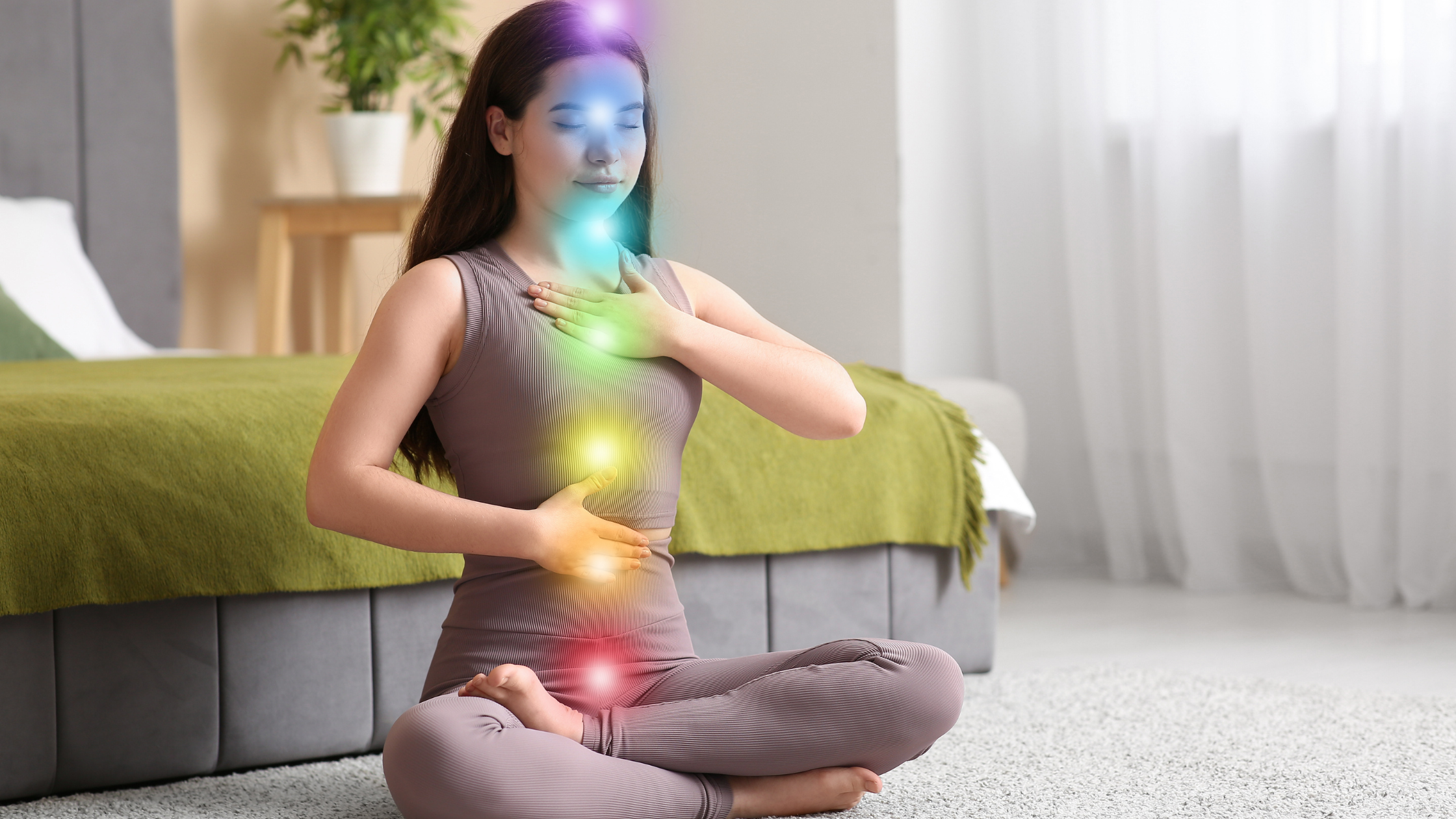
These seven chakras are usually described as running from the base of the spine to the top of the head. Each one is associated with different qualities, such as grounding, creativity, confidence, love, communication, intuition, and spiritual connection.
You may also see each chakra connected with a particular color. These rainbow-colored associations are common in modern chakra practices, although they are not identical to all traditional Indian teachings.
For me, working with the chakra system is less about trying to prove that invisible energy centers physically exist. Instead, I like to use the chakras as a spiritual framework for reflection. They can encourage us to notice different areas of our lives and ask where we may need more attention, awareness, or balance.
Throughout this guide, we will explore the seven chakras from that perspective. You can approach them with curiosity and use the ideas that feel meaningful to your own spiritual practice.
1. Root Chakra (Muladhara)
With the 7 chakras explained one by one, we begin with the Root Chakra, also known as Muladhara. Modern chakra practices usually connect the Root Chakra with the base of the spine and with feelings of grounding, stability, safety, and connection to the physical world.
Modern chakra practices commonly connect the Root Chakra with the color red and the element of earth. You can think of the Root Chakra as the energetic foundation of the chakra system, the place where our sense of security and stability begins.
When you feel grounded, you may find it easier to stay present, trust yourself, and feel more secure in everyday life. On the other hand, when this area feels out of balance, some spiritual practitioners associate it with feelings of insecurity, restlessness, fear, or difficulty feeling settled.
For me, working with the Root Chakra is often about coming back to the present moment. When life feels overwhelming or my thoughts are everywhere, simple grounding practices can help me reconnect with myself.
You might try spending time in nature, walking barefoot on grass, taking slow and conscious breaths, or simply noticing the feeling of your feet touching the ground. Meditation and gentle movement can also become part of a grounding practice.
A simple question you can ask yourself is:
“What helps me feel safe, supported, and grounded in my everyday life?”
You do not need to force yourself to feel perfectly balanced. Sometimes simply noticing where you need more stability can be a meaningful first step.
2. Sacral Chakra (Svadhisthana)
As we continue through the 7 chakras explained in this guide, the second is the Sacral Chakra, also known as Svadhisthana. Modern chakra practices usually connect the Sacral Chakra with the lower abdomen, a few inches below the navel.
Modern chakra practices commonly connect the Sacral Chakra with the color orange and the element of water. Spiritual traditions often connect the Sacral Chakra with creativity, emotions, pleasure, relationships, joy, and flow in life.
When this area feels balanced, spiritual traditions often associate it with emotional openness, creativity, healthy self-expression, and the ability to enjoy life without feeling guilty about it.
When it feels out of balance, some people may connect it with emotional ups and downs, lack of inspiration, difficulty expressing feelings, or feeling disconnected from pleasure and creativity. These experiences can have many ordinary causes as well, so they should not automatically be interpreted as signs of a chakra imbalance.
For me, exploring the Sacral Chakra is about giving myself permission to feel, create, and enjoy the present moment. It can be a reminder that spirituality does not always have to be serious. Creativity, movement, laughter, and joy can also be meaningful parts of our inner journey.
You might explore this chakra through creative activities, gentle movement, dancing, journaling, meditation, or simply allowing yourself to do something you genuinely enjoy.
A simple question you can ask yourself is:
“Am I allowing enough creativity, joy, and emotional expression into my life?”
Sometimes reconnecting with this part of yourself can begin with something very small, listening to music you love, creating something without worrying about the result, or simply allowing yourself to enjoy the moment.
3. Solar Plexus Chakra (Manipura)
Next in the 7 chakras explained in this guide is the Solar Plexus Chakra, also known as Manipura. Modern chakra practices usually connect the Solar Plexus Chakra with the upper abdomen, around the stomach area.
Modern chakra practices commonly connect the Solar Plexus Chakra with the color yellow and the element of fire. The Solar Plexus Chakra is often linked with personal power, confidence, motivation, self-esteem, and our ability to make decisions and take action.
When this area feels balanced, spiritual traditions often associate it with a healthy sense of confidence and inner strength. You may feel more comfortable trusting yourself, setting boundaries, and moving toward the things that matter to you.
When it feels out of balance, some people associate it with self-doubt or lack of motivation. They may also connect it with difficulty making decisions or feeling powerless. However, these feelings can have many different causes and should not automatically be viewed as evidence of a chakra imbalance.
For me, working with the Solar Plexus Chakra is a reminder to pay attention to the way I speak to myself. It encourages me to notice whether I am trusting my own choices or allowing fear and doubt to hold me back.
You might explore this chakra through meditation, journaling, mindful movement, setting small achievable goals, or practicing healthy boundaries. Even taking one small action toward something important to you can help you reconnect with a sense of personal strength.
A simple question you can ask yourself is:
“Where in my life could I trust myself a little more?”
You do not need to feel confident all the time. Sometimes personal power simply means recognizing your fears while still choosing to take a small step forward.
4. Heart Chakra (Anahata)

As we move through the 7 chakras explained in this guide, we arrive at the Heart Chakra, also known as Anahata. Modern chakra practices usually connect the Heart Chakra with the center of the chest, around the heart area.
Modern chakra practices commonly connect the Heart Chakra with the color green and the element of air. The Heart Chakra is often linked with love, compassion, forgiveness, emotional openness, and our ability to connect with ourselves and others.
Spiritual traditions connect a balanced Heart Chakra with the ability to give and receive love more openly. You may feel greater compassion toward yourself and others while still maintaining healthy emotional boundaries.
When it feels out of balance, some people associate it with difficulty trusting others, holding onto past hurt, loneliness, resentment, or struggling with self-love. However, these feelings can have many different causes and should not automatically be interpreted as signs of a chakra imbalance.
For me, the Heart Chakra is especially meaningful because it reminds me that love and compassion also need to be directed inward. It can be easy to offer kindness to other people while being much harder on ourselves.
You might explore this chakra through meditation, gratitude, forgiveness practices, journaling, or simply taking a few quiet moments with your hands resting gently over your heart. You can also reflect on the relationships in your life. Ask yourself whether you are giving yourself the same care you naturally offer to others.
A simple question you can ask yourself is:
“Am I giving myself the same love and compassion that I give to others?”
Opening your heart does not mean ignoring your boundaries or accepting everything from everyone. Sometimes one of the most loving things you can do is honor your own needs while remaining compassionate toward yourself and others.
5. Throat Chakra (Vishuddha)
Continuing with the 7 chakras explained in this guide, the fifth is the Throat Chakra, also known as Vishuddha. Modern chakra practices usually connect the Throat Chakra with the throat and neck area.
Modern chakra practices commonly connect the Throat Chakra with the color blue and the element of space or ether. The Throat Chakra is often linked with communication, truth, self-expression, and our ability to express thoughts and feelings openly.
When this area feels balanced, spiritual traditions often associate it with clear and authentic communication. You may find it easier to express your needs, share your ideas, speak honestly, and also listen carefully to others.
When it feels out of balance, some people associate it with difficulty speaking up or fear of being misunderstood. They may also connect it with holding back emotions or struggling to express what they truly feel. These experiences can have many different causes and should not automatically be interpreted as signs of a chakra imbalance.
For me, exploring the Throat Chakra is about asking whether I am expressing what is truly important to me. Sometimes we stay quiet because we want to avoid conflict or worry about what other people might think.
You might explore this chakra through journaling, singing, mindful conversation, meditation, or simply practicing saying what you mean with kindness and honesty. Listening can be just as important as speaking.
A simple question you can ask yourself is:
“Am I expressing my truth in a way that feels honest and authentic to me?”
Finding your voice does not mean that you need to say everything you think. It can simply mean learning to communicate your feelings, needs, and boundaries with greater awareness.
6. Third Eye Chakra (Ajna)
The sixth energy center in the 7 chakras explained in this guide is the Third Eye Chakra, also known as Ajna. Modern chakra practices usually connect the Third Eye Chakra with the area between the eyebrows.
Its commonly associated color is indigo. Spiritual traditions often connect the Third Eye Chakra with intuition, inner wisdom, awareness, imagination, and the ability to look beyond immediate thoughts and reactions.
When this area feels balanced, spiritual traditions often associate it with greater clarity and trust in your inner guidance. You may find it easier to step back from situations, notice patterns, and listen to your intuition before making decisions.
When it feels out of balance, some people associate it with confusion, difficulty trusting themselves, overthinking, or feeling disconnected from their intuition. However, these experiences can have many different causes and should not automatically be interpreted as signs of a chakra imbalance.
For me, exploring the Third Eye Chakra is less about trying to predict the future and more about learning to listen inward. Sometimes our intuition can become easier to notice when we create enough quiet space to hear it.
You might explore this chakra through meditation, journaling, visualization, spending time in silence, or simply observing your thoughts without immediately reacting to them.
A simple question you can ask yourself is:
“Am I giving myself enough quiet space to listen to my inner wisdom?”
Developing intuition does not mean that every thought or feeling is automatically a message you need to follow. Instead, it can be a practice of becoming more aware of yourself while balancing inner reflection with thoughtful decision-making.
7. Crown Chakra (Sahasrara)
The final energy center in the 7 chakras explained in this guide is the Crown Chakra, also known as Sahasrara. Modern chakra practices usually connect the Crown Chakra with the top of the head.
Its commonly associated colors are violet or white. Spiritual traditions often connect the Crown Chakra with spiritual awareness, higher consciousness, inner wisdom, and a sense of connection with something greater than ourselves.
When this area feels balanced, spiritual traditions often associate it with a deeper sense of peace, meaning, and spiritual connection. You may feel more connected to your inner self, your spiritual path, or the larger world around you.
When it feels out of balance, some people associate it with feeling spiritually disconnected, lacking direction, or struggling to find meaning. However, these experiences can have many different causes and should not automatically be interpreted as signs of a chakra imbalance.
For me, exploring the Crown Chakra is about creating space for stillness and connection. It reminds me that spirituality does not always require searching for answers. Sometimes simply becoming quiet and present can be meaningful.
You might explore this chakra through meditation, mindfulness, spending time in nature, gratitude, prayer if it is part of your personal beliefs, or simply sitting quietly without distractions.
A simple question you can ask yourself is:
“What helps me feel connected to something greater than my everyday thoughts and worries?”
There is no single way to experience spiritual connection. Your path can be deeply personal, and it may change as you continue to learn, grow, and understand yourself more deeply.
What Does It Mean to Balance Your Chakras?
In modern spiritual practices, you may often hear people talk about balancing, opening, or even clearing the chakras. These expressions are generally used to describe the idea of creating greater harmony and awareness within different areas of your life.
Chakra balance does not have to mean that every part of your life feels perfect. Instead, you can use the chakra system as a simple framework for noticing where you may need more attention.
For example, you might reflect on whether you feel grounded and secure, whether you are expressing your emotions, or whether you are speaking honestly about your needs. You might also notice where you need more confidence, compassion, creativity, or quiet time for inner reflection.
This is one of the reasons I enjoy working with the chakra system. Rather than seeing every difficult emotion as proof that something is blocked, I prefer to use the chakras as gentle invitations to become more aware of myself.
Practices such as meditation, journaling, mindful breathing, movement, Reiki, and spending time in nature can all become part of a personal chakra practice. You do not need to do all of them. Choose the practices that help you slow down and connect with yourself.
It is also important to remember that chakras belong to spiritual traditions and are not scientifically established physical structures in the body. Physical or emotional symptoms should not automatically be explained as a “blocked chakra,” especially when they are persistent or concerning.
The goal does not have to be perfect energetic balance. Sometimes the most meaningful part of chakra work is simply learning to listen to yourself with a little more awareness and compassion.
A Simple Chakra Meditation for Beginners

You do not need a complicated routine to begin exploring your chakras. A simple meditation can help you slow down, bring your attention inward, and become more aware of how you are feeling.
Find a quiet place where you can sit or lie down comfortably. Close your eyes and take a few slow, natural breaths. Allow your body to relax without trying to force anything.
Begin by bringing your attention to the Root Chakra at the base of the spine. Imagine the color red and take a few breaths while thinking about grounding, safety, and stability.
Then slowly move your attention upward through each chakra: orange for the Sacral Chakra, yellow for the Solar Plexus Chakra, green for the Heart Chakra, blue for the Throat Chakra, indigo for the Third Eye Chakra, and violet or white for the Crown Chakra.
You can spend a few breaths with each area. Notice any thoughts, emotions, or sensations that arise without judging them or trying to change them.
If visualization does not come naturally to you, that is completely okay. You do not need to see bright colors or feel energy moving through your body. Simply placing your attention on each area can become part of your meditation.
When you reach the Crown Chakra, take a few more slow breaths. Then gently bring your awareness back to your whole body and the space around you. Open your eyes whenever you feel ready.
Your meditation can last five minutes or twenty minutes. There is no perfect amount of time. What matters most is creating a quiet moment where you can reconnect with yourself.
As you become more familiar with the 7 chakras explained throughout this guide, you may discover that certain areas or themes naturally deserve more of your attention.

The 7 Chakras as Part of Your Spiritual Journey
Now that you have seen the 7 chakras explained, you may have a clearer idea of what each energy center represents and how the chakra system can become part of a personal spiritual practice.
You do not need to memorize every color, location, or meaning immediately. Chakra work can be something you explore gradually. As you become more familiar with the system, you may naturally notice that certain themes feel more relevant to you at different times in your life.
For me, the most meaningful part of working with chakras is the opportunity to turn inward. The chakra system gives me different areas to reflect on, from feeling grounded and secure to expressing myself, opening my heart, trusting my intuition, and exploring my spiritual connection.
Remember that experiencing fear, sadness, self-doubt, physical discomfort, or other challenges does not necessarily mean that one of your chakras is blocked. Chakra teachings offer a spiritual framework for self-reflection, rather than a medical explanation for physical or emotional symptoms.
There is also no need to achieve perfectly balanced chakras. Your inner world naturally changes as your life changes. Some days you may need grounding, while on others you may feel drawn toward creativity, self-expression, compassion, or quiet meditation.
Allow yourself to explore the chakra system with curiosity rather than pressure. Meditate, journal, practice Reiki, spend time in nature, or simply pause occasionally and ask yourself what you need in that moment.
Your spiritual journey is deeply personal. You do not have to follow someone else’s path or experience energy in exactly the same way they do.
Sometimes becoming more balanced begins with something very simple: slowing down, listening inward, and reconnecting with your own inner light.